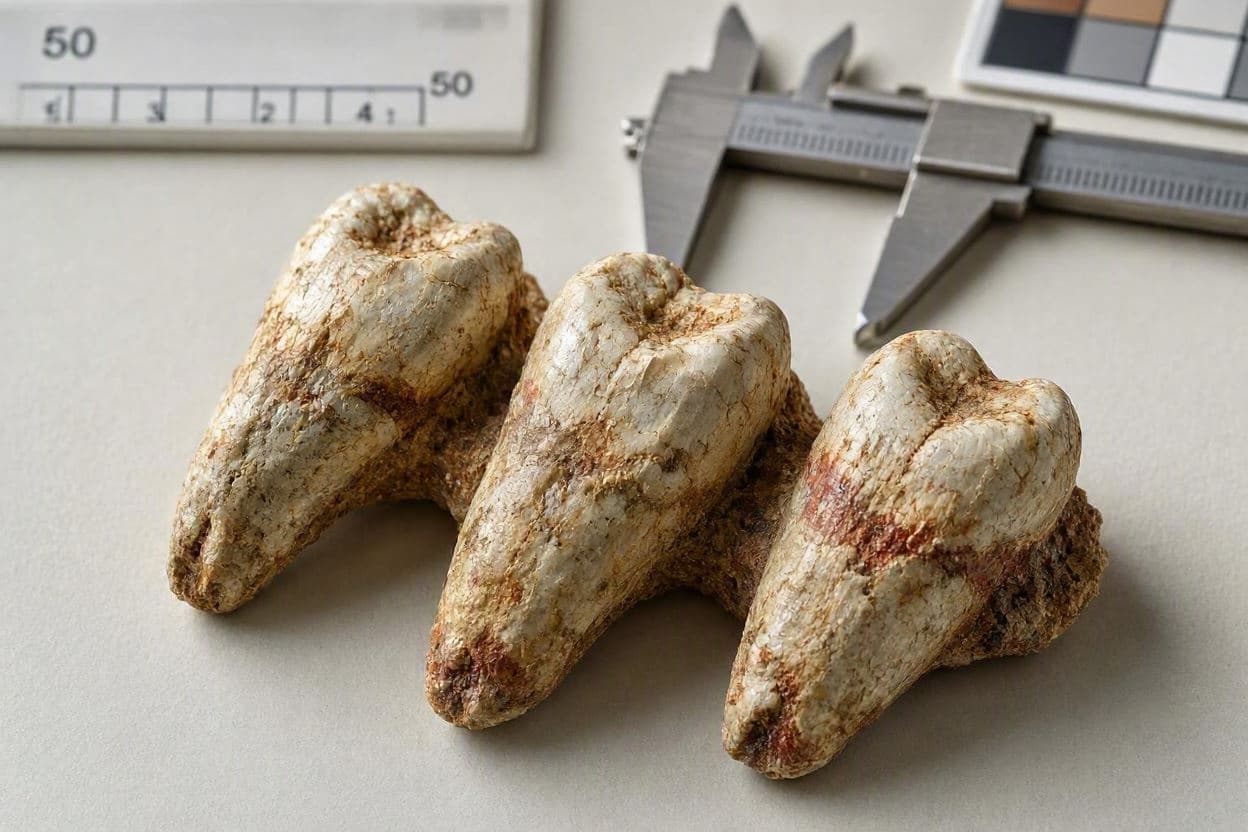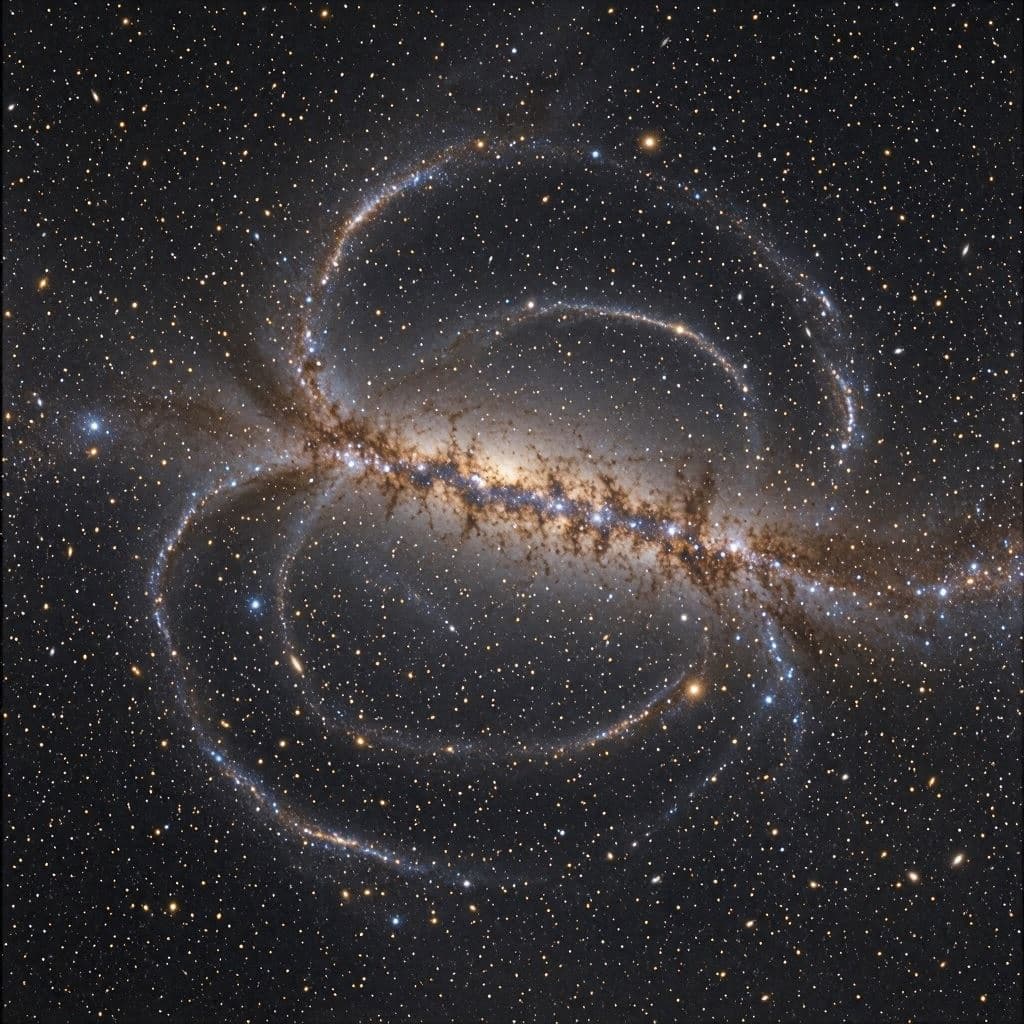
Every landscape preserves traces of its past. Mountains carry the memory of shifting continents, rivers record changing climates, and forests quietly mark the passage of generations. Our galaxy is no different. Although the Milky Way appears serene on a clear night, its stars retain the signatures of ancient collisions that transformed a young collection of gas and stars into the vast spiral galaxy we call home today. For astronomer Amina Helmi, those enduring traces are "cosmic fossils" waiting to be interpreted.
Amina Helmi, a professor at the University of Groningen in the Netherlands, has spent decades studying the oldest stars and stellar structures within the Milky Way. Rather than excavating fossils from rock, she investigates ancient stars whose chemical compositions and orbital motions preserve evidence of events that occurred billions of years ago. Her work has helped establish the field known as galactic archaeology, which reconstructs the history of galaxies through their oldest surviving stellar populations.
One of Helmi's most influential discoveries was identifying evidence that the Milky Way experienced a major collision with a smaller galaxy approximately 10 billion years ago. By analyzing data from the European Space Agency's Gaia spacecraft, researchers found groups of stars moving together in unusual patterns. These stars shared distinct chemical characteristics and orbital paths, revealing that they originated outside the Milky Way before being absorbed during a massive galactic merger now known as Gaia-Enceladus, or the Gaia Sausage event.
These ancient stars function much like fossils on Earth. Their ages, elemental abundances, and trajectories remain preserved even after billions of years, allowing astronomers to reconstruct the sequence of mergers that gradually assembled the Milky Way. Rather than forming in a single event, the galaxy grew through repeated interactions with smaller neighboring galaxies, each leaving behind stellar remnants that continue orbiting today.
The European Space Agency's Gaia mission has dramatically expanded this field by measuring the positions, distances, and motions of nearly two billion stars with unprecedented precision. Combined with spectroscopic surveys that reveal stellar chemistry, these observations enable researchers to distinguish stars born within the Milky Way from those that originated in long-vanished companion galaxies. Each newly identified stellar stream contributes another fragment to the galaxy's evolutionary history.
Helmi's research has earned international recognition, including the 2026 Kavli Prize in Astrophysics, honoring her contributions to understanding how galaxies assemble through cosmic time. Beyond reconstructing the Milky Way's past, her work provides a broader framework for studying galaxy formation throughout the universe. Similar techniques are now being applied to distant galaxies using increasingly powerful observatories, extending galactic archaeology beyond our own celestial neighborhood.
The study of cosmic fossils also reminds scientists that galaxies are dynamic rather than static systems. The graceful spiral visible from Earth represents the outcome of billions of years of mergers, star formation, and gravitational interactions. Every ancient star carries information about those events, preserving evidence long after the galaxies that created them disappeared.
As astronomers continue examining the oldest stellar populations, the Milky Way's history becomes increasingly detailed. The work of Amina Helmi demonstrates that understanding the present often begins with carefully reading the oldest surviving records. In the quiet light of ancient stars, researchers continue uncovering the story of a galaxy whose turbulent beginnings ultimately gave rise to the cosmic home humanity inhabits today.
AI Image Disclaimer: The accompanying images are AI-generated artistic visualizations inspired by astronomical research and are intended to illustrate scientific concepts rather than depict actual observational data.
Sources (Verified):
Nature Astronomy & Astrophysics European Space Agency (ESA) University of Groningen France 24
Published by Banx Network. This article is part of the Banx decentralized media programme, powered by the BXE token on the XRP Ledger.