The earth remembers what we often forget. Deep within the fossil record lies a story of a world transformed by heat, a time when the planet’s lungs—its vast forests—began to wither under the weight of a warming climate. Fifty-six million years ago, during the Paleocene-Eocene Thermal Maximum (PETM), global temperatures surged, and landscapes that were once lush and green turned brown. Today, as we face our own era of rapid climate change, researchers are uncovering striking parallels between that ancient event and our present reality, offering a sobering glimpse into what may lie ahead.
The PETM was a period of intense global warming, driven by a massive release of carbon into the atmosphere. Recent studies analyzing fossilized leaves from this era reveal that trees struggled to cope with the rising heat and changing rainfall patterns. The stomata, or tiny pores on leaf surfaces, changed in density and size, indicating that plants were under significant physiological stress. This "browning" was not merely a change in color but a sign of widespread ecological disruption, as forests retreated and biodiversity shifted.
What makes this historical episode so relevant today is the speed at which it occurred. While the PETM unfolded over thousands of years, the current rise in atmospheric carbon is happening at an unprecedented pace. Yet, the biological responses of plants appear remarkably similar. Modern forests are already showing signs of stress, with increased mortality rates and shifts in species distribution mirroring the ancient patterns observed in the fossil record. This continuity suggests that nature’s limits are consistent, even across millions of years.
Researchers emphasize that the recovery from the PETM took nearly 100,000 years. This long timeline serves as a cautionary tale for modern conservation efforts. Once ecosystems cross certain thresholds, their return to previous states is not guaranteed within human timescales. The resilience of nature is profound, but it is not infinite, and the cost of pushing beyond these boundaries is measured in millennia rather than decades.
The study also highlights the role of water availability in forest health. During the PETM, changes in precipitation patterns exacerbated the effects of heat, leading to drought conditions that further stressed tree populations. Today, many regions are experiencing similar combinations of heatwaves and altered rainfall, creating a dual threat to forest stability. Understanding these historical dynamics helps scientists predict which areas are most vulnerable to future climate impacts.
Despite the grim parallels, there is value in looking back. By studying how ancient ecosystems responded to warming, scientists can better identify strategies for protecting modern forests. This includes preserving genetic diversity, protecting water sources, and reducing additional stressors such as deforestation and pollution. Knowledge of the past becomes a tool for safeguarding the future, allowing us to make more informed decisions about land management and climate policy.
The narrative of the browning forests is not one of inevitable doom but of urgent awareness. It reminds us that climate change is not a new phenomenon, but its current trajectory is unique in its speed and human causation. By recognizing the echoes of the PETM in our own time, we are called to act with greater intention and care, ensuring that the green canopy of our world remains vibrant for generations to come.
As research continues, the dialogue between paleontology and climate science grows stronger. Each fossil leaf tells a story of survival and adaptation, offering lessons that are as relevant today as they were 56 million years ago. In listening to these ancient voices, we find both warning and wisdom, guiding us toward a more sustainable relationship with our planet.
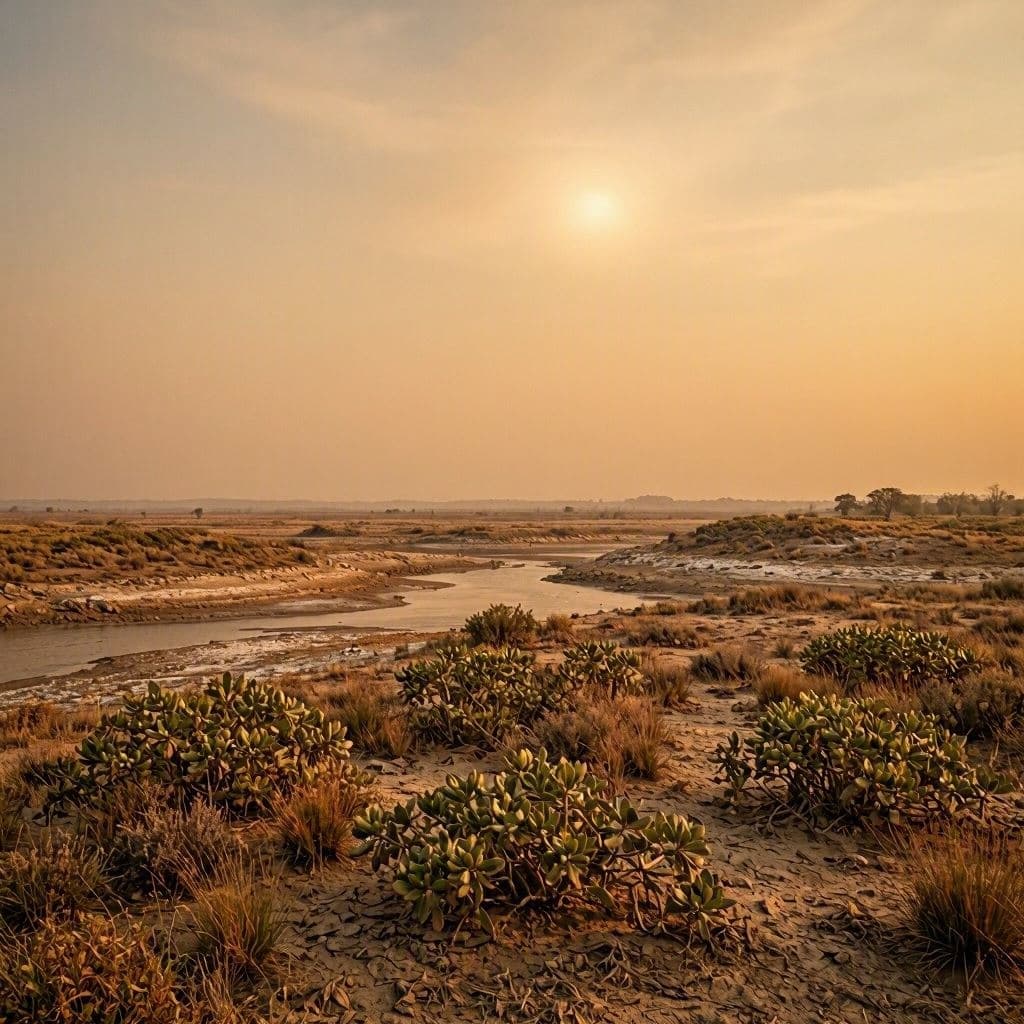
AI Image Disclaimer: The visual representations in this article are AI-generated illustrations depicting ancient landscapes and fossilized flora, designed to evoke the historical context of the Paleocene-Eocene Thermal Maximum.
Sources: Nature, Phys.org, The Conversation, La Brea Tar Pits Museum
Published by Banx Network. This article is part of the Banx decentralized media programme, powered by the BXE token on the XRP Ledger.