Beneath the rolling waves of the Pacific, hidden from the sun’s reach and the noise of the surface world, life persists in quiet abundance. We often imagine the deep ocean as a barren void, a place of darkness and pressure where little can thrive. Yet, recent discoveries remind us that the depths are teeming with secrets, waiting patiently to be revealed. Off the coast of California, scientists have uncovered a bustling metropolis of octopuses, a nursery of unprecedented scale that challenges our understanding of marine ecosystems. It is a finding that speaks to the resilience of nature and the hidden complexities of the underwater realm.
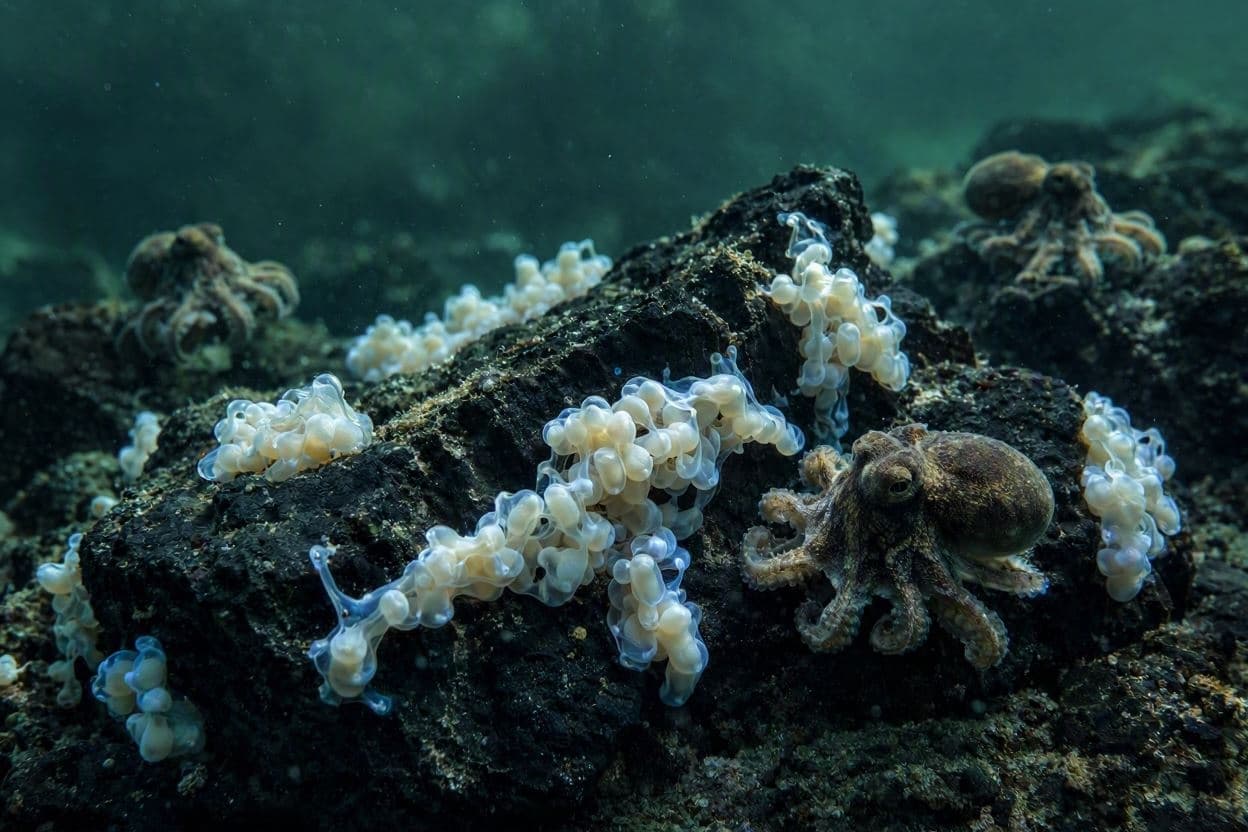
The discovery centers on a volcanic seamount known as Davidson Seamount, where researchers identified approximately twenty thousand octopus nests clustered together. This aggregation is not merely a random gathering but a structured community, suggesting social behaviors and environmental preferences that were previously unknown in these species. The nests, carefully tended by female octopuses, create a patchwork of life on the rocky slopes, turning a sterile volcanic landscape into a vibrant hub of biological activity. The scale of this nursery is unparalleled, dwarfing other known octopus breeding grounds around the world.
What makes this site particularly remarkable is the depth at which it exists. Located far below the reach of typical sunlight, the nursery relies on chemosynthetic processes and nutrient-rich currents rather than photosynthesis. This adaptation highlights the ingenuity of life in extreme environments. The octopuses here have evolved to thrive in cold, dark conditions, utilizing the unique geological features of the seamount for protection and breeding. Their presence indicates a delicate balance between geological activity and biological sustainability, a harmony that has persisted for millennia.
The implications of this discovery extend beyond mere curiosity. Understanding such large-scale breeding grounds is crucial for marine conservation efforts. These nurseries serve as critical reservoirs for octopus populations, influencing the broader food web and ecosystem health. By identifying and protecting such sites, scientists can better advocate for marine protected areas that safeguard not just individual species but entire ecological networks. The Davidson Seamount nursery stands as a testament to the importance of preserving deep-sea habitats from potential threats like deep-sea mining or climate change.
Moreover, the behavior observed in this underwater city offers new insights into cephalopod intelligence and sociality. Octopuses are often portrayed as solitary creatures, yet this aggregation suggests a level of communal tolerance and possibly cooperation. Researchers are keen to study how these animals communicate, defend their nests, and interact within such high-density populations. Each observation adds a piece to the puzzle of cephalopod cognition, revealing layers of complexity that challenge traditional views of invertebrate behavior.
The technology used to discover this nursery also deserves mention. Advanced remote-operated vehicles and high-definition cameras allowed scientists to explore depths that were once inaccessible. These tools have opened a new window into the deep sea, enabling detailed documentation of life forms that rarely see human eyes. The clarity of the images captured has been instrumental in confirming the scale and nature of the nesting site, providing concrete evidence for further study. It is a reminder of how technological advancement can drive scientific breakthrough.
As we reflect on this underwater city, we are reminded of how much remains unknown about our own planet. The ocean covers more than seventy percent of Earth’s surface, yet we have explored less than five percent of it. Each discovery, like this octopus nursery, underscores the vastness of our ignorance and the potential for wonder that lies beneath the waves. It invites us to approach the ocean with humility and respect, recognizing it as a living, breathing entity full of surprises.
Protecting such sites requires international cooperation and a commitment to sustainable practices. The fragility of deep-sea ecosystems means that even minor disturbances can have lasting impacts. By studying and valuing places like the Davidson Seamount, we take a step toward ensuring that these hidden wonders continue to thrive for future generations. It is a responsibility that falls on all of us, not just scientists, to cherish and preserve the mysteries of the deep.
The discovery of this vast octopus nursery is a gentle nudge toward greater awareness of our marine heritage. It shows that even in the darkest depths, life finds a way to flourish, creating communities that are as intricate as they are fragile. Let this finding inspire a deeper commitment to ocean stewardship.
AI Image Disclaimer: The visual representations associated with this article are AI-generated interpretations intended for illustrative purposes only.
Sources: NOAA Fisheries Monterey Bay Aquarium Research Institute (MBARI) BBC News
Published by Banx Network. This article is part of the Banx decentralized media programme, powered by the BXE token on the XRP Ledger.