There is a certain choreography to the announcement of a major investment, especially when the calendar is drawing close to an election. On Wednesday afternoon in the Oval Office, President Donald Trump unveiled what he described as a $200 billion commitment from South Korea to American projects—a package that includes $54 billion for the long-discussed Alaska liquefied natural gas pipeline, eight large-scale nuclear reactors, and a gas-fired power complex in Texas.
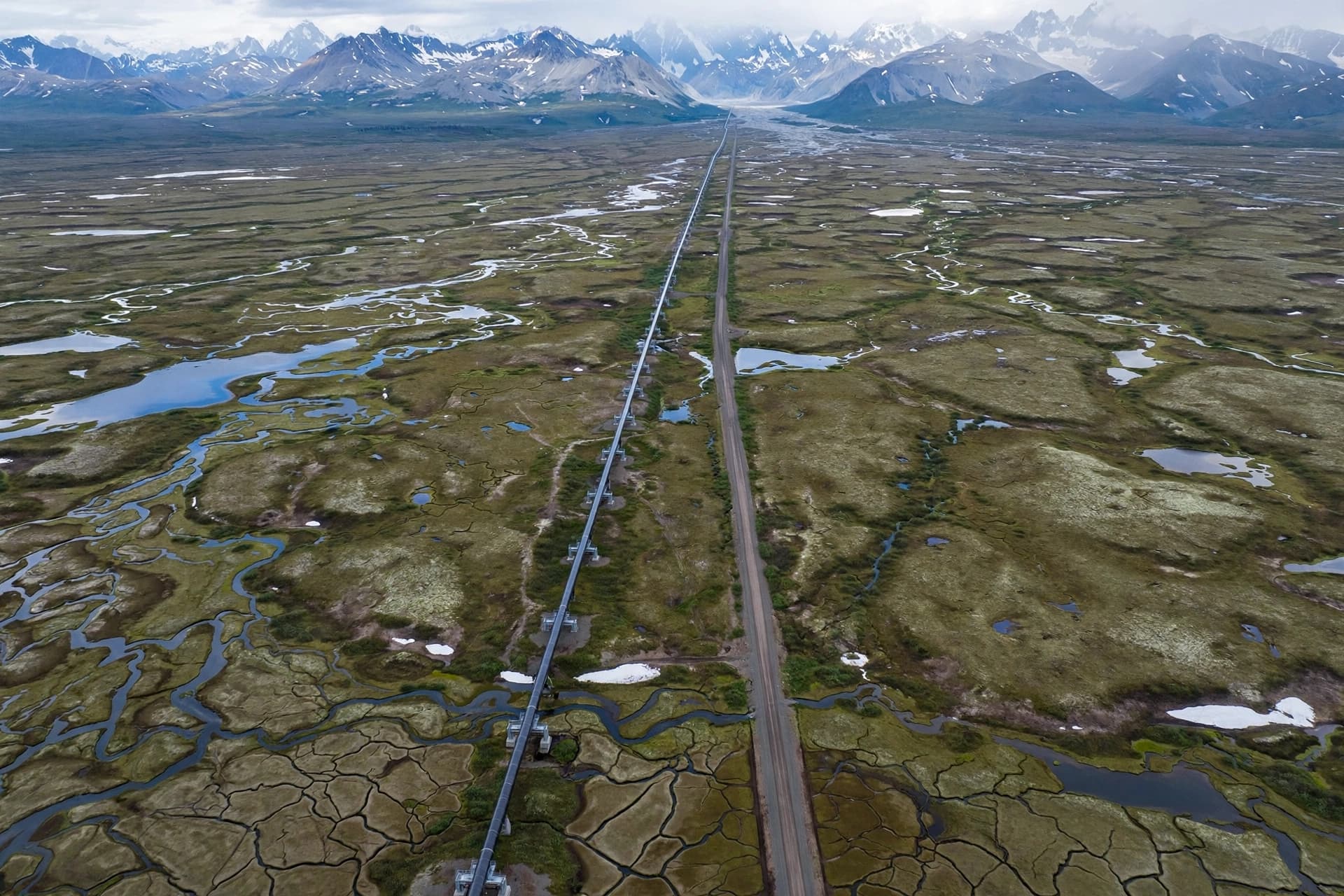
The Alaska investment is the most politically charged component. The 807-mile pipeline would connect the North Slope to a liquefaction facility on Alaska’s southern coast, allowing natural gas to be shipped to Asian markets . Senator Dan Sullivan of Alaska, who has championed the project for years and faces a competitive reelection challenge from Democrat Mary Peltola, stood beside Trump during the announcement . “He’s got my ear, and he’s had my ear for a long time on Alaska,” Trump said .
The investment derives from a 2025 trade agreement in which South Korea pledged $350 billion in U.S. projects in exchange for lower U.S. tariffs on South Korean cars, auto parts, and other products . The package was divided into $150 billion for shipbuilding and $200 billion for strategic investments. The Texas gas-fired power plant in Encinal, with a capacity of more than 6 gigawatts, was the first project selected under the strategic investment program .
South Korean officials have approached the Alaska project with caution. The government has stated that projects under the investment package must meet commercial viability standards, and Seoul had previously classified the Alaska LNG initiative as a task requiring further consultation . Opposition lawmakers in South Korea have raised concerns about the fiscal risks. “Before considering political needs or diplomatic demands, however, it was necessary to thoroughly verify the commercial rationale and viability of any investment that put a tremendous burden on the public,” said Kim Sung-won, a lawmaker who chairs parliament’s trade committee .
The project has faced years of uncertainty. Major energy companies including ExxonMobil withdrew a decade ago, citing a lack of commercial viability . The developer, Glenfarne, said in March it had lined up commitments for 13 million tons per year of LNG but needed another 3 million tons to secure financing and make the commitments binding . Japanese importers JERA and Tokyo Gas have signed preliminary agreements to purchase a combined 2 million tons annually if the project is built .
The announcement comes as Trump’s approval ratings have sunk ahead of the November midterms, and as voters express concern about near-record fuel prices related to the unresolved war with Iran. In a late-July AP-NORC poll, only about one-third of Americans approved of Trump’s handling of the economy . The Alaska and nuclear components of the deal remain subject to further negotiation, and it is not yet clear how quickly the South Korean government will formally approve the projects .
AI Image Disclaimer: The accompanying images in this report were created with artificial intelligence and are intended for conceptual representation only.
Sources: The Canadian Press, Reuters, Yonhap News Agency, SBS News, Eagle-Tribune, Spectrum Local News
Published by Banx Network. This article is part of the Banx decentralized media programme, powered by the BXE token on the XRP Ledger.