
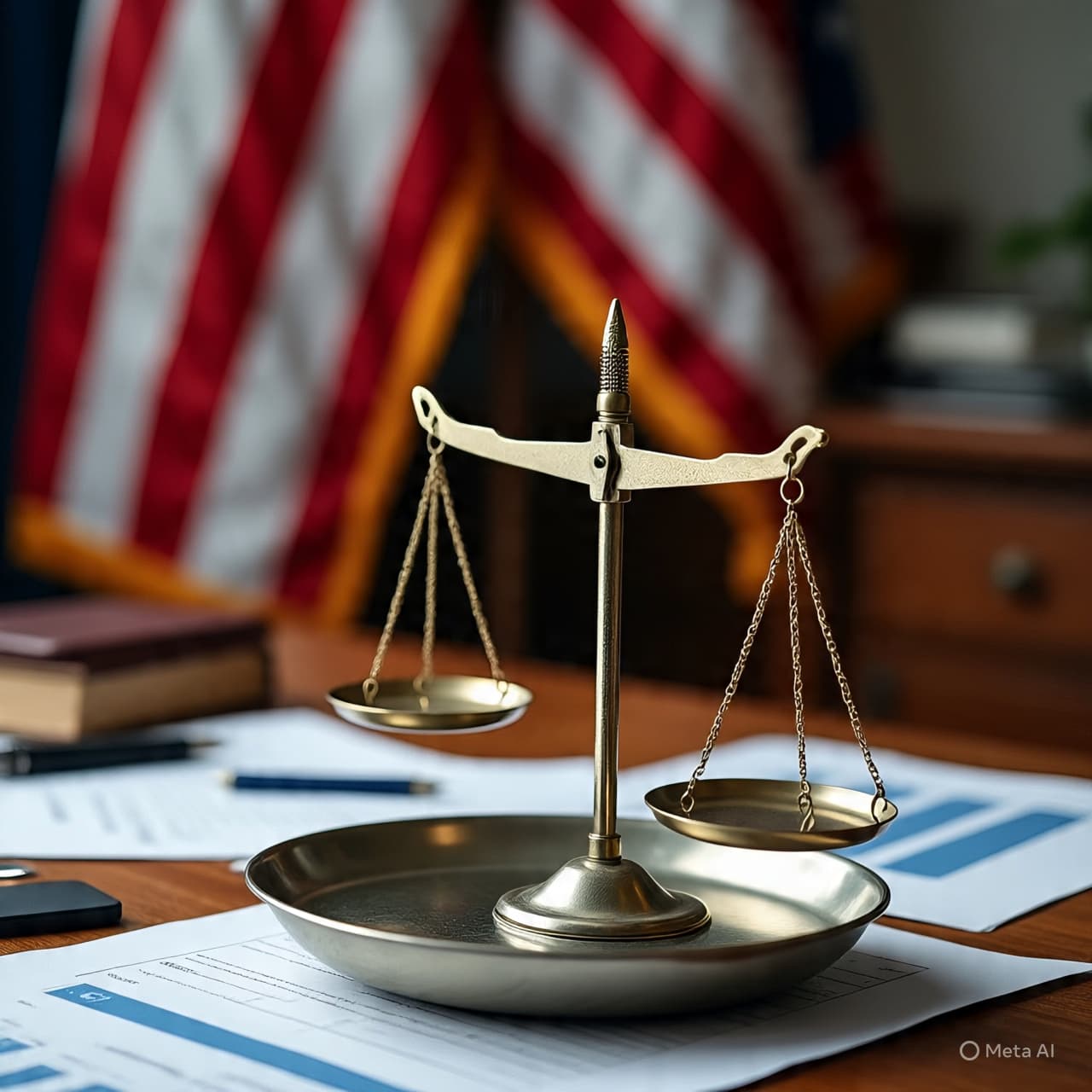
In moments of calm, institutions often fade into the background, like steady clocks on the wall whose ticking reassures more than it distracts. The Federal Reserve has long occupied that quiet space in American life — influential, powerful, yet deliberately distant from daily political noise. But when the Justice Department turns its gaze toward the Fed, even gently, the room grows noticeably still.
Across the worlds of economics and business, reactions have not arrived with thunder or outrage, but with careful words and measured concern. Many economists describe the probe less as a legal drama and more as a test of boundaries — a question about how far oversight should reach without disturbing the delicate balance that central banks depend on to function. The Fed’s independence, they note, is not a decorative feature but a working mechanism, one that relies on trust, restraint, and predictability.
Business leaders have echoed similar reflections, focusing less on personalities and more on precedent. Markets, after all, are built as much on expectations as on data. For some executives and investors, the investigation introduces an unfamiliar variable — not panic-inducing, but unsettling in its uncertainty. Even if the probe ultimately changes nothing, the act of scrutiny itself has become a signal worth watching.
Among economists, there is a prevailing sense that monetary policy decisions will not be easily swayed by external pressure. Several have emphasized that interest-rate setting remains grounded in data, inflation trends, and employment figures, not headlines or legal developments. Still, they acknowledge that perception matters. The idea that political or legal forces could encroach upon central banking independence carries weight precisely because it has been avoided for so long.
Others see the moment as a reminder of institutional resilience. The Fed has endured wars, recessions, political cycles, and public criticism before. In that context, the DOJ’s inquiry is viewed not as a rupture, but as part of a broader democratic system where power, even technocratic power, is subject to review. Transparency, they argue, need not be the enemy of independence if handled with care.
As statements from officials and analysts continue to circulate, the dominant tone remains notably restrained. There is no rush to judgment, no sweeping predictions of collapse or chaos. Instead, there is watchfulness — a collective pause among those who understand how fragile confidence can be, and how slowly it is built.
For now, the investigation exists alongside the Fed’s ongoing work, not in place of it. Interest rates are still debated, inflation still measured, and markets still open each morning. The larger story, at least for those listening closely, is not about confrontation, but about how institutions navigate scrutiny without losing their center.
AI Image Disclaimer Illustrations were produced with AI and serve as conceptual depictions rather than real photographs.
Sources (Media Names Only) Business Insider Reuters Financial Times Associated Press Federal Reserve
Published by Banx Network. This article is part of the Banx decentralized media programme, powered by the BXE token on the XRP Ledger.



