The promise of elections often carries the language of renewal. In Myanmar, however, the coming vote arrives stripped of that promise, unfolding not as a return to civilian rule but as a carefully managed exercise in political appearance.
More than four years after the military seized power, the country remains fractured by conflict, displacement, and deep public distrust. Yet the ruling authorities have announced a phased election, presenting it as a pathway back to stability. For many inside and outside the country, it appears instead as a carefully choreographed process designed to validate an outcome long decided.
At the center of the controversy lies exclusion. The country’s most popular political force, which once won overwhelming national support, has been dissolved. Its leaders remain imprisoned or silenced. In its place, political space has been narrowed to groups that either align with the military or operate under strict constraints. Participation exists, but choice does not.
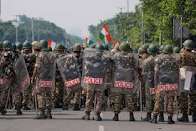
Security conditions further erode the credibility of the vote. Large parts of the country remain beyond the effective control of the central authorities, with active conflict continuing in multiple regions. Millions of citizens are displaced, while entire communities live under curfews, surveillance, or martial law. In such an environment, the concept of a free and equal ballot becomes difficult to sustain.
The decision to hold elections in phases reflects this reality. Rather than a unified national exercise, voting will occur only where control can be enforced. Critics argue that this fragmented approach transforms a democratic process into a logistical performance — one shaped by military reach rather than public consent.
International reaction has been cautious but clear. Many governments and human rights observers view the planned vote as a mechanism to legitimize continued military rule rather than a genuine transfer of power. The absence of independent observers and the suppression of dissent reinforce those concerns.
What emerges is not an election meant to resolve Myanmar’s political crisis, but one designed to manage its image. By presenting ballots without freedom and institutions without accountability, the process risks deepening the divide between authority and legitimacy.
In this context, the question is no longer whether the election will proceed, but what it will truly represent. For millions of Myanmar’s citizens, the promise of democracy remains suspended — acknowledged in form, yet denied in substance.
Published by Banx Network. This article is part of the Banx decentralized media programme, powered by the BXE token on the XRP Ledger.