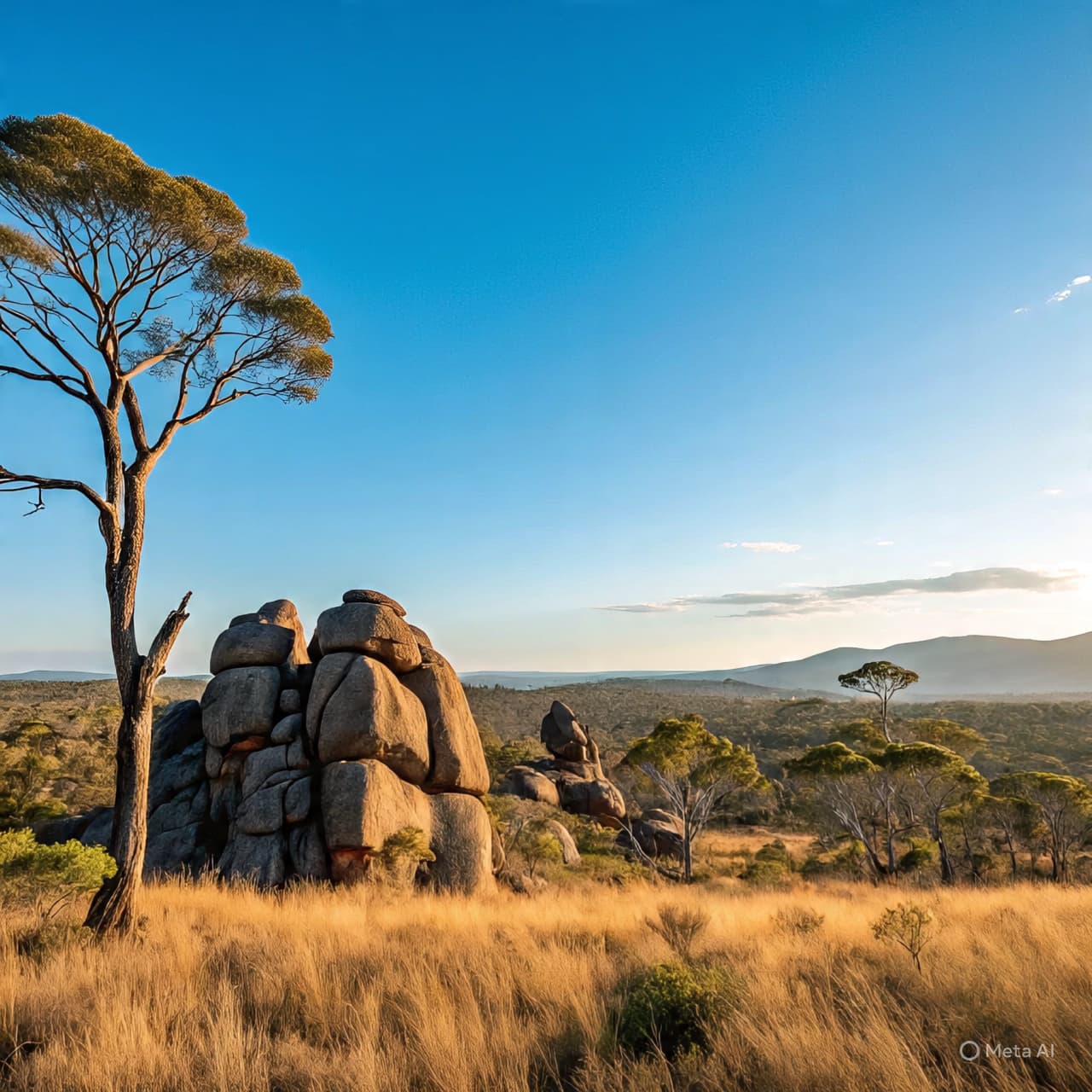
Morning in the savannas of Far North Queensland often begins with the slow warmth of sunlight spreading across rocky outcrops and tall grass. The landscape appears timeless—granite ridges, scattered eucalyptus, and long horizons that seem to hold more sky than land. Yet beneath that familiar surface, the region continues to reveal quiet surprises.
Scientists have recently identified three previously unknown species of rock monitor lizards living among the rugged formations of northern Australia’s savanna country. The discovery adds new chapters to the story of Australia’s remarkable reptile diversity and reminds researchers that even well-studied landscapes can still conceal undiscovered life.
The newly described reptiles belong to the broader family of monitor lizards, a group that includes the well-known Komodo dragon as well as Australia’s own goannas. Members of the genus Varanus are known for their agility, intelligence, and ability to adapt to a wide range of environments—from deserts to forests and rocky escarpments.
In this case, the newly identified species inhabit isolated rocky habitats scattered across Queensland’s northern savanna. For years, these lizards were believed to belong to already known species. Only through detailed genetic analysis and careful comparison of physical characteristics did researchers begin to realize that the animals represented distinct evolutionary lineages.
Such discoveries often unfold gradually. Field researchers observe subtle differences in color patterns, body proportions, or habitat preferences. Over time, DNA studies confirm that populations separated by mountains, rivers, or geological formations have evolved independently for thousands—or sometimes millions—of years.
The savanna landscapes of northern Australia provide ideal conditions for this kind of hidden diversity. Rocky plateaus and escarpments create natural barriers that isolate animal populations from one another. Over long stretches of geological time, these separated groups can develop unique traits, eventually becoming entirely new species.
For conservation scientists, discoveries like this carry both excitement and responsibility. Identifying new species helps researchers better understand ecosystems and the delicate relationships that sustain them. It also highlights the importance of protecting remote habitats where biodiversity may still be largely undocumented.
Australia already hosts one of the world’s richest reptile faunas, and monitor lizards form a particularly distinctive part of that natural heritage. Agile hunters capable of climbing cliffs and navigating rocky terrain, they play important ecological roles as predators within their environments.
The discovery of three new rock monitor species in Far North Queensland adds another layer to that story. Each species represents a lineage that has quietly adapted to its landscape over countless generations, surviving in the heat and shelter of stone ridges that few people ever visit.
Across the wide savannas, the rocks remain warm under the tropical sun, and life continues its patient rhythms. With each careful study and expedition, scientists are reminded that even in places that appear familiar, the natural world still holds mysteries waiting to step out from the shadows of stone.
Published by Banx Network. This article is part of the Banx decentralized media programme, powered by the BXE token on the XRP Ledger.