There are currents that pass through the world without leaving a trace.
They move between towers and devices, across cities and open land, carrying voices, images, and fragments of presence through space that appears otherwise still. These signals—radio waves, unseen yet constant—have become part of the atmosphere of modern life, shaping how distance is experienced without ever becoming visible.
And yet, even these quiet pathways depend on the surfaces they encounter.
Walls, buildings, and materials do not simply stand in place; they guide, reflect, absorb, and scatter the signals that move among them. In this interplay between wave and matter, small changes can alter how information travels—how quickly it arrives, how clearly it is received, how far it can go before fading.
It is within this relationship that a new development has begun to take form.
Researchers have introduced a coating made from carbon nanotubes—structures known for their strength, conductivity, and responsiveness at extremely small scales—that can influence the behavior of electromagnetic waves in ways that may support future 6G communication systems. Applied as a thin layer to surfaces, the material interacts with incoming signals, helping to manage how they are transmitted or reflected.
The idea is not to generate signals differently, but to guide them more precisely.
Future wireless technologies, particularly those envisioned for 6G, are expected to operate at much higher frequencies than current networks. These frequencies can carry more data, but they are also more sensitive to obstacles, more easily disrupted by physical surroundings. As a result, the environment itself becomes part of the communication system, shaping the path signals must follow.
In this context, materials like carbon nanotube coatings offer a way to adjust that environment.
By carefully designing the structure of the coating, researchers can influence how waves interact with surfaces—enhancing transmission in some directions, reducing loss in others, and potentially improving overall signal efficiency. The coating acts less like a passive barrier and more like an active participant, quietly shaping the flow of information through space.
The work remains in development, and much of its potential lies ahead. Questions of scalability, durability, and integration into existing infrastructure are still being explored. Yet the principle itself reflects a broader shift in how communication systems are imagined.
No longer confined to devices alone, they extend into the spaces between them.
Buildings, walls, and everyday surfaces begin to take on new roles, becoming part of a larger network that is both physical and invisible. In such a system, performance is not determined solely by transmitters and receivers, but by the environments that connect them.
There is a certain subtlety in this change.
The coating itself is nearly imperceptible, a thin layer applied without altering the appearance of what lies beneath. And yet, within that thinness, it carries the possibility of reshaping how signals move—guiding them with greater precision through a world that is already filled with unseen motion.
Researchers report that carbon nanotube-based coatings can improve the control and efficiency of high-frequency electromagnetic waves, offering potential benefits for next-generation 6G networks. Further studies are underway to evaluate performance in real-world conditions and to explore practical deployment at scale.
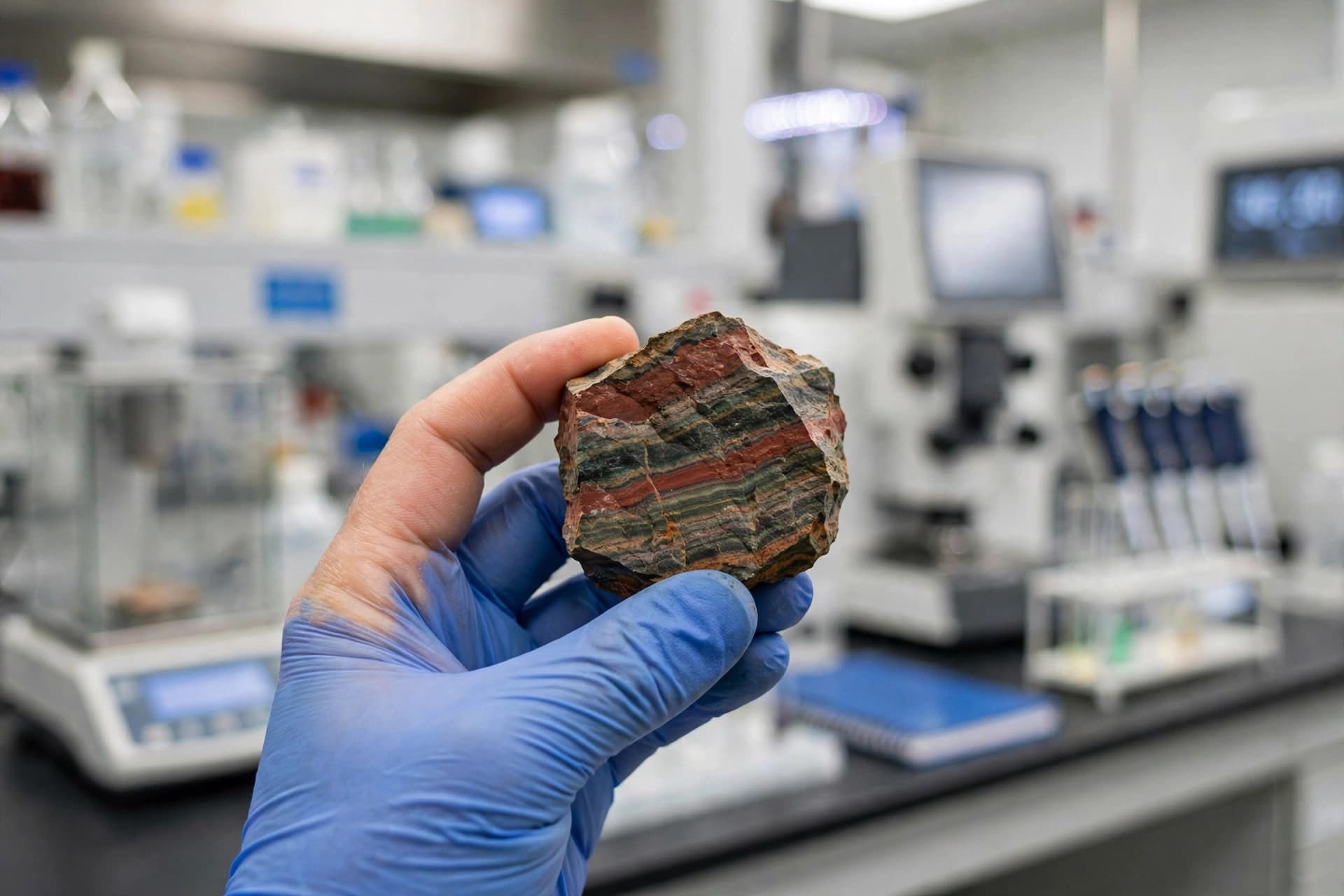
Disclaimer: These visuals are AI-generated for illustrative purposes and do not represent actual photographs.
Source Check Nature IEEE Spectrum MIT Technology Review Science South China Morning Post
Published by Banx Network. This article is part of the Banx decentralized media programme, powered by the BXE token on the XRP Ledger.