Imagine orbiting Earth alone, quietly circling the blue planet at roughly 300 kilometres above the surface — a realm where silence is the rule and sound should not exist. Yet in the early hours of China’s first crewed mission in 2003, astronaut Yang Liwei reported something that defied that expectation: a rhythmic knocking sound on the outside of his spacecraft.
Yang’s journey aboard Shenzhou 5 marked China’s entry into independent human spaceflight, completing 14 orbits and about 21 hours in space. It was a historic flight, yet amid the triumph came an odd moment that has lingered in spaceflight lore. According to recollections and reports, Yang heard a knock “like tapping an iron bucket with a wooden hammer” despite the fact that sound cannot travel through the vacuum of space.
In space, sound waves require a medium — air, water, or solid — to travel, which is absent outside a spacecraft. That simple physical truth makes Yang’s experience especially curious, because no sensors on the capsule detected an external impact, and there was no visible damage or anomaly in mission telemetry to explain the sound.
Several explanations have been proposed over the years, yet none fully resolve the mystery. Some engineers point to thermal effects — the rapid heating and cooling of spacecraft materials as the capsule moves between sunlight and Earth’s shadow can cause metal panels and joints to creak or pop as they expand and contract. These internal vibrations can then transmit through the structure and become audible inside the cabin.
Another idea is that the astronaut may have heard structure-borne noise originating from within the spacecraft itself — mechanical components, docking latches, or systems cycling — rather than an actual external knock. In some spaceflights, subtle pressure changes and equipment sounds have been mistaken for external noises by crew members.
Interestingly, this phenomenon wasn’t reported just once. Crews on later Shenzhou missions — including Shenzhou 6 and Shenzhou 7 — mentioned similar knocking sounds, and Yang reportedly advised them not to be alarmed if they heard it too.
Despite decades of research and advanced instrumentation, the exact source of the knocking remains unresolved. For space scientists and enthusiasts, it stands as a reminder that even well-understood environments like low Earth orbit can still hold subtle, human-sensed mysteries — where the environment obeys strict physical laws, but individual experiences can defy easy explanation.
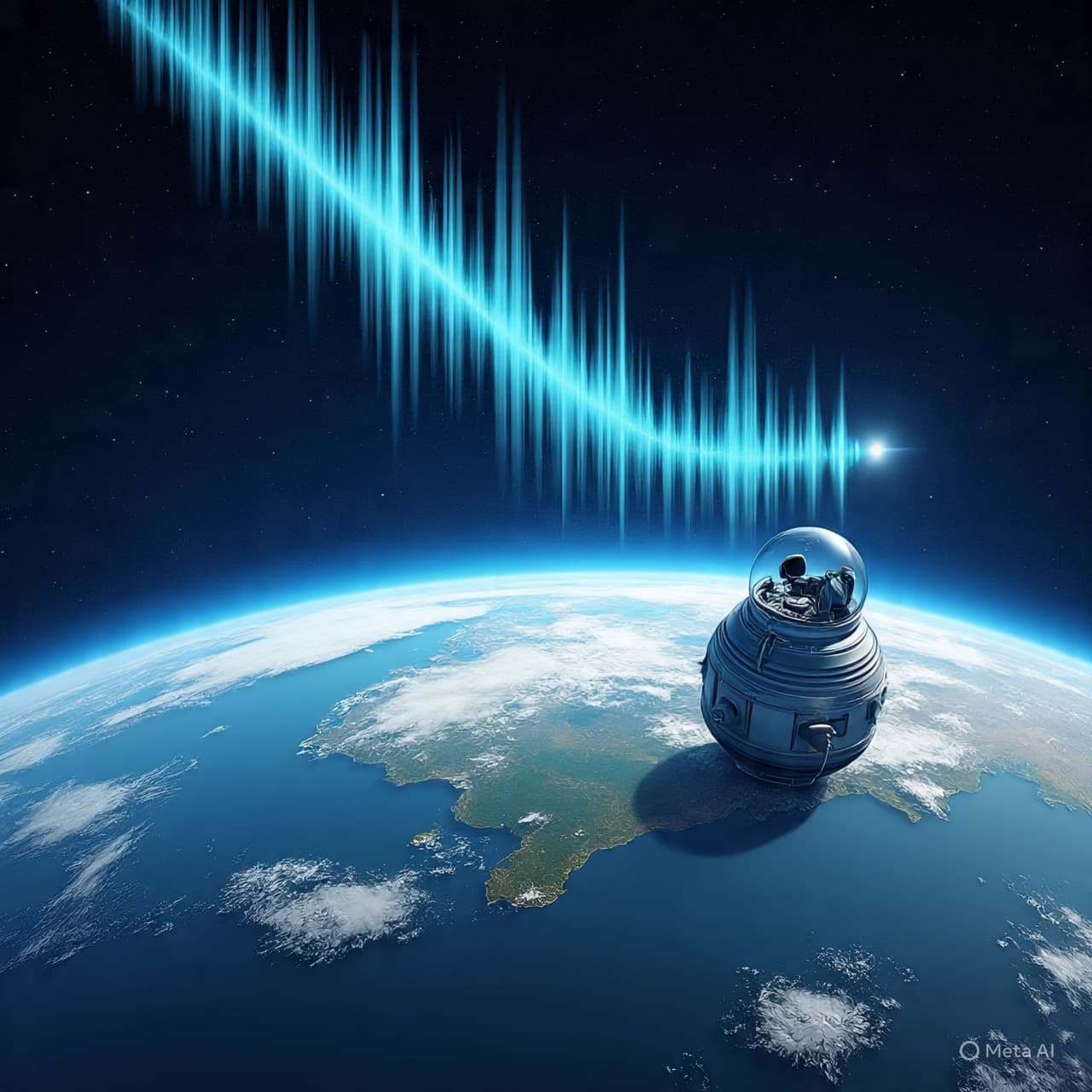
AI Image Disclaimer: Visuals are created with AI tools and are intended for conceptual depiction, not real photographs.
Sources
Indian Defence Review Glass Almanac analysis of Yang Liwei’s reported knocking experience Wikipedia entry on the Shenzhou 5 mission
Published by Banx Network. This article is part of the Banx decentralized media programme, powered by the BXE token on the XRP Ledger.