There is a particular art in reading a result against its headline, in finding in a decisive vote the seeds of a different argument. On Monday, three-quarters of Albertans voted to remain in Canada, rejecting a proposal for a future referendum on separation. The headline was unmistakable: the separatist movement had been defeated. But Paul St-Pierre Plamondon, the premier-designate of Quebec, looked past the headline to the other questions on the ballot and saw something else entirely: proof that the Canadian federation, as it stands, is no longer acceptable.
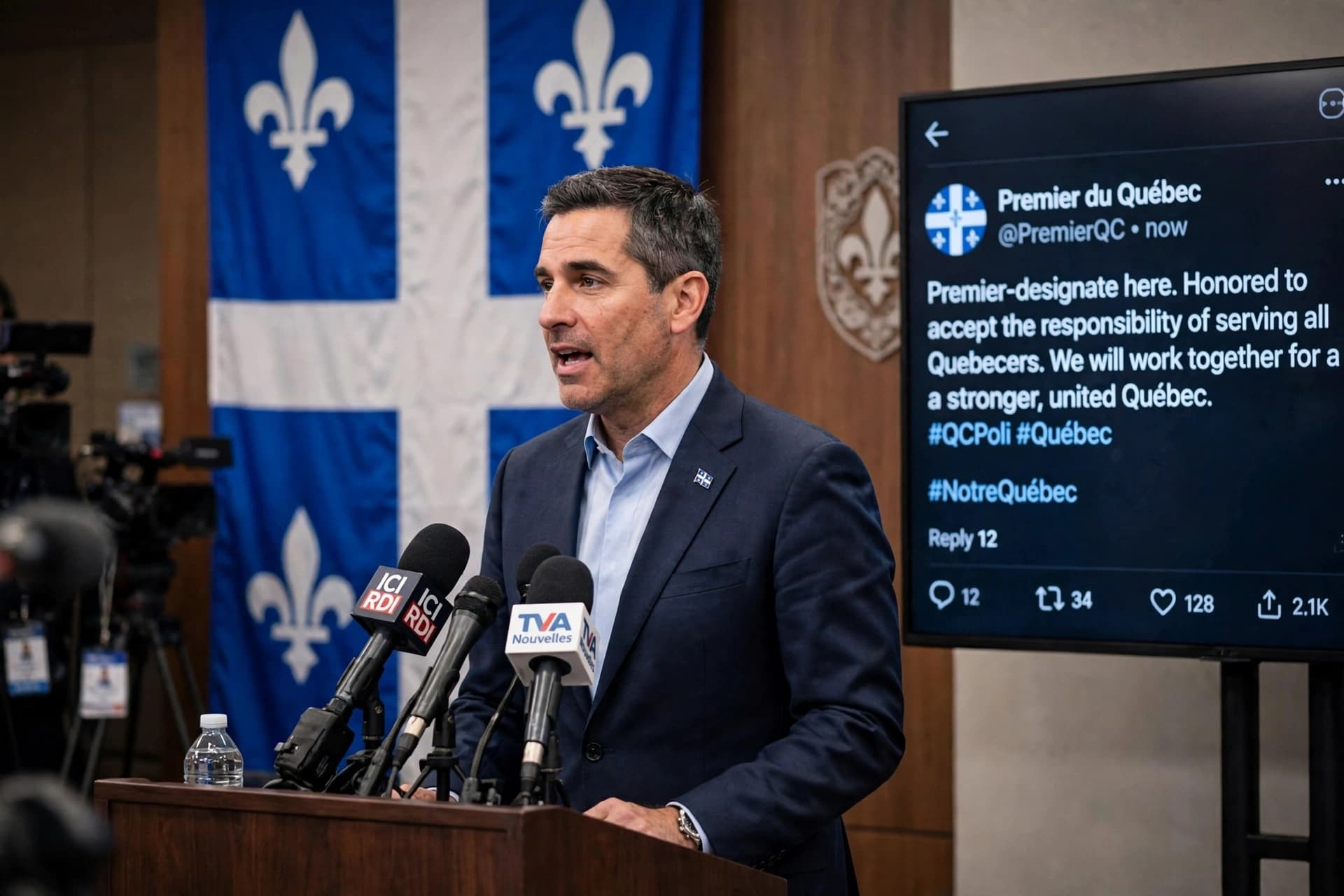
Albertans voted on ten questions in total. The first was the separation question, and it failed decisively. The other nine asked whether the province should negotiate for more powers from Ottawa—over immigration, over the appointment of judges, over areas of provincial jurisdiction. According to St-Pierre Plamondon, a majority of Albertans voted in favor of eight of those nine questions . "The message they are sending to Ottawa could not be clearer," he wrote on social media. "Canada, as it stands, is not working, and the status quo is no longer acceptable" .
The Parti Québécois leader framed the Alberta result as a vindication of a position he has held for years: that the provinces are constrained by a federal government that has become increasingly interventionist. "Like Quebecers, they see the Canadian federation as a straitjacket that prevents them from placing their priorities at the heart of their own public policies, in order to meet their own needs," he wrote . He noted that the Coalition Avenir Québec government had tried to secure more autonomy through negotiation and had achieved only "rejections and setbacks." The lesson, in his telling, is that the current approach does not work, and that a different one is required.
There is a political calculus beneath the rhetoric that is difficult to ignore. St-Pierre Plamondon has promised Quebecers a third referendum on independence, though he has said it will not be held before U.S. President Donald Trump leaves office in 2029 . His party returned to power earlier this month on that promise, and he will be sworn in as premier this week. The Alberta referendum, whatever its outcome on the separation question, offers him a rhetorical gift: evidence that another province shares Quebec's frustration with Ottawa, and that the desire for more provincial power is not a fringe position but a majority one.
Whether that reading of the Alberta result is accurate is a matter of interpretation. The nine questions were non-binding, and voters may have supported them without endorsing the broader separatist framework. The margin on some of those questions has not been publicly detailed in the available reporting. What is clear is that the referendum was designed to send a message about federalism, and that the message received by at least one premier-designate was precisely the one the question's authors intended.
For St-Pierre Plamondon, the Alberta result is an opportunity to build a coalition of provinces that feel constrained by Ottawa. He has offered to collaborate with "other provinces that come to the same conclusion as Quebec and Albertans: change is needed" . Whether any province takes him up on that offer remains to be seen. What is certain is that the conversation about the shape of the Canadian federation, which the Alberta referendum was designed to provoke, has now been taken up by a leader whose ultimate goal is not reform but independence.
AI Image Disclaimer: The images accompanying this article are generated by artificial intelligence and are intended for illustrative purposes only.
Sources: The Canadian Press, Toronto Sun, The Globe and Mail
Published by Banx Network. This article is part of the Banx decentralized media programme, powered by the BXE token on the XRP Ledger.