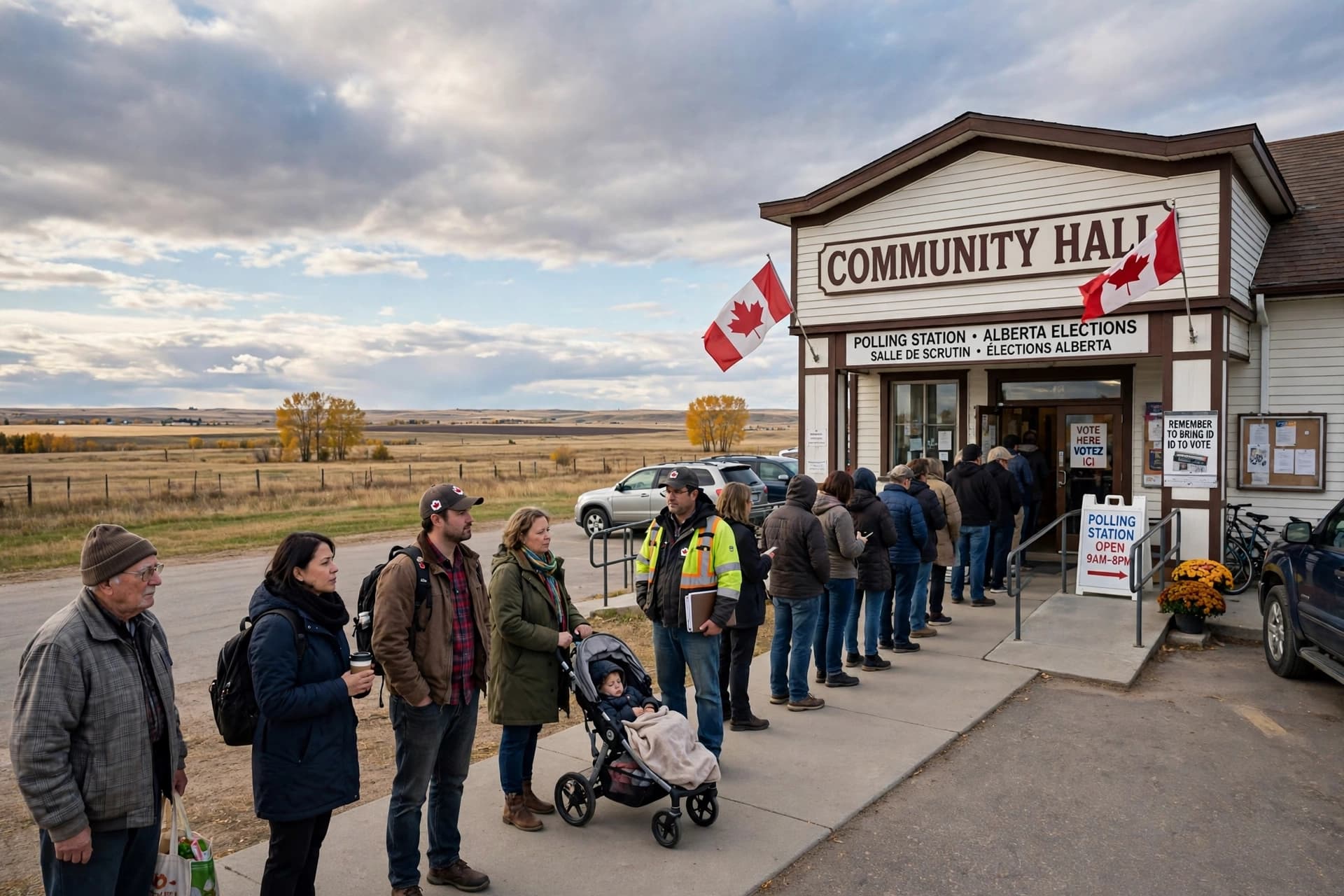
There is a particular kind of clarity that arrives when a question is asked plainly and answered decisively. For years, the conversation about Alberta's place in Canada had simmered in petitions, in grievances, in the occasional flourish of separatist rhetoric that seemed louder than its numbers. On Monday, that conversation was put to a vote, and the answer was not close. Albertans rejected the proposal to begin the process of separation, with more than seventy-five percent voting to remain a province of Canada.
CBC News projected the result shortly after polls closed, with 75.5 percent of voters choosing to stay and 24.5 percent in favor of holding a binding referendum on separation, based on results from 4,613 of 5,584 polls . The margin was wide enough that even the most committed separatists acknowledged the scale of the defeat, though some vowed the conversation was not over.
The referendum was not a simple yes-or-no on independence. The ballot asked whether Albertans wanted to give the provincial government a mandate to hold a binding separation referendum, a two-step process that would have prolonged the uncertainty . By rejecting that mandate, voters closed a door that had been opened by Premier Danielle Smith earlier this year, when she added the question in response to citizen petitions .
Prime Minister Mark Carney, who campaigned personally in the province in the final days, described the result as "absolutely clear." He said it was "a vast majority in favour of staying in Canada, and now is a time to work together for all Albertans and all Canadians" . Intergovernmental Affairs Minister Dominic LeBlanc called it a "very decisive decision from Albertans for the unity of Canada" .
The result was not a surprise. Polls had consistently placed support for separation below twenty-five percent, and the province's political establishment, including much of its business community, had lined up against the measure. But the vote still carried symbolic weight. It was, in part, a test of whether the grievances that fueled the separatist movement—frustration with federal environmental regulations, a sense that Alberta's resource wealth was being constrained—could translate into electoral traction. The answer suggested they could not, at least not yet.
For the separatist movement, the defeat was a reckoning. Keith Wilson, who led the Let Alberta Decide campaign, told supporters that the campaign had concluded but the conversation about Alberta's future would continue . The movement had drawn attention from outside the province, including from American figures who saw in Alberta a natural ally, but that attention did not translate into votes .
There is a practical question now for the federal government and the province. The referendum asked Albertans what they wanted, and they answered. What comes next is a matter of whether the grievances that prompted the question are addressed with the same seriousness that the vote itself commanded. Carney spoke of "high ambition" and working together. The words are easy. The work is not.
AI Image Disclaimer: The visuals in this article are AI-generated and are intended for illustrative purposes only.
Sources: CBC News, The Canadian Press, AFP (via Agerpres), CTV News
Published by Banx Network. This article is part of the Banx decentralized media programme, powered by the BXE token on the XRP Ledger.