There is a principle so old it predates the republic itself: that the ballot is cast in secret, and that the counting of it is not a matter for the federal government to interfere with. On Sunday, a federal judge in Alaska reaffirmed that principle, dismissing a lawsuit brought by the Trump administration that sought to preemptively challenge the results of the state's U.S. Senate race if the Republican incumbent lost . The case was unusual not only in its timing—before a single vote had been certified—but in its premise: that a federal court should intervene in a state election on the speculation of confusion caused by two candidates sharing a similar name.
The candidates in question are Senator Dan S. Sullivan, the Republican incumbent, and Daniel J. Sullivan Jr., a retired teacher running without party affiliation. The lawsuit, filed at President Trump's direction, asked the court to block certification of the results if Senator Sullivan lost but would have won had all votes cast for Daniel J. Sullivan gone to him. It also demanded an investigation into whether voters who selected the retired teacher actually intended to vote for the senator . Chief Judge Sharon Gleason, an Obama appointee, wrote that she did not see how the federal government's proposed solution—separating out ballots and investigating voter intent—could work given that the right to a secret ballot is a core principle of American democracy .
The ruling was not close, in the sense that the legal reasoning was straightforward. The Constitution places control of elections in the hands of the states, and legal observers had given the case little chance of succeeding from the start . Judge Gleason found that the federal government lacked the ability to bring the lawsuit, and that the requested relief would likely violate Alaskan voters' right to a secret ballot. "The absence of any explanation from the United States as to how its requested relief could redress its alleged injury while simultaneously maintaining the secrecy of the ballot is telling," she wrote . The Justice Department has indicated it will appeal.
The context of the lawsuit matters. Alaska's Republican Party had previously tried to keep Daniel J. Sullivan off the ballot, arguing that he was a spoiler recruited by Democrats to siphon votes from the incumbent. The Alaska Supreme Court rejected that effort in June, ruling that Sullivan Jr. had the right to run . A New York Times report about Democratic operatives' efforts to recruit Sullivan Jr.—which NPR has not independently confirmed—drew new attention to the allegations. Governor Mike Dunleavy, a Republican, ordered a state investigation and suggested that certification might be delayed depending on its findings . The federal lawsuit was, in effect, an attempt to federalize a dispute that had already been litigated in state court.
Voting rights groups that intervened to defend Alaska against the lawsuit welcomed the ruling. "DOJ's attempt to throw out Alaska's election results before a single ballot was counted was lawless from the start, and the court saw it for exactly what it was," said Sophia Lin Lakin of the ACLU's Voting Rights Project. "It was a reckless waste of taxpayer money aimed at silencing hundreds of thousands of Alaska voters" . The statement was sharp, but the sentiment behind it reflected a broader concern: that the machinery of federal power should not be used to preemptively undermine an election before its outcome is known.
Senator Sullivan himself said on Sunday that he would accept the results, win or lose . That statement, unremarkable as it should be, carried weight in a political moment when the peaceful transfer of power and the legitimacy of elections have been questioned at the highest levels. The senator's willingness to accept the outcome stands in contrast to the lawsuit filed on his behalf, a lawsuit that presumed, before any votes were counted, that a loss would be the product of confusion rather than choice.
The ruling does not end the controversy. The state investigation continues, and the Justice Department's appeal will proceed. But the immediate effect is clear: Alaska's election will be certified according to Alaska's rules, and the federal government will not be permitted to stop it on the speculation of voter confusion. The judge's decision is a reminder that elections are not abstractions to be managed from Washington. They are the accumulated choices of individual voters, cast in private and counted in public, and the law protects that process even when the outcome is uncertain.
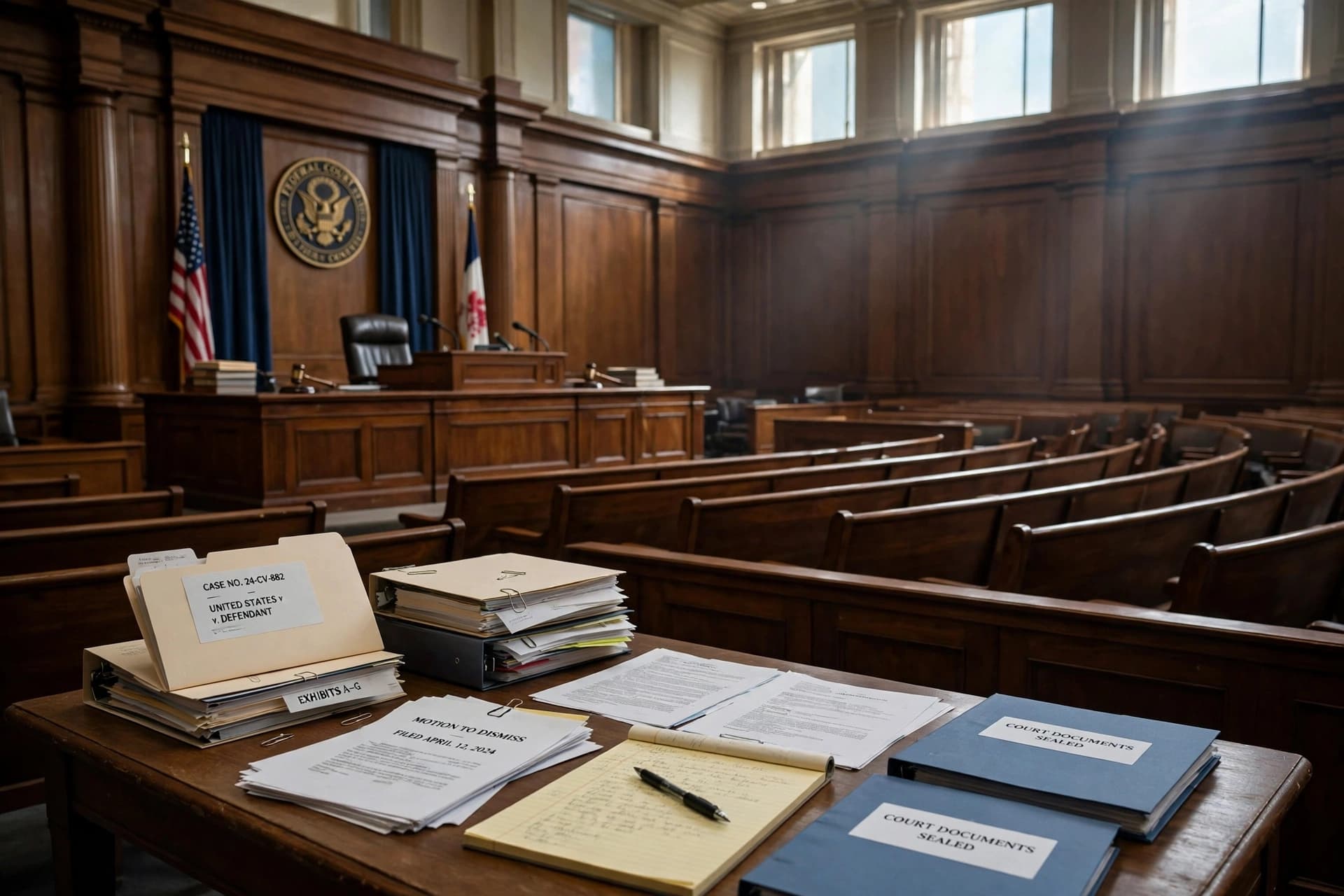
Image Disclaimer: This article's accompanying image is an AI-generated illustration and does not represent the actual courtroom or individuals involved.
Sources: The New York Times, The Washington Post, NPR, Texas Public Radio, Maine Public
Published by Banx Network. This article is part of the Banx decentralized media programme, powered by the BXE token on the XRP Ledger.