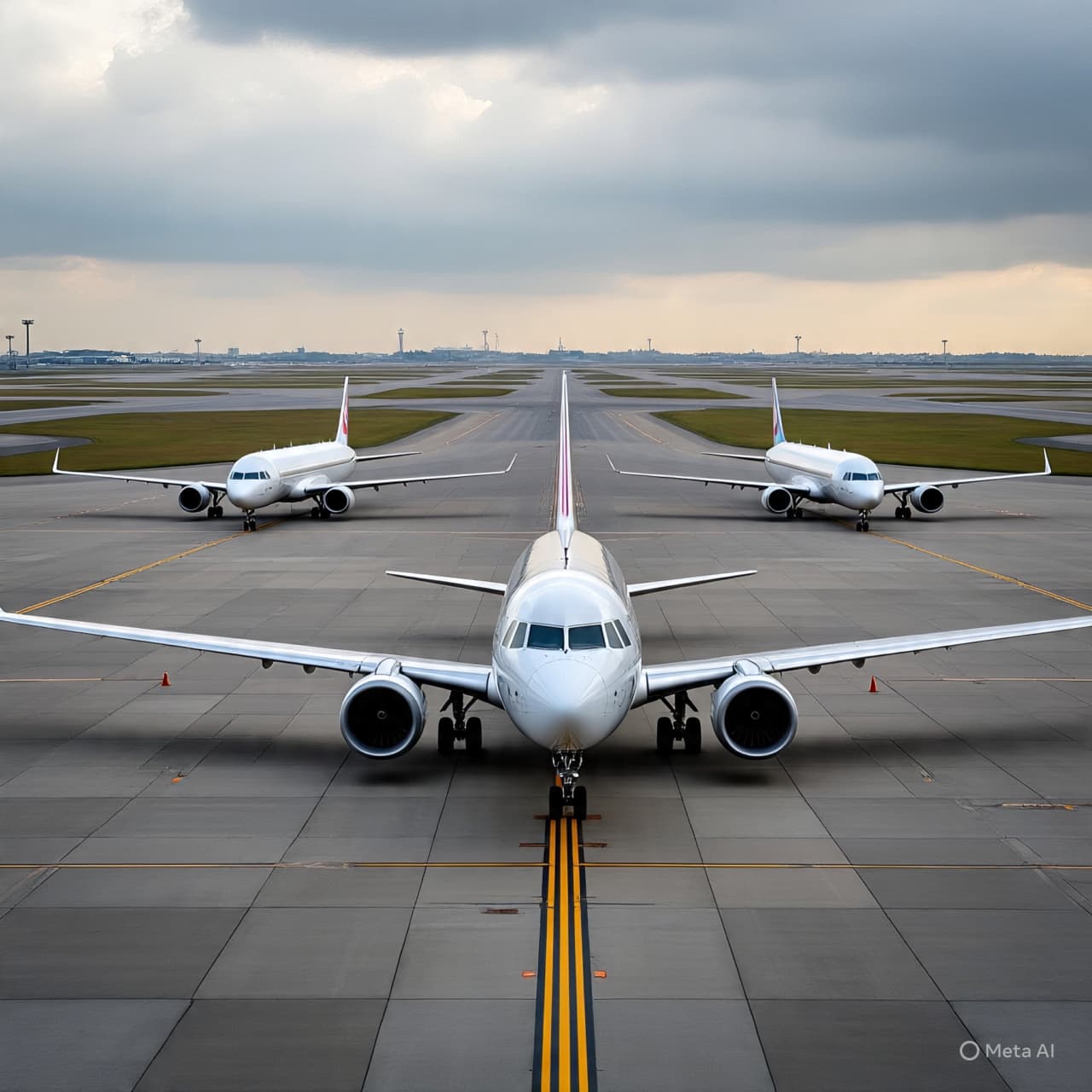
Travel often begins with a simple expectation: that the journey will move forward. Airports are designed around that quiet promise, their halls filled with the rhythm of departures and arrivals that rarely pause for long. Yet sometimes events far beyond the terminal walls can interrupt that flow, leaving thousands of travelers suspended between destinations.
Across the Middle East this week, that pause has become a reality for many passengers as escalating conflict has forced the closure of large sections of regional airspace. Flights have been canceled or rerouted across several major aviation corridors, turning some of the world’s busiest transit hubs into temporary waiting rooms for travelers whose plans suddenly unraveled.
For people midway through international journeys, the disruption arrived with little warning. Departure boards began to fill with cancellation notices, and the steady movement of aircraft across the sky slowed to an unfamiliar stillness. Airports that normally serve as brief stopovers for connecting flights became places where passengers waited hours—or even days—searching for new routes home.
The Middle East occupies a central position in global aviation, linking Europe, Asia, Africa, and Australia through a network of highly efficient transit hubs. Cities such as Dubai, Doha, and Abu Dhabi have long served as crossroads for long-haul flights. When conflict narrows the airspace around the region, the effects ripple quickly across international travel.
Airlines responded by suspending services, diverting aircraft to longer routes, or grounding flights entirely while safety conditions were reassessed. These decisions are made with caution; modern aviation relies heavily on predictable air corridors, and sudden geopolitical risks can force immediate adjustments.
For travelers on the ground, however, those adjustments can feel disorienting. Long lines formed at airline service desks as passengers tried to rebook flights or secure accommodation for unexpected overnight stays. Seats on alternative routes disappeared quickly, and the complexity of global flight schedules meant that replacement journeys were not always available.
Some travelers opted to reroute through entirely different regions, hoping to bypass the affected airspace. Others chose to remain where they were, waiting for airlines to resume operations once conditions improved. In many airports, families and solo travelers alike gathered around power outlets and information screens, quietly tracking news updates and airline announcements.
Airlines and airport authorities attempted to assist where possible. Emergency accommodation, rebooking options, and travel waivers were offered in some cases. Yet the sheer scale of the disruption meant that solutions often arrived gradually rather than immediately.
The situation also highlights how interconnected modern travel has become. A flight canceled in one part of the Middle East can disrupt schedules thousands of miles away, affecting aircraft rotations, crew availability, and passenger connections around the globe.
For many stranded travelers, the experience has been an unexpected reminder of how closely global mobility is tied to geopolitical stability. The routes that connect continents pass through regions where political tensions can reshape the skies overnight.
Still, airports remain places of transition, even during uncertain moments. Conversations begin among strangers sharing the same delayed flights. Travelers exchange advice about alternative routes and update family members waiting at the other end of their journeys.
For now, many passengers continue to wait as airlines monitor the evolving situation and gradually adjust their schedules. Their journeys, interrupted though they may be, are likely to resume when the skies reopen.
Until then, the departure boards tell a quieter story — one of patience, uncertainty, and the fragile threads that link travel to the wider world.
AI Image Disclaimer Graphics are AI-generated and intended for representation, not reality.
Sources Reuters Associated Press (AP) NBC News The New York Times Al Jazeera
Published by Banx Network. This article is part of the Banx decentralized media programme, powered by the BXE token on the XRP Ledger.