There is a particular kind of patience required when building something that has never existed before. For three years, SpaceX has launched its enormous Starship vehicle from the southern tip of Texas, each flight a rehearsal for a performance that had not yet begun. The rockets flew, sometimes failed, often fell, but always returned to the drawing board. On Monday morning, the rehearsal ended.
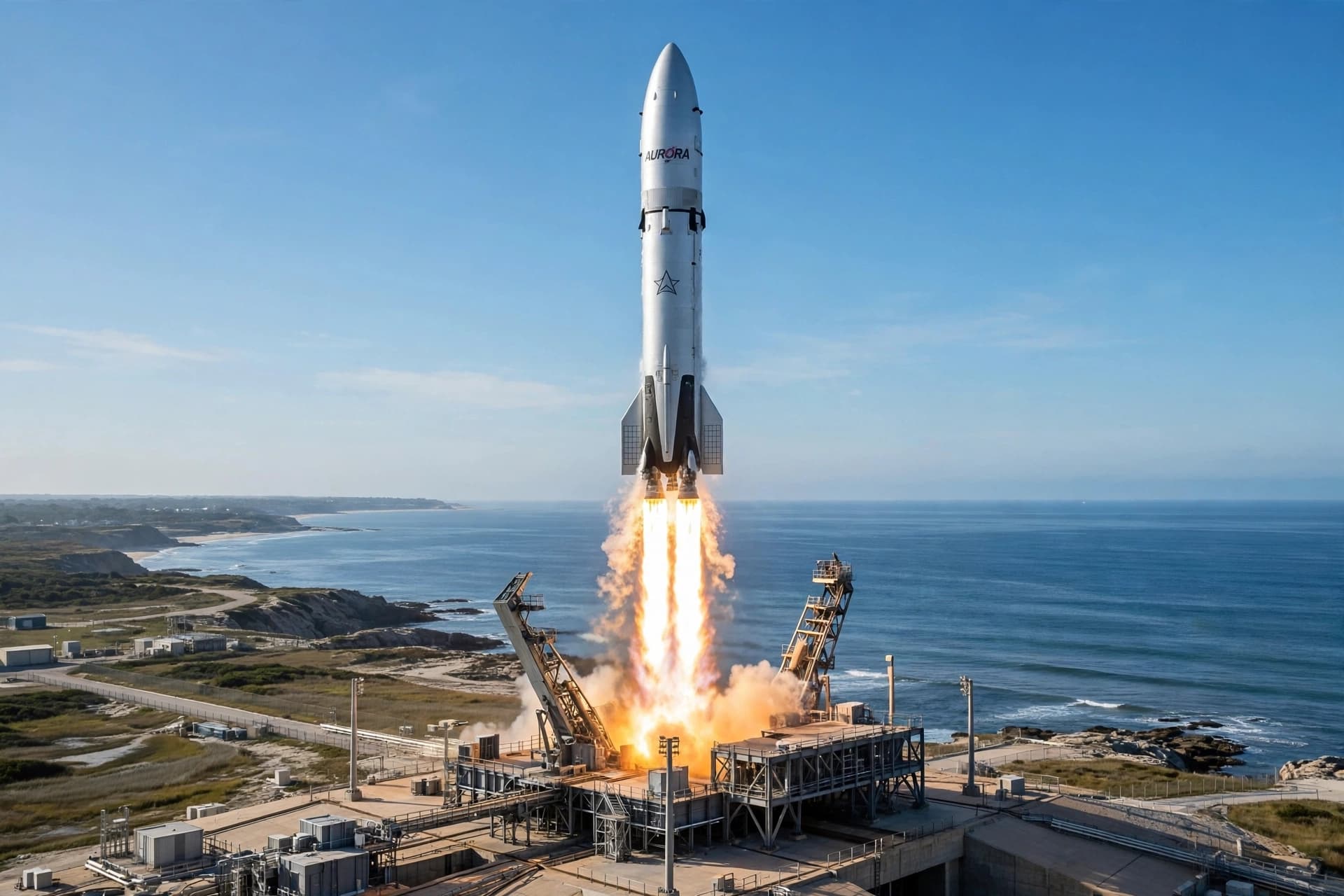
Starship lifted off from Starbase at 7:48 a.m. Central Time, its thirty-three Raptor engines igniting in sequence to push the 124-meter vehicle skyward. For the first time, the spacecraft achieved orbital velocity—roughly 17,500 miles per hour—and settled into a trajectory that would carry it around the Earth before splashing down in the Pacific Ocean near Chile.
The flight was not without its moments of tension. One of Starship's six engines shut down prematurely during ascent, prompting flight controllers to weigh whether the orbital insertion burn should proceed. After several minutes of deliberation, they determined that the remaining engines and systems could safely complete the mission. "Starship is orbital," mission control announced, and the room erupted.
The spacecraft carried twenty-six Starlink V3 satellites, the first operational payload for Starship. Each satellite is designed to add roughly one terabit per second of capacity to the Starlink network—a figure SpaceX says is about ten times what a Falcon 9 launch of older satellites provides. The satellites deployed one by one, drawing cheers from the crowds gathered at the launch site.
Super Heavy, the first-stage booster, separated on schedule and splashed down in the Gulf of Mexico rather than attempting a return to the launch tower. SpaceX has been methodical about the catch maneuver, wanting to ensure the vehicle's reliability before bringing it back over land. "Our popularity would diminish very rapidly" if debris rained on populated areas, Elon Musk remarked earlier this month.
The 407-foot rocket was designed from the outset to be fully reusable, a goal that, if achieved, would fundamentally alter the economics of space access. SpaceX recovered the previous Starship from the Indian Ocean in July, and engineers modified the heat shield on this flight based on hands-on inspections of that vehicle. Three of the deployed Starlink satellites carried cameras to capture imagery of the heat shield during reentry, feeding data into future iterations.
For NASA, the stakes extend beyond SpaceX's commercial ambitions. The agency has selected Starship as a human landing system for the Artemis program, with a docking demonstration planned as soon as next year. The Artemis IV mission, slated for no earlier than 2028, would see astronauts return to the lunar surface in either Starship or Blue Origin's Blue Moon lander—whichever is ready first.
The path to this moment has not been linear. Previous Starship flights ended in explosions, uncontrolled spins, and hard splashdowns. The vehicle has been redesigned, rebuilt, and relaunched. Monday's success does not erase those failures; it contextualizes them as the necessary steps of a development process that has always been more iterative than the public might prefer.
The next Starship will attempt to return to the launch tower, caught by mechanical arms that have already proven capable with the Super Heavy booster. If that succeeds, Musk has suggested the vehicle could be reflown by year's end. The orbital milestone, significant as it is, remains a waypoint rather than a destination.
AI Image Disclaimer: All visual materials associated with this article are generated by artificial intelligence and are not actual photographs.
Sources: ABC News (Australia), Associated Press, Axios, The Guardian, Aerospace Global News, Maine Public (NPR)
Published by Banx Network. This article is part of the Banx decentralized media programme, powered by the BXE token on the XRP Ledger.