
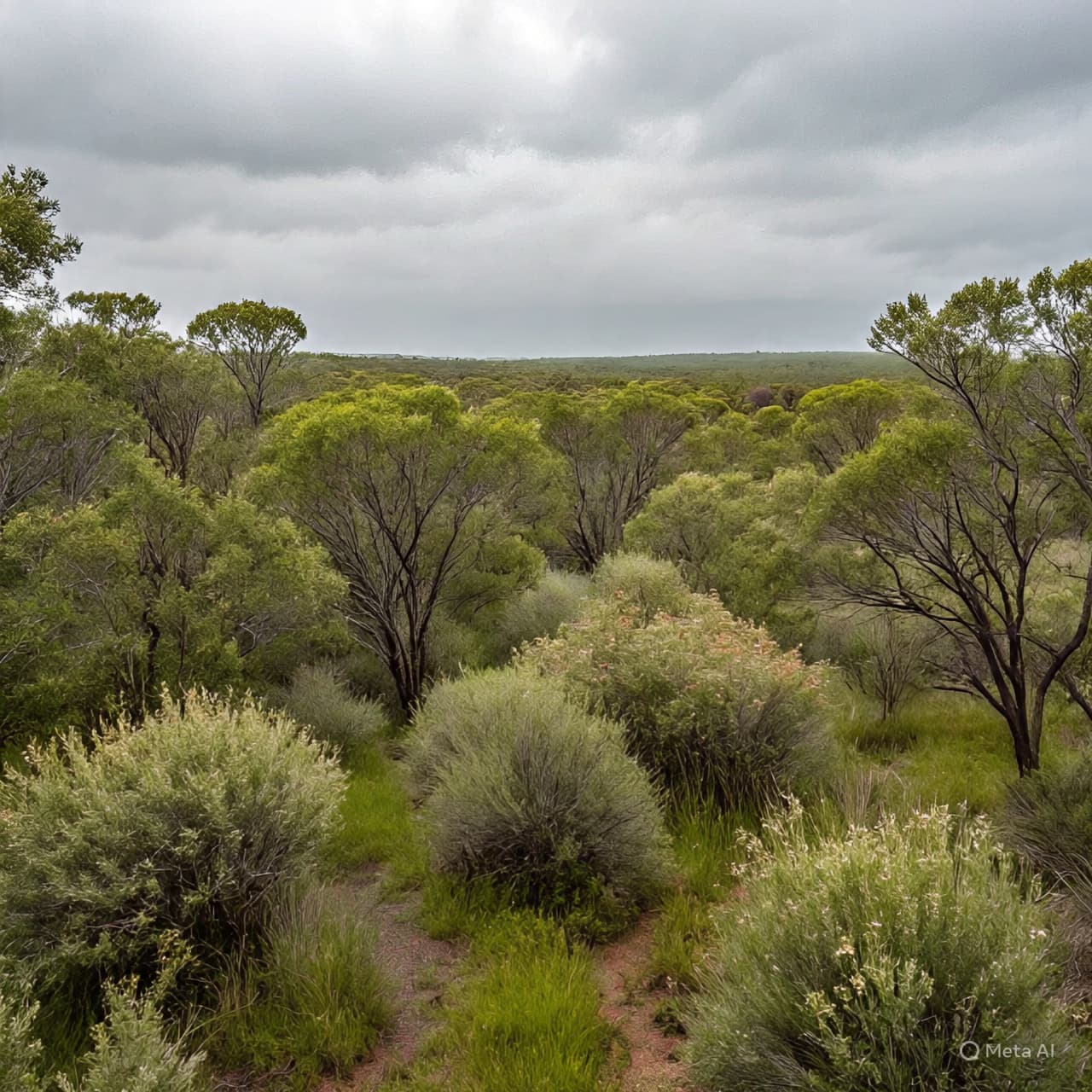
For much of the year, the Australian interior stretches outward in tones of red and ochre, its vastness defined by dryness and distance. The land carries a stillness that feels enduring, shaped by cycles of scarcity that have persisted for generations.
But sometimes, those cycles shift.
Recent periods of heavy rainfall have altered parts of the so-called “Red Centre,” introducing a layer of green across terrain more often associated with dust and heat. Vegetation, dormant beneath the surface, responds quickly when conditions allow. Grass emerges, wildflowers appear, and the landscape takes on a texture that feels both unfamiliar and fleeting.
The transformation is striking not because it is permanent, but because it is not. Scientists and environmental observers note that such changes highlight the variability inherent in climate systems. Rainfall patterns, influenced by broader atmospheric conditions, can bring sudden abundance to regions long defined by scarcity.
Water collects in temporary channels, soil absorbs moisture, and ecosystems respond in interconnected ways. Insects, birds, and other wildlife adjust their patterns, taking advantage of conditions that may last only weeks or months.
Yet beneath this moment of renewal lies an understanding of impermanence. The desert does not cease to be a desert. It shifts, briefly, before returning to its more familiar state.
These fluctuations offer insight into both resilience and fragility. The land is capable of rapid transformation, but it is also dependent on conditions that are increasingly influenced by broader climatic changes.
For those who observe it, the sight of green across red earth is both a reminder and a question—of how landscapes endure, and how they may continue to change.
Published by Banx Network. This article is part of the Banx decentralized media programme, powered by the BXE token on the XRP Ledger.


