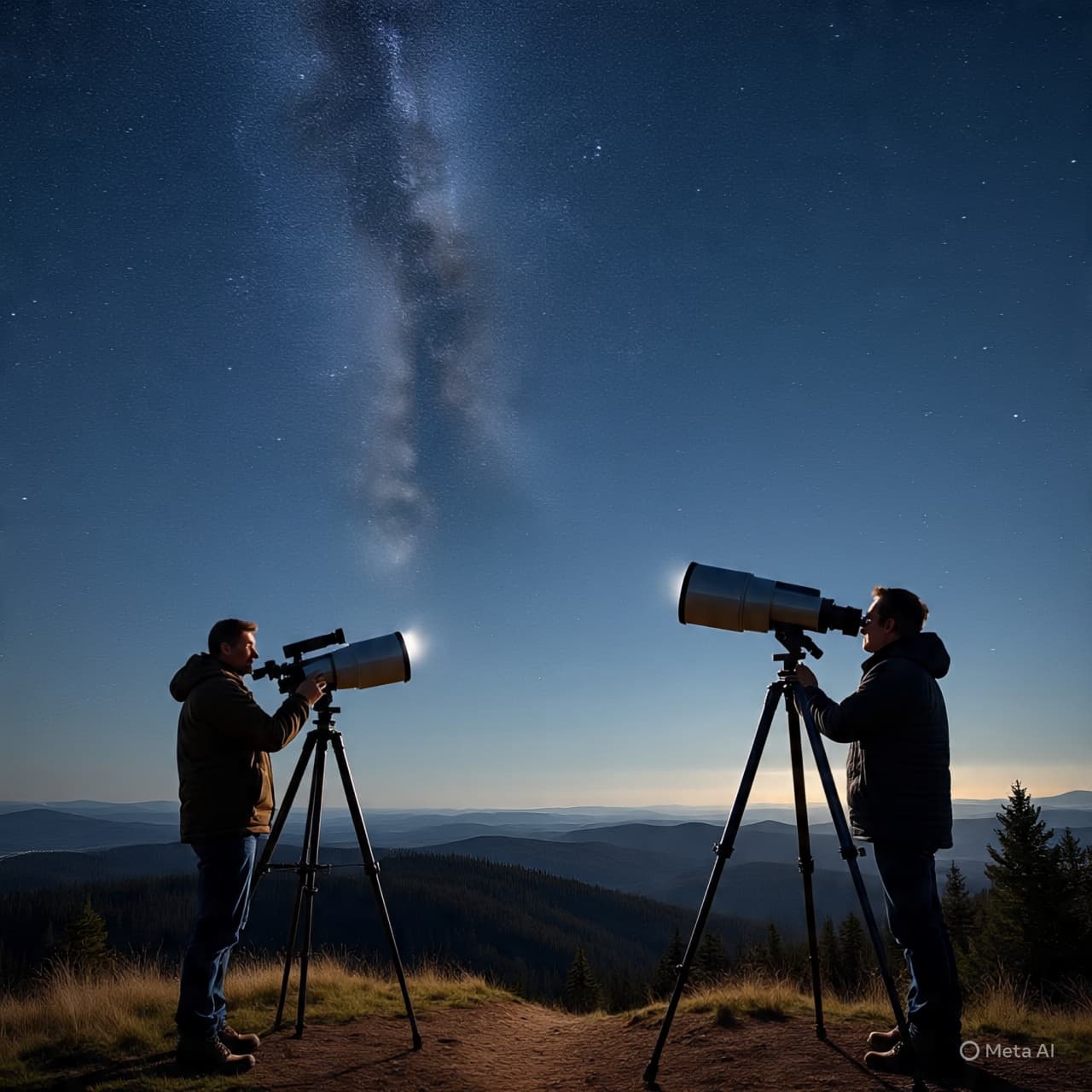
In the quiet of winter nights, the sky offers a spectacle of motion, light, and distance. Between January 9 and 18, observers can trace the paths of planets, watch the Moon traverse constellations, and glimpse the subtle glow of distant star clusters. Each night presents a shifting canvas, reminding us that the cosmos is never static, and our perception of it is shaped by time, motion, and perspective.
The Moon continues its march through familiar constellations, casting shadows over icy landscapes while providing a guide for skywatchers. Planets move against the backdrop of stars, offering opportunities to spot Jupiter’s brilliance or Saturn’s subtle glow. In darker skies, winter constellations—Orion, Taurus, and Gemini—anchor the view, their familiar shapes punctuated by bright stars and faint nebulae, some of which can be glimpsed even with modest telescopes.
Meteor activity, though limited in this period, still offers moments of surprise for patient observers. Clear nights reward those who scan the heavens with faint streaks of light, a reminder that our planet is embedded in a shower of cosmic debris, constantly intersecting with material from the solar system.
Beyond specific events, these nights encourage reflection on scale and temporality. The movement of planets, the cycles of the Moon, and the enduring glow of distant stars invite us to consider the immense distances and forces that shape the sky. Each glance upward becomes an opportunity to connect with phenomena unfolding on scales far larger than human lifetimes.
In practical terms, between January 9 and 18, skywatchers can follow the Moon through constellations, observe bright planets, and enjoy winter star patterns. The week offers accessible opportunities to explore celestial movement and appreciate the rhythms of the night sky.
AI Image Disclaimer Visuals are AI-generated and serve as conceptual representations.
Published by Banx Network. This article is part of the Banx decentralized media programme, powered by the BXE token on the XRP Ledger.