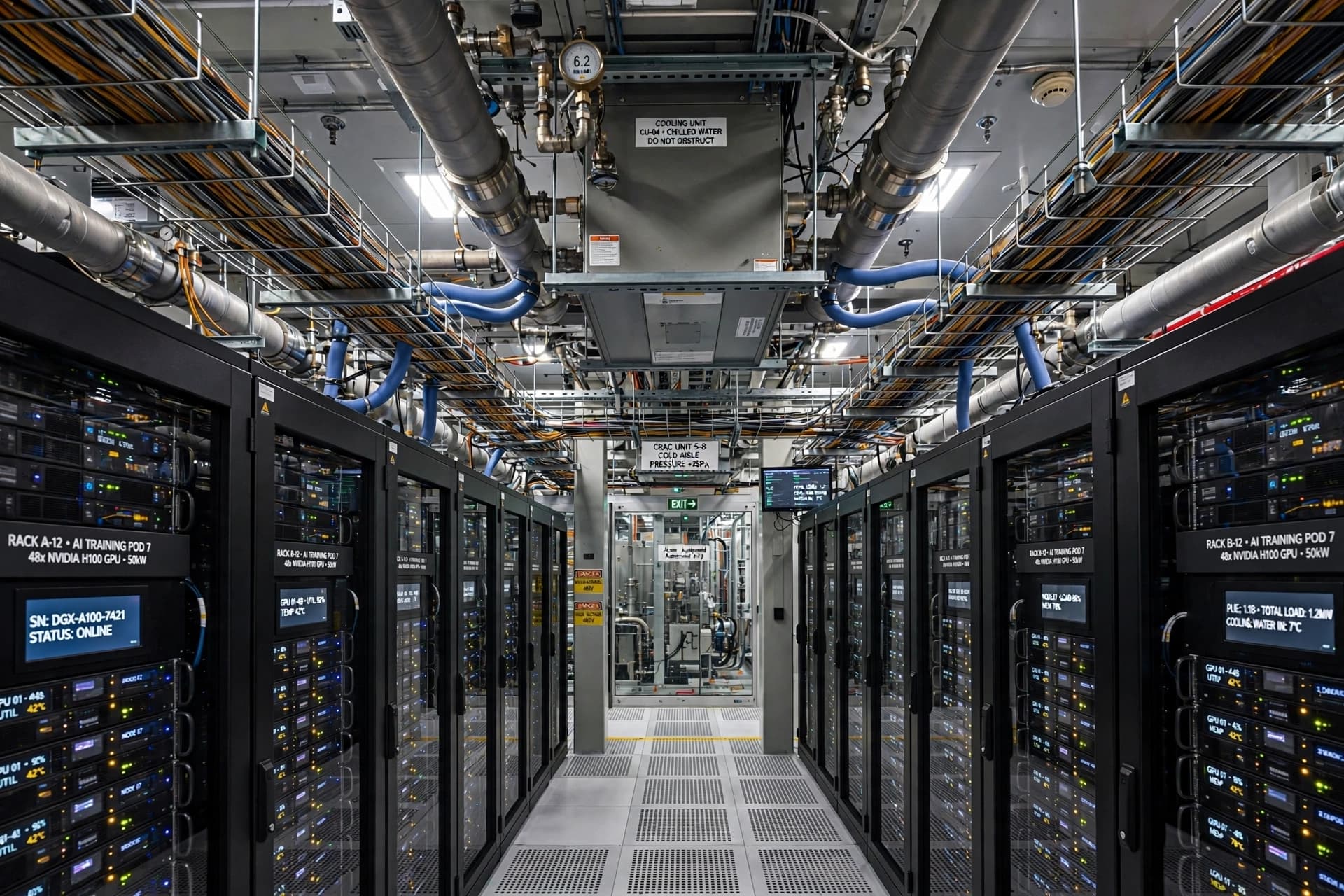
Along Virginia’s roads, the future of computing has taken physical form. Behind large walls and security gates, rows of machines process information that may travel across the world in fractions of a second. But as artificial intelligence expands, the buildings supporting that digital world are becoming increasingly visible.
Virginia, home to the world’s largest concentration of data centers, announced a new framework on September 18 intended to increase transparency and introduce additional environmental and commercial controls on future developments.
The framework includes restrictions on nondisclosure agreements for data-center projects of 25 megawatts or larger. The stated aim is to provide communities with greater visibility into major developments and their potential effects.
Energy is another central element. Virginia plans to encourage data centers to use renewable sources such as solar and wind for backup power rather than relying exclusively on conventional generators powered by natural gas or diesel.
The issue has become increasingly relevant because modern data centers can require large amounts of electricity. Artificial-intelligence systems, particularly large computing workloads, require extensive processing capacity, creating demand for facilities capable of operating thousands of servers simultaneously.
That demand has brought data centers into conversations about power infrastructure, land use and environmental management. Similar discussions are occurring in other U.S. states as communities consider how rapidly expanding AI infrastructure fits within existing electricity and development systems.
Virginia’s framework does not mean that existing data centers will simply disappear. Instead, the measures primarily address how future projects are reviewed, disclosed and powered, with some portions requiring approval from state legislators next year.
The changes illustrate the physical side of the artificial-intelligence economy. Much of AI appears to exist in software, screens and cloud services, yet every digital interaction ultimately depends on hardware, electricity, cooling systems and buildings.
For technology companies, infrastructure providers and local communities, that physical layer is becoming increasingly important. Expansion requires land and power, while communities must consider how new facilities fit into existing roads, utilities and surrounding neighborhoods.
Virginia’s latest measures therefore place the data-center industry within a broader conversation about how digital infrastructure develops. The technology may continue moving quickly, but the buildings supporting it remain part of a physical landscape governed by energy systems, land and local communities.
AI Image Disclaimer
The accompanying visuals were generated with AI and are conceptual illustrations of data-center infrastructure in Virginia.
Sources
Reuters The Verge Virginia state government
Published by Banx Network. This article is part of the Banx decentralized media programme, powered by the BXE token on the XRP Ledger.