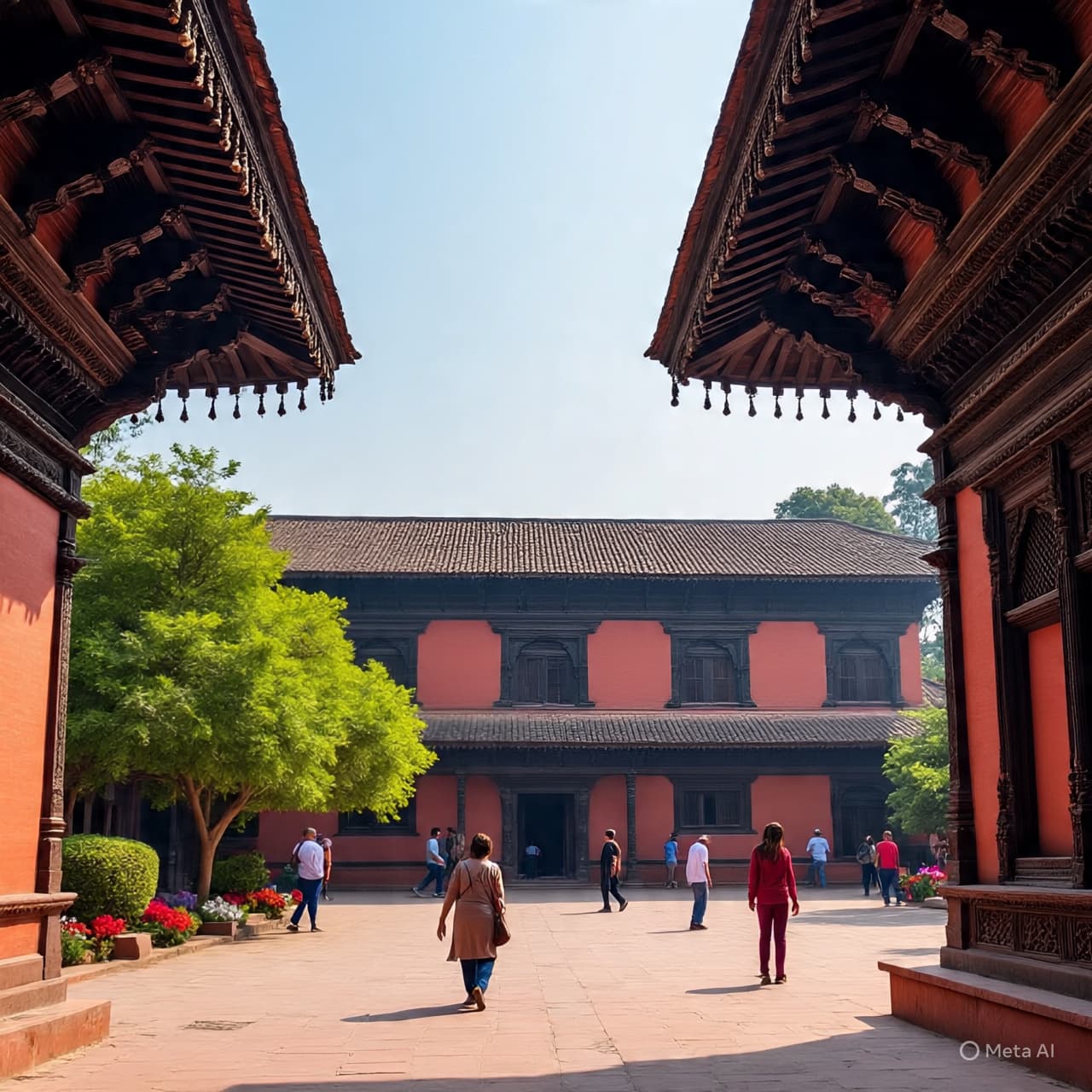
In Kathmandu, the mornings begin with a hush that feels older than the city’s tangled wires and rising concrete. Prayer flags stir above courtyards; the Himalayas, distant and pale, hold their silence. In the narrow lanes near Durbar Square, history does not feel archived—it feels present, breathing in brick and stone. And in this season of elections, as campaign posters overlap like layers of memory, a question drifts once more through the valley: is the monarchy, cast aside nearly two decades ago, still a force in Nepal’s political imagination?
It has been almost twenty years since Nepal formally abolished its 240-year-old monarchy in 2008, declaring itself a federal democratic republic after a turbulent decade marked by civil war and mass protests. The former king, Gyanendra Shah, stepped away from the Narayanhiti Palace, which now stands as a museum—a building transformed from residence to relic. Yet institutions, once dissolved, do not always disappear from the public mind as neatly as decrees might suggest.
In recent election cycles, republican parties—chief among them the Nepali Congress and the Communist Party factions—have continued to dominate parliamentary politics. Coalition governments have formed and fractured with a regularity that feels almost seasonal. The federal structure introduced by the 2015 constitution has reshaped governance, granting provinces new authority and responsibilities. And still, amid debates about economic stagnation, youth migration, and political instability, some voices have begun to speak again of the crown.
Pro-monarchy rallies, once marginal, have drawn noticeable crowds in Kathmandu and other urban centers. Supporters argue that the monarchy once provided a symbolic anchor, a figure above party rivalries. For them, the king represents continuity and cultural identity in a country balancing tradition and rapid change. In speeches and social media posts, nostalgia mingles with frustration at corruption and frequent changes in leadership. The restoration they imagine is often constitutional rather than absolute—a ceremonial monarchy coexisting with democratic institutions.
At the same time, many Nepalis remember vividly the final years of royal rule, when direct power was seized by the palace in 2005, prompting widespread protests and international concern. The people’s movement of 2006 remains a touchstone, a reminder of how fragile and hard-won political transformation can be. For a generation that marched in those streets, the republic is not an abstract arrangement but a lived victory.
Political analysts note that while pro-monarchy sentiment has become more visible, it remains a minority position within the broader electorate. No major party has formally embraced restoration as a central platform, though smaller groups have sought to channel discontent into electoral gains. The monarchy, in this sense, functions less as an imminent policy proposal and more as a symbol—an idea invoked in moments of uncertainty.
The current elections unfold against a backdrop of economic pressures. Remittances from abroad sustain many households, and the departure of young Nepalis in search of work has reshaped villages and city neighborhoods alike. Inflation and unemployment weigh heavily on daily life. In such conditions, politics becomes not only about ideology but about stability and trust. The question of monarchy thus surfaces not solely as a constitutional matter, but as an emotional one: what kind of continuity does a nation seek when the present feels unsettled?
Kathmandu’s skyline, punctuated by temple spires and new apartment blocks, captures this tension between inheritance and ambition. The Narayanhiti Palace Museum stands open to visitors, its rooms preserved as they were on the day the monarchy ended. Tourists and students walk through halls once reserved for royalty, reading placards that recount both ceremony and crisis. The building has become a quiet metaphor for Nepal’s transition—history intact, but recontextualized.
As ballots are cast and counted, the republic remains the framework within which power is contested and transferred. The constitution does not provide for a referendum on monarchy, and mainstream political discourse continues to revolve around governance reforms, economic policy, and federal dynamics. Yet the recurring presence of royal symbolism at rallies and in online spaces suggests that memory itself can be a political actor.
In the end, the monarchy in Nepal today is less a throne awaiting restoration than a question lingering in the air—about leadership, stability, and identity in a nation still defining its democratic path. Two decades after its ouster, it remains visible not in law but in longing, not in institutions but in imagination. And as the Himalayan light shifts over Kathmandu’s rooftops, the country moves forward, carrying both its republic and its past in the same steady stride.
AI Image Disclaimer Visuals are AI-generated and serve as conceptual representations.
Sources BBC News Reuters Al Jazeera The Kathmandu Post The Himalayan Times
Published by Banx Network. This article is part of the Banx decentralized media programme, powered by the BXE token on the XRP Ledger.