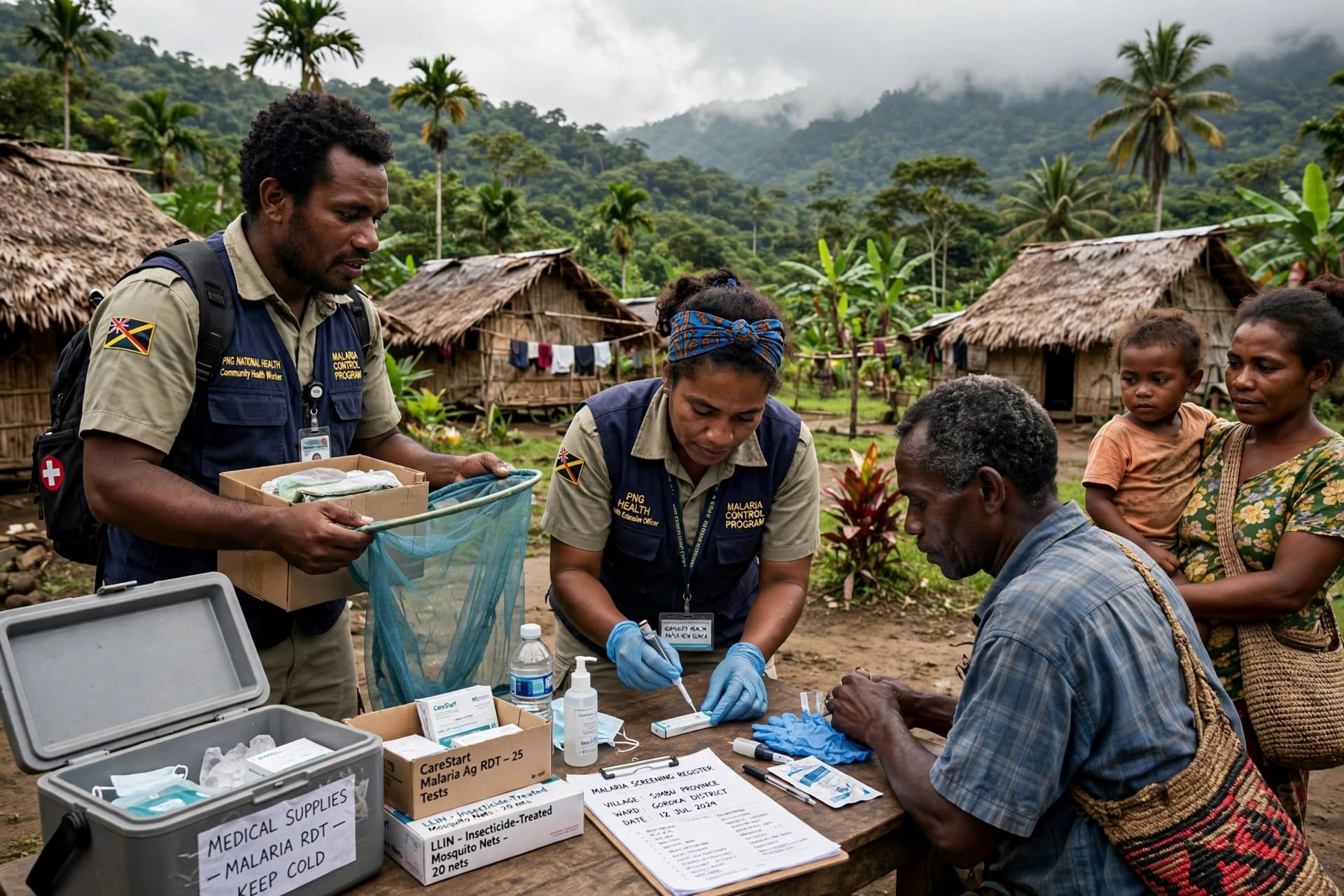
In Papua New Guinea, the fight against malaria is measured not only in laboratories but in villages, clinics, roads, mountains, and communities spread across a difficult geography. Against that backdrop, a new five-year research partnership with Japan is beginning with an ambition that reaches beyond a single treatment or intervention.
Papua New Guinea and Japan have launched a five-year research project designed to strengthen health systems and support efforts to eliminate malaria. The initiative brings together researchers and health institutions from both countries to examine practical ways of improving disease control.
Malaria remains an important public-health challenge in Papua New Guinea, where tropical conditions and geographical isolation can make healthcare delivery difficult. Reaching remote communities can require significant time and resources, particularly in areas where transportation and medical infrastructure are limited.
The new research project therefore places health systems alongside malaria itself. Controlling the disease requires more than identifying infections. It also depends on surveillance, diagnostic services, trained health workers, medicine availability, community participation, and reliable systems for responding to cases.
Japan has long supported health and development initiatives in the Pacific. Cooperation with Papua New Guinea allows Japanese research institutions and technical organizations to work alongside local health professionals who understand the conditions faced by communities on the ground.
Research can also help identify differences between regions. Malaria transmission does not occur in exactly the same way everywhere, and local environmental conditions, population movement, healthcare access, and prevention practices can influence outcomes.
For Papua New Guinea, strengthening local research capacity can be as important as receiving outside expertise. Training scientists, health workers, laboratory staff, and other professionals creates knowledge that can remain within the country after individual projects have ended.
The five-year timeline is significant because public-health changes rarely happen overnight. Disease-control programs depend on sustained monitoring and repeated interventions, while health systems often require years of investment before improvements become fully visible.
Technology may also play a growing role. Better diagnostic tools, data collection, digital surveillance, and communication systems can help health authorities identify where infections are occurring and respond more quickly.
The partnership ultimately reflects a broader understanding of disease elimination. Malaria is not defeated in a single laboratory or hospital. It is addressed through networks of people and institutions working across geography and time. In Papua New Guinea, the new research effort begins another part of that long journey, connecting local experience with international scientific cooperation in the hope that fewer communities will have to live under the shadow of the disease.
SEO SLUG
papua-new-guinea-japan-malaria-research-project-2026
HASHTAGS
#PapuaNewGuinea #Japan #Malaria #Healthcare #MedicalResearch #HealthSystems #PublicHealth #Pacific
IMAGE DISCLAIMER
This AI-generated image is a conceptual editorial illustration and does not depict actual researchers, patients, communities, or a specific research site.
SOURCES
The National Japan International Cooperation Agency Papua New Guinea National Department of Health
Published by Banx Network. This article is part of the Banx decentralized media programme, powered by the BXE token on the XRP Ledger.