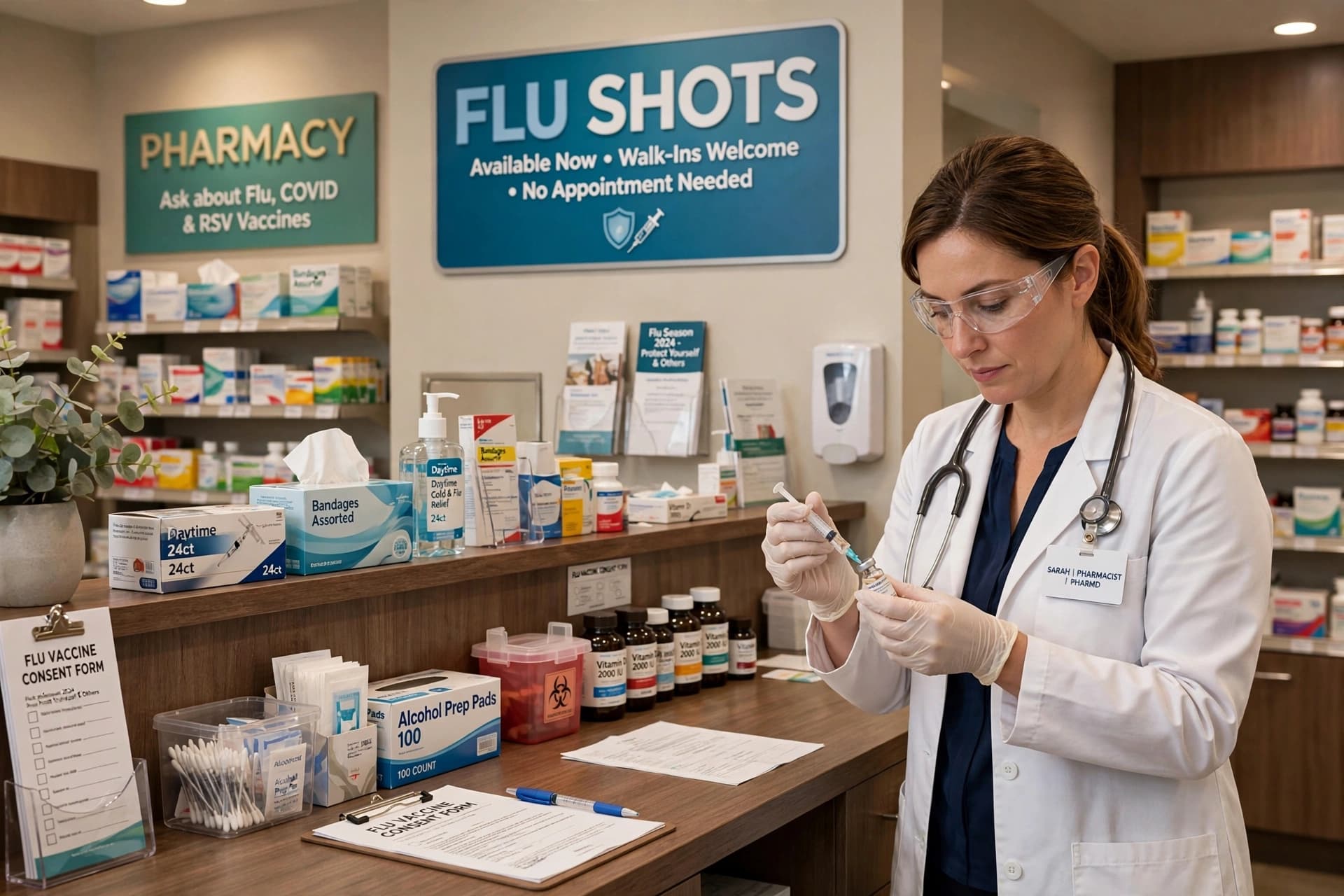
There is a particular rhythm to the arrival of autumn—a turning of the light, a cooling of the air, a return to routines that had loosened during the long days of summer. It is also, less poetically, the beginning of influenza season. And this year, the advice from public health officials is both simple and urgent: the time to think about a flu shot is now, before the season gathers its full strength.
The Centers for Disease Control and Prevention recommends that everyone six months and older receive an annual flu vaccine, ideally by the end of October . That timing is not arbitrary. The vaccine takes about two weeks to train the body's immune system to recognize and respond to the virus, and flu activity typically begins to climb in late October, peaking between December and February . Getting vaccinated now means protection is in place before the season's first wave arrives.
The stakes are higher than many people realize. During the 2025-2026 flu season, the CDC estimates there were between 15 million and 25 million medical visits, 390,000 to 790,000 hospitalizations, and 24,000 to 81,000 flu deaths . That season was classified as "high severity," the worst in seven years . Preliminary data from the 2025-2026 season showed that more than 95 percent of adults hospitalized with flu had at least one underlying health condition, and roughly 70 to 85 percent of flu-related deaths occurred in people aged 65 and older .
Some groups face a particularly elevated risk. The CDC identifies young children, pregnant women, people with chronic conditions such as asthma, diabetes, or heart and lung disease, and adults 65 and older as being at higher risk of serious flu complications . For these populations, vaccination is not merely a matter of convenience but of protection against severe illness, hospitalization, and death. A Wyoming child's death during the 2025-2026 season served as a sad reminder: nationwide, 52 pediatric deaths were reported, and 90 percent of the children who died were not up to date on flu vaccination .
There is also a broader community dimension. Vaccination of health care workers and caregivers helps prevent the spread of flu to those who are most vulnerable, including infants too young to be vaccinated and residents of long-term care facilities . The vaccine itself does not guarantee immunity, but it has been shown to reduce the severity of illness in people who get vaccinated but still become sick .
For the 2026-2027 season, all flu vaccines are designed to protect against three influenza viruses, and a newly approved mRNA flu vaccine is available for adults aged 50 and older . Higher-dose or adjuvanted vaccines are recommended for adults 65 and older. It is not too late to get vaccinated, and it never was—but the ideal window is closing. The season is arriving. The protection takes two weeks to build. And the shot, for most people, is a matter of minutes.
AI Image Disclaimer: The images accompanying this article were generated by artificial intelligence and are for illustrative purposes only.
Sources: CDC, Johns Hopkins Medicine, University of Rochester Medical Center, Wyoming Department of Health
Published by Banx Network. This article is part of the Banx decentralized media programme, powered by the BXE token on the XRP Ledger.