There are mornings when the landscape seems to make a quiet promise. The trees stand still, the sky carries only a pale haze, and familiar roads invite people to continue with ordinary routines. In such moments, danger can feel distant, hidden beyond the next ridge or carried on winds that have not yet changed direction. Nature often speaks softly before it raises its voice.
For residents living near active wildfire zones, that quiet confidence can disappear in only a few minutes. Across several wildfire-affected regions in North America this summer, many communities believed the fires remained far enough away to pose no immediate threat. Then shifting winds transformed the horizon into a moving wall of smoke, reducing visibility, darkening daylight, and forcing rapid evacuations as conditions changed with startling speed.
Wildfires rarely move in straight lines. Their behavior depends on a delicate balance of wind, temperature, humidity, vegetation, and terrain. A fire that appears stable during one hour can accelerate dramatically when weather conditions shift, carrying smoke and embers far beyond the visible flames. Emergency officials often describe smoke as one of the earliest and most unpredictable signals that a fire has entered a new phase.
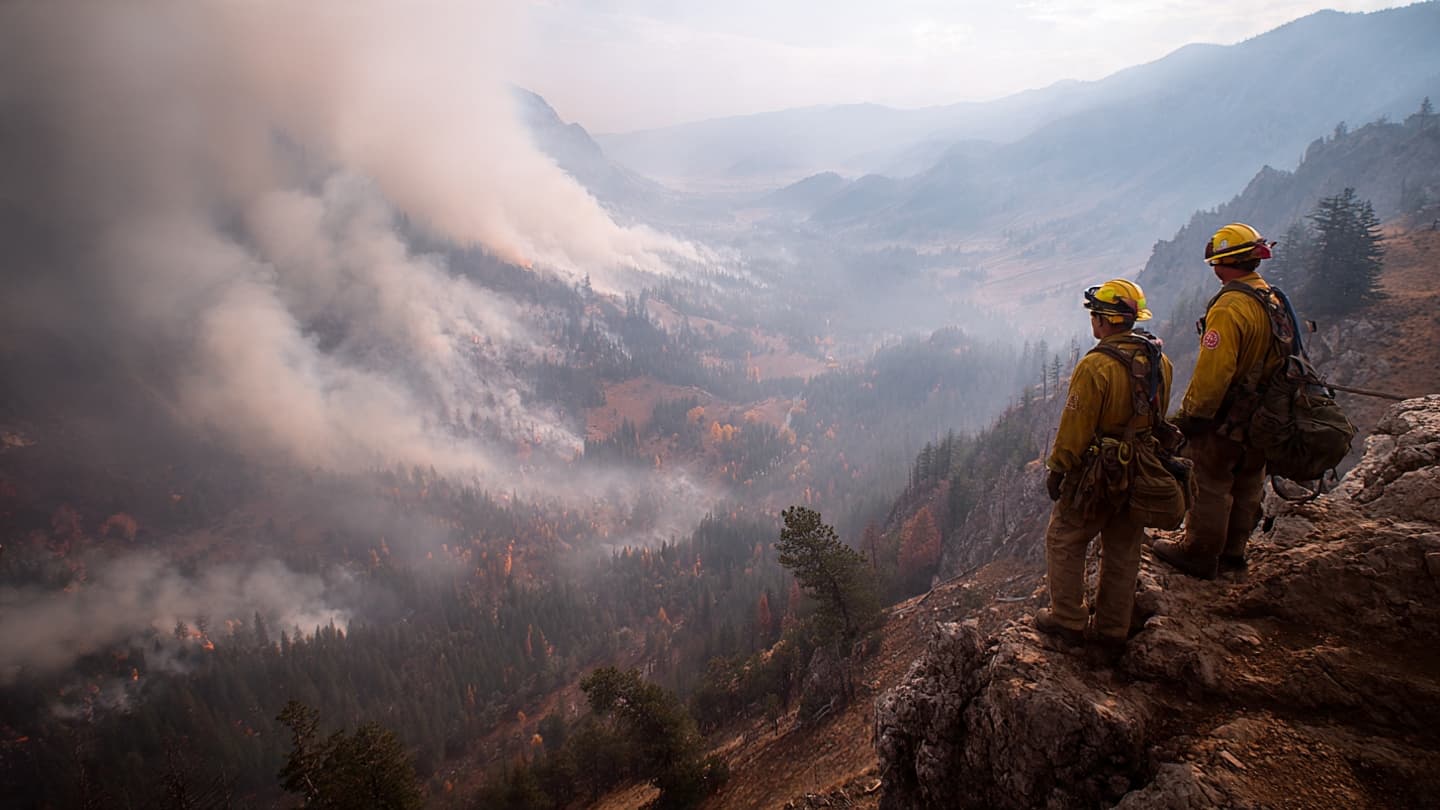
For many residents, the first sign of change was not fire itself but the sudden disappearance of the landscape. Mountains, neighborhoods, and highways slowly vanished behind dense gray clouds. Daylight dimmed into an unfamiliar twilight, while the scent of burning forests arrived long before flames became visible. What had seemed like a manageable situation only moments earlier quickly demanded immediate decisions about evacuation and safety.
Firefighters work within constantly changing conditions where predictions can evolve from hour to hour. Weather forecasts, satellite imagery, and aircraft observations help guide response efforts, yet rapidly shifting winds remain among the greatest challenges. A single change in wind direction can redirect smoke across entire communities while opening new paths for advancing flames.
Beyond limiting visibility, wildfire smoke carries significant health risks. Fine particulate matter can travel hundreds or even thousands of miles, affecting people far from the fires themselves. Health authorities advise residents exposed to dense smoke to remain indoors whenever possible, use air filtration if available, and reduce strenuous outdoor activity, particularly for children, older adults, and individuals with respiratory or cardiovascular conditions.
This year's wildfire season has demonstrated how interconnected weather extremes have become. While firefighters battled expanding blazes in western regions, smoke spread across large portions of the United States and Canada, affecting air quality in major cities far from the fires' origin. At the same time, other regions faced severe flooding and extreme heat, illustrating the broad range of challenges emergency agencies are managing simultaneously.
Communities increasingly rely on evacuation alerts, weather updates, and local emergency communications to guide their decisions. Emergency managers encourage residents living in fire-prone regions to prepare evacuation plans before conditions worsen, recognizing that the window for safe departure can narrow rapidly when smoke and flames begin advancing together.
As another wildfire season continues, the image of a wall of smoke serves as a reminder that nature often changes more quickly than expectation. The forests will one day recover, new growth will return to blackened hillsides, and familiar roads will reopen beneath clear skies. Until then, preparedness, timely warnings, and careful attention to changing conditions remain among the most reliable companions for those living where forests and communities meet.
AI Image Disclaimer These illustrations were generated using AI to visually represent the reported events and are not authentic photographs.
Sources Reuters U.S. National Interagency Fire Center U.S. Environmental Protection Agency National Weather Service Health Canada
Published by Banx Network. This article is part of the Banx decentralized media programme, powered by the BXE token on the XRP Ledger.