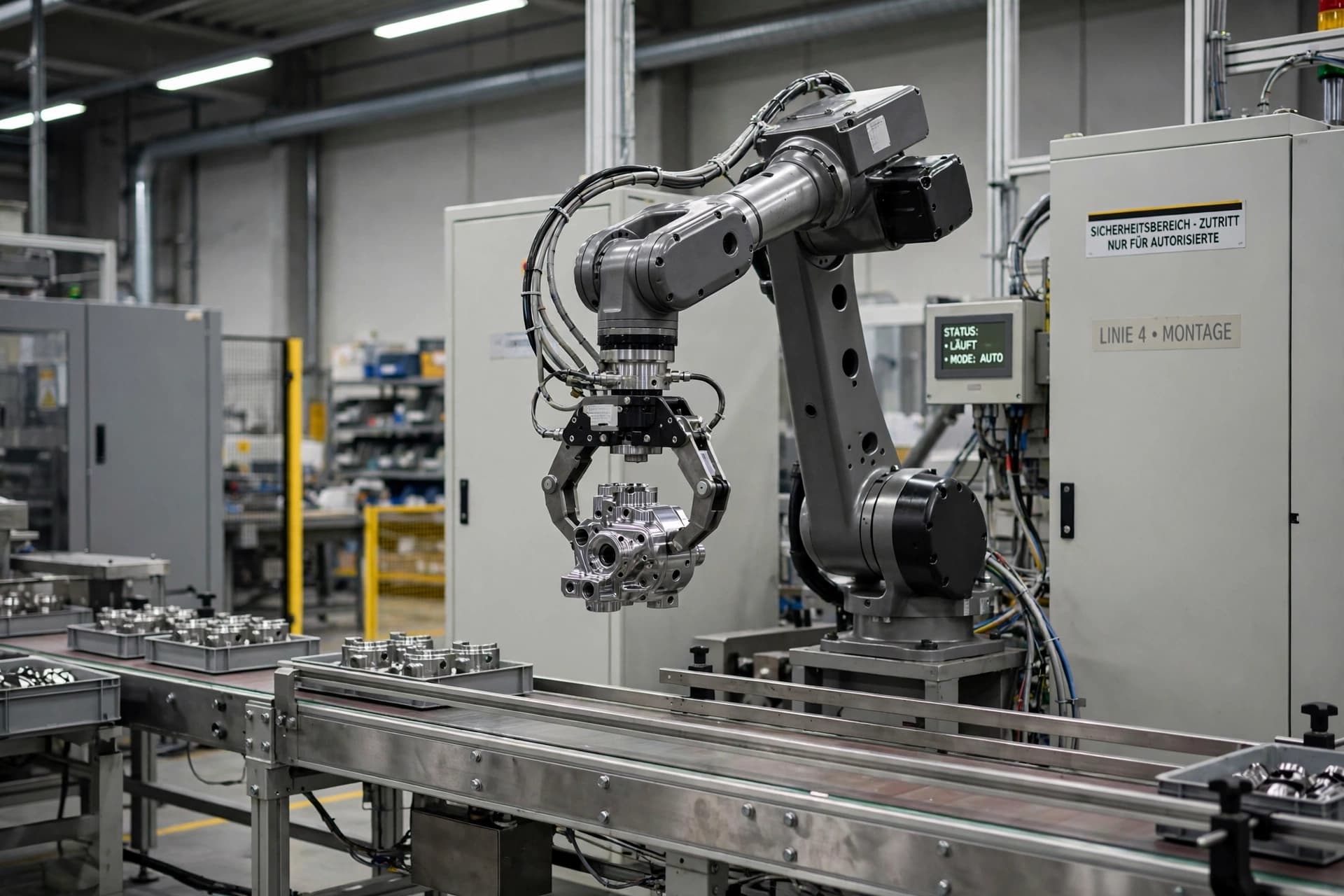
Some machines are built to cross oceans, others to carry people through cities. And then there are machines so small that their movement begins to resemble something found in nature rather than industry.
Researchers in Switzerland are exploring miniature drones that can be powered or controlled using sound waves. The work belongs to a growing field of micro-robotics, where engineers seek ways to move extremely small machines without relying on conventional propulsion systems.
At this scale, ordinary engineering assumptions begin to change. Motors, batteries, and mechanical components become difficult to shrink while retaining useful performance. Sound offers another possibility because acoustic waves can interact with very small structures.
The research demonstrates how physical principles that are familiar in everyday life can become tools for advanced engineering. Sound normally reaches us as vibration, but under carefully controlled conditions those vibrations can also contribute to the movement and manipulation of microscopic systems.
The potential applications remain largely experimental, but miniature robots could eventually be useful in environments where conventional machines cannot easily operate. Their small size could make them suitable for specialized scientific, medical, or industrial tasks.
Switzerland provides a natural setting for this kind of research. Universities and research institutions across the country have long worked at the intersection of physics, engineering, materials science, and robotics.
The challenge is not simply making something smaller. Researchers must also ensure that a miniature system can receive energy, respond to instructions, maintain stability, and perform useful movements without becoming too complex.
Acoustic technology offers one avenue through that narrow engineering space. By manipulating sound waves, researchers can explore ways of interacting with machines that would be difficult to achieve using conventional mechanical components.
The work also points toward a broader change in robotics. Large industrial robots are already familiar sights, but the future of robotics may increasingly include machines that operate at scales almost invisible to the human eye.
For now, Swiss sound-powered micro-drones remain a research development rather than an everyday technology. Their significance lies in the possibilities they reveal: at very small scales, sound itself may become part of the machinery that allows robots to move.
AI Image Disclaimer
The illustrations were generated with AI as conceptual visualizations and do not depict actual experimental micro-drones or laboratory photographs.
Sources
SWI swissinfo.ch ETH Zurich EPFL Swiss National Science Foundation
Published by Banx Network. This article is part of the Banx decentralized media programme, powered by the BXE token on the XRP Ledger.