Across the scattered islands of the Philippines, where land meets sea in a mosaic of horizons, the past often lingers beneath the surface. Each fragment of stone or bone carries a quiet story, waiting for patient hands to bring it into light. Recent archaeological findings suggest that these stories may be more intricate than once imagined.
Researchers have uncovered evidence indicating that early human populations in the Philippines established extensive networks across multiple islands. These findings challenge earlier assumptions that such movements were limited or isolated, instead pointing to a level of connectivity that required planning, skill, and cooperation.
The discoveries are based on artifacts, tools, and settlement traces found across several locations. By analyzing these materials, archaeologists have begun to piece together patterns of movement and interaction. The evidence suggests that early communities were not confined to single islands but navigated waterways to maintain links with neighboring groups.
Such mobility implies a familiarity with maritime environments that may have been underestimated. Constructing watercraft, understanding currents, and coordinating travel would have required both knowledge and collective effort. These capabilities highlight a form of early innovation shaped by geography and necessity.
The Philippine archipelago, with its thousands of islands, presents both challenges and opportunities for human settlement. For early populations, the sea was not merely a barrier but a pathway. The emerging picture is one of communities that adapted to their surroundings with a degree of sophistication that continues to unfold through research.
This discovery also contributes to broader discussions about human migration in Southeast Asia. The movement of early humans across islands has long been a subject of study, and new evidence from the Philippines adds depth to existing theories. It suggests that connectivity in the region may have been more extensive than previously believed.
Archaeologists emphasize that these findings are part of an ongoing process. Each excavation and analysis adds detail, but also raises new questions about how early humans lived, traveled, and interacted. The work continues, guided by both curiosity and careful methodology.
In tracing these ancient pathways, researchers offer a glimpse into a world where distances were bridged not only by physical journeys but by shared knowledge and resilience. The islands, once thought to separate, may instead reveal a story of connection that has endured across millennia.
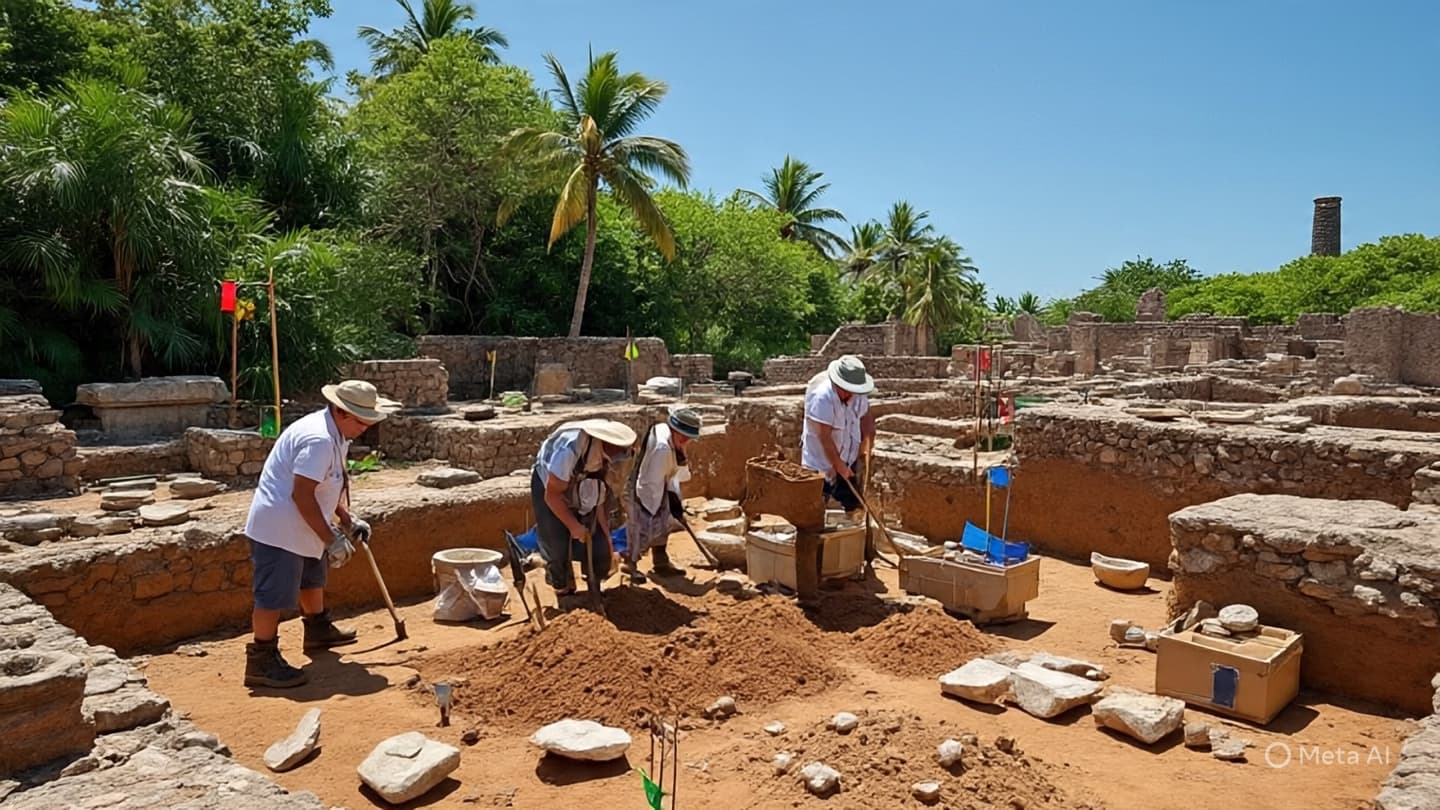
AI Image Disclaimer: The visuals are AI-generated interpretations designed to illustrate archaeological concepts and are not exact representations of discoveries.
Sources: National Geographic, Science Magazine, BBC, Nature
Published by Banx Network. This article is part of the Banx decentralized media programme, powered by the BXE token on the XRP Ledger.