Across the wide blue distances of the Pacific, where islands appear as small points between larger horizons, new financial commitments are beginning to take shape. Australia and the United States have announced a combined package worth about $580 million to support Pacific Island nations, bringing infrastructure, economic development, and regional cooperation into sharper focus.
The announcement comes as Pacific countries continue to face the practical challenges of geography. Distance can make transportation expensive, energy systems difficult to develop, and access to essential infrastructure uneven. Financial assistance therefore often carries significance beyond its headline value, particularly for island economies where projects can require substantial resources.
Australia has long maintained close economic and development relationships with Pacific Island countries. Its geographic position gives the region a natural place within Australia's international economic outlook, while Pacific governments continue seeking investment that can strengthen infrastructure and create more durable opportunities for their populations.
The United States is also contributing to the package, creating a broader financial framework for projects across the Pacific. The combined commitment reflects an effort to coordinate resources rather than leaving individual island countries to navigate infrastructure and development challenges entirely on their own.
For the recipient nations, the details of where the money eventually flows will matter as much as the total figure. Infrastructure projects can range from energy and telecommunications to transportation and other systems that connect communities with domestic and international markets. In places where geography naturally creates high costs, improvements in these areas can have effects across several parts of an economy.
The Pacific is also becoming increasingly important as countries consider how to strengthen economic resilience. Supply chains, access to energy, digital connectivity, and sustainable development are increasingly linked, making infrastructure investment a central part of long-term economic planning.
Australia's role in this environment is shaped by both proximity and established commercial connections. Its businesses, development agencies, and institutions already operate across parts of the Pacific, creating channels through which new investment can be directed toward local projects and partnerships.
As the new funding moves from announcement toward implementation, attention will turn to individual projects and the benefits they deliver. For Pacific communities, the most visible measure will ultimately be found not in the size of the commitment but in roads, power systems, communications networks, businesses, and other infrastructure that emerge across the islands.
For now, the $580 million commitment represents another financial bridge across the Pacific. Australia and the United States have placed new resources behind development efforts, while Pacific Island nations remain at the center of decisions about where those resources can have the greatest practical effect.
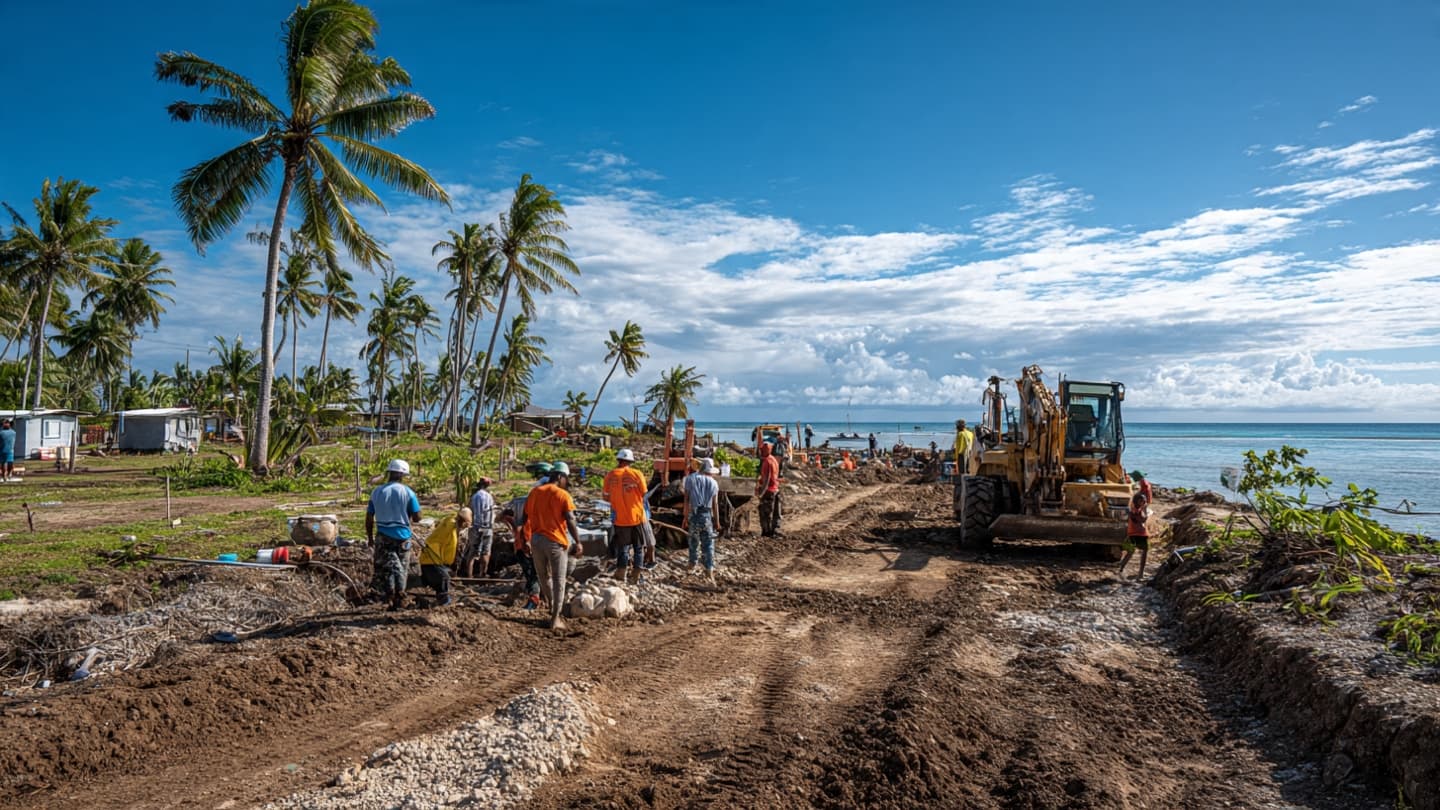
AI Image Disclaimer The accompanying visuals were generated using AI and are intended as conceptual representations, not authentic photographs.
Sources Reuters Australian Government U.S. Government ABC News Pacific Islands Forum
Published by Banx Network. This article is part of the Banx decentralized media programme, powered by the BXE token on the XRP Ledger.