Mercury has long been imagined as a world of stillness. Scarred by craters and scorched by proximity to the Sun, it seems frozen in a distant past, a place where time settled early and never quite moved on. Its surface, etched with the marks of ancient impacts, carries the quiet dignity of something finished, unchanged, and complete.
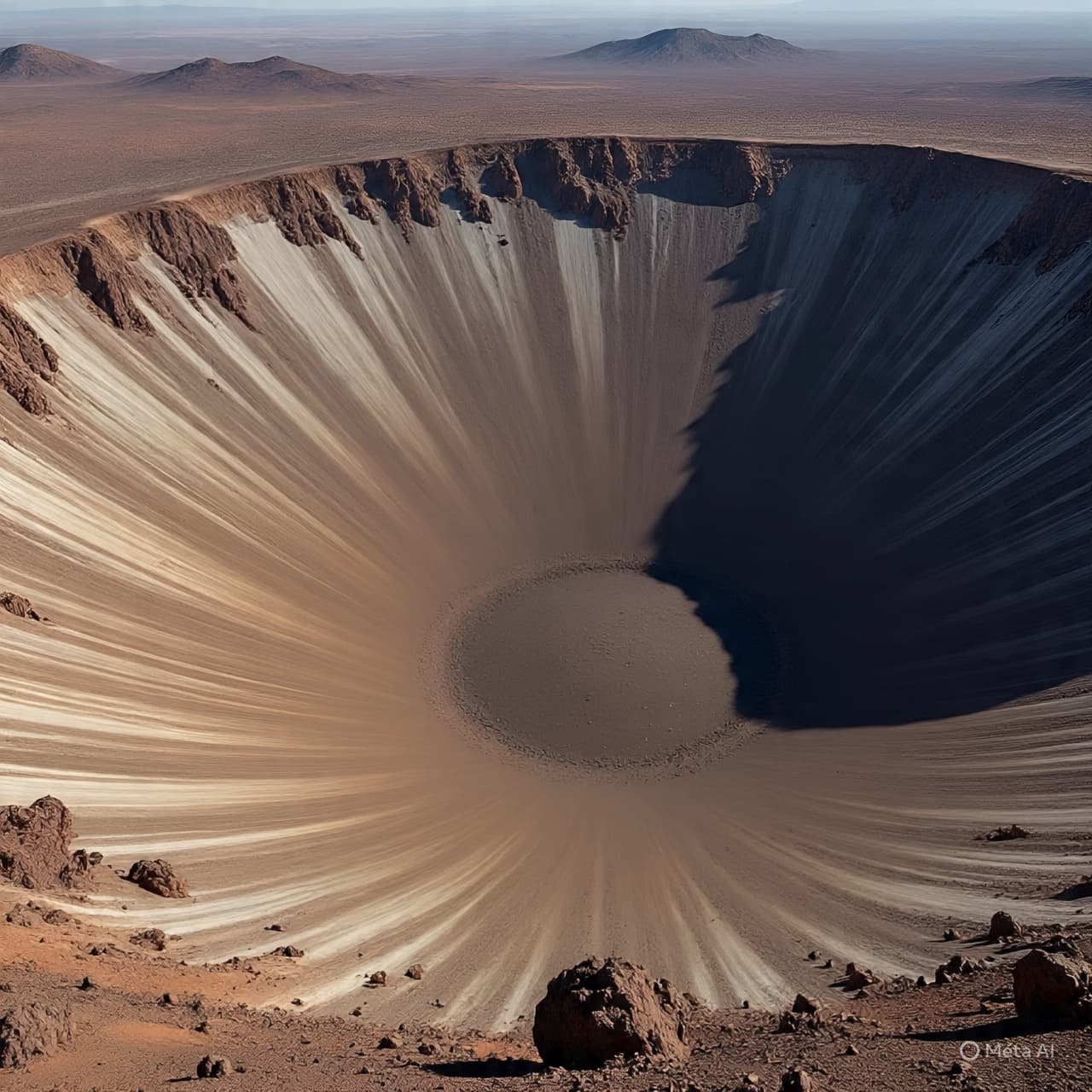
But recent observations suggest that this small planet may still be gently stirring. Across the floors and walls of some of Mercury’s craters, scientists have identified curious striped patterns—light and dark bands that do not align neatly with impacts or erosion alone. These markings appear subtle, almost tentative, as though the planet itself traced them slowly, without urgency.
Researchers propose that the stripes may be linked to gas seeping from beneath Mercury’s surface. Over billions of years, volatile elements trapped during the planet’s formation could be gradually escaping through fractures created by impacts. As gas rises and interacts with the surface, it may disturb fine material, creating visible streaks that stretch downslope like brushstrokes across stone.
This process would be neither sudden nor dramatic. Instead, it suggests a planet changing by increments, reshaping itself through quiet release rather than violent upheaval. The idea challenges the long-held view of Mercury as entirely geologically inactive. While it may lack the volcanic vigor of larger worlds, it may still possess a subtle internal life, expressed in these delicate surface patterns.
The striped craters also invite broader questions about planetary aging. Rather than moving cleanly from active youth to inert old age, Mercury may occupy a middle ground, where remnants of internal processes continue long after surface activity appears to have ceased. The planet becomes less a relic and more a record, still adding lines to its own history.
As missions like NASA’s MESSENGER and ESA-JAXA’s BepiColombo continue to refine our understanding, these markings are being examined with growing care. Scientists emphasize that the gas hypothesis is still under study, but it offers a compelling explanation for features that do not quite fit previous models.
Current evidence suggests that Mercury’s surface patterns are the result of slow, ongoing interactions between its interior and exterior. The planet remains largely quiet, but not entirely still, reminding researchers that even the most seemingly dormant worlds may have stories left to tell.
AI Image Disclaimer Graphics are AI-generated and intended for representation, not reality.
Sources Nature Astronomy Science NASA European Space Agency Smithsonian Magazine
Published by Banx Network. This article is part of the Banx decentralized media programme, powered by the BXE token on the XRP Ledger.