Artificial intelligence has become one of the defining technologies of the decade, yet its arrival inside companies is rarely as immediate as the headlines suggest. In Japan, many businesses are still standing somewhere between experimentation and full adoption, weighing potential benefits against the practical difficulties of changing established systems.
More than four in five Japanese companies have yet to fully embrace artificial intelligence, according to a recent Reuters report. The finding illustrates a significant gap between the rapid development of AI technology and the pace at which businesses are integrating it into everyday operations. (reuters.com)
The hesitation is not necessarily a rejection of the technology. Many companies are experimenting with generative AI, automation, data analysis, and other applications, but moving from a trial project to company-wide deployment can require major changes to software, data management, cybersecurity, employee training, and organizational processes.
Japan’s corporate landscape also contains many long-established companies with complex internal systems. Replacing or integrating those systems can take time, particularly when businesses depend on technology that has evolved over decades.
The challenge is especially visible among smaller companies. Large corporations often have greater resources to establish AI teams and invest in computing infrastructure, while smaller businesses may face higher relative costs when attempting to introduce new systems.
Labor shortages could nevertheless create a strong incentive for adoption. Japan’s aging population and shrinking workforce have encouraged businesses to explore automation and digital tools that can improve productivity or reduce the amount of repetitive work employees need to perform.
AI could potentially support those efforts in areas ranging from customer service and document processing to manufacturing, logistics, software development, and research. But successful implementation requires more than purchasing an AI system; companies must also determine where the technology genuinely improves operations.
Questions about data security and reliability remain important as well. Businesses handling sensitive information need systems capable of protecting data, while employees must understand when AI-generated information requires human verification.
The slower adoption rate therefore reflects a mixture of caution, cost, technical complexity, and organizational structure. At the same time, the continued expansion of AI technology means companies may face increasing pressure to determine how it fits into their future operations.
Japan's experience offers a reminder that technological revolutions rarely happen at the same speed everywhere. While AI laboratories and technology companies continue moving rapidly, much of the corporate world is still deciding how these systems should actually be used.
For Japanese businesses, the coming years will likely be defined less by whether AI exists and more by how effectively companies can integrate it into established workplaces. The latest figures show that the country remains in an early and uneven stage of that transition. (reuters.com)
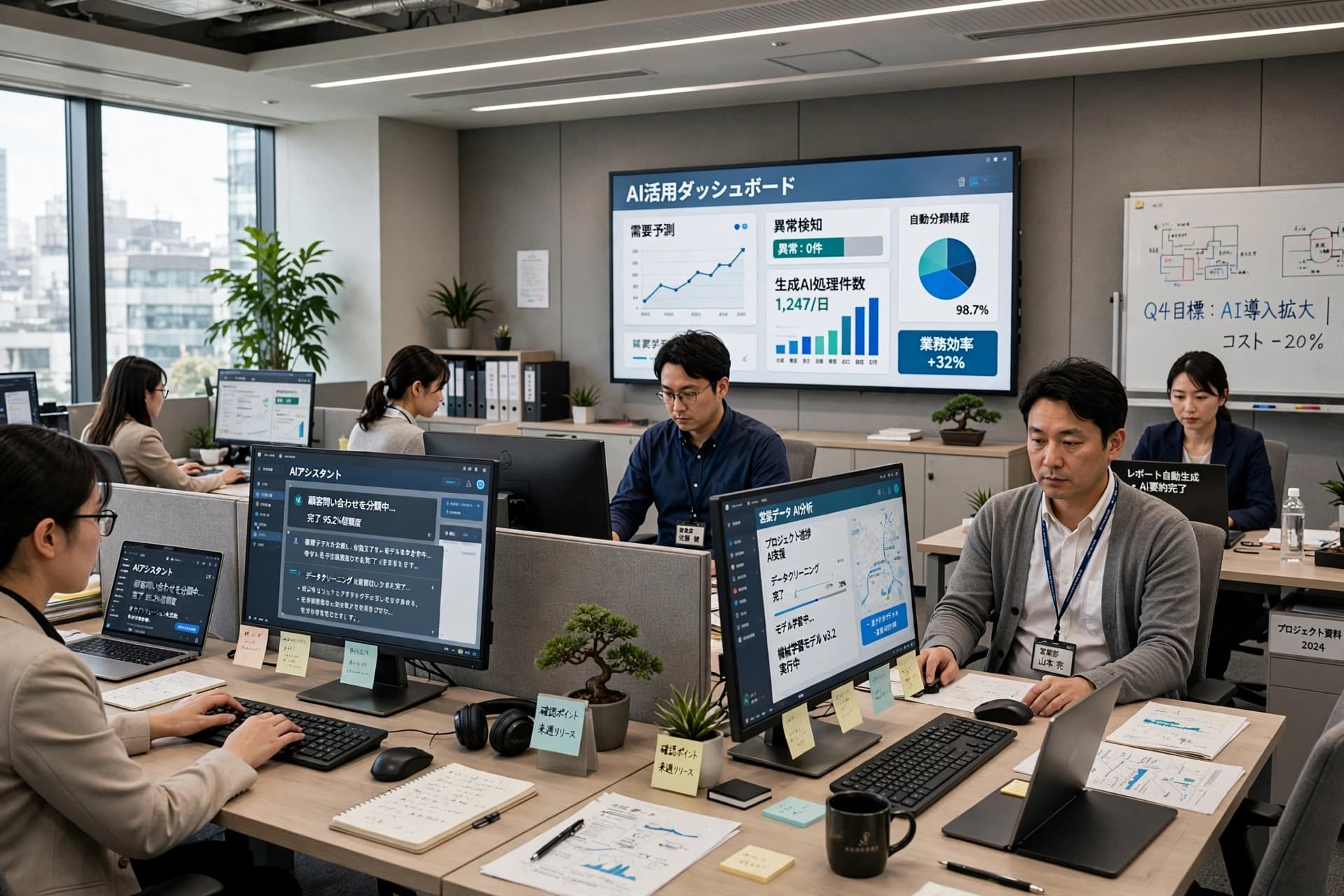
AI Image Disclaimer Illustrations in this article are AI-generated conceptual visuals designed to represent the reported technology trend rather than actual workplace photographs.
Sources Reuters Nikkei Asia Japan Times Japan External Trade Organization OECD
Published by Banx Network. This article is part of the Banx decentralized media programme, powered by the BXE token on the XRP Ledger.