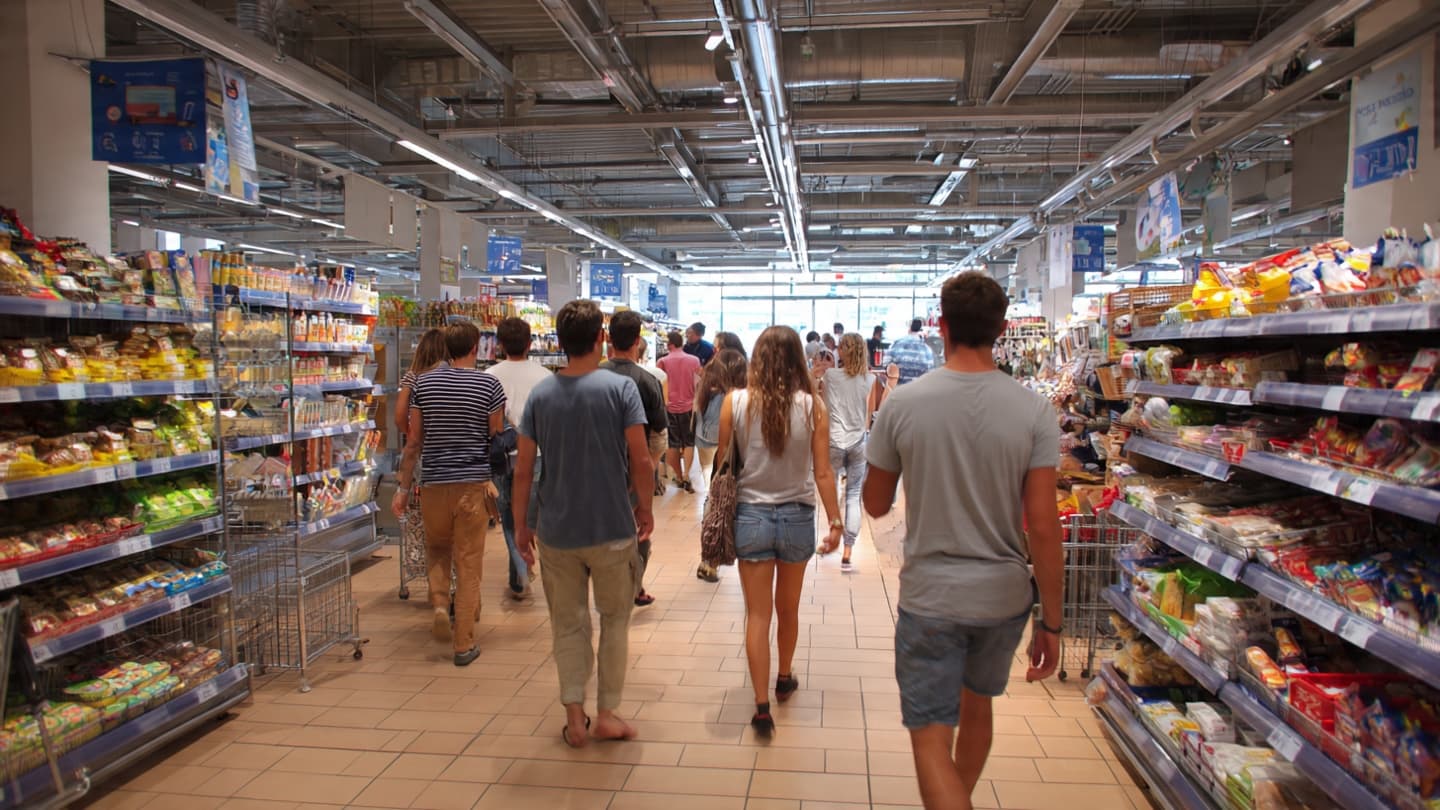
Economic recovery is often easiest to notice in ordinary places. A family entering a supermarket, customers sitting at a cafe, or shoppers carrying bags through a city street can reveal something about confidence that a statistical table only describes afterward. In France, household spending returned as an important source of movement during the second quarter, helping the economy regain momentum after a difficult start to the year.
France's economy grew 0.2% between April and June after contracting 0.1% in the first quarter. INSEE reported that household consumption contributed to the recovery alongside stronger exports. The figures offered a modest but clear indication that domestic demand had regained some strength during the spring. (reuters.com)
Consumer spending is important because it connects households directly to businesses. Purchases at supermarkets, restaurants, stores and service providers generate revenue that can support employment and investment. When consumers become more confident, that movement can gradually spread through the wider economy.
The improvement did not mean households had stopped paying attention to prices. French consumers, like households across Europe, have remained sensitive to food, energy and transportation costs. Spending decisions can therefore shift quickly depending on whether people believe their incomes are keeping pace with everyday expenses.
Retail confidence nevertheless improved during July. INSEE's business climate survey showed that confidence among retailers increased significantly, with expectations for future orders improving. The development suggested that businesses were beginning to see somewhat stronger demand after a period of caution. (reuters.com)
Services also benefited from consumer activity. Hotels and restaurants reported stronger expectations for demand during July, although the exceptionally hot weather created a complicated environment. Some businesses benefited from increased demand for accommodation and cooling, while others faced operational challenges associated with extreme temperatures.
The wider European economy provided another layer of context. The euro zone expanded 0.4% in the second quarter, while France recorded its more modest 0.2% growth. The figures suggested that European demand was holding up better than some earlier expectations, although the pace remained far from rapid.
France's government has nevertheless maintained a cautious economic outlook. The full-year growth forecast for 2026 was lowered to 0.7%, reflecting concerns over international uncertainty, energy costs and domestic economic conditions. Household spending can support growth, but it is only one part of a much larger economic equation. (reuters.com)
For households, the economic recovery remains something experienced through everyday decisions rather than headline numbers. The choice to eat at a restaurant, replace an appliance or take a holiday can collectively influence the direction of the economy. France's second-quarter figures show that consumers contributed to renewed growth, while July confidence data suggest that businesses were beginning to sense the same movement.
The French economy therefore enters the latter part of summer with a modest foundation beneath it. Household spending has returned as a source of growth, retail confidence has improved and services remain active, even as costs and uncertainty continue to shape decisions. The recovery is not dramatic, but the latest figures show that ordinary consumer activity remains an important current beneath France's economic landscape.
AI Image Disclaimer: The accompanying visuals are AI-generated conceptual scenes and should not be interpreted as authentic photographs.
Sources: Reuters, INSEE, Eurostat.
Published by Banx Network. This article is part of the Banx decentralized media programme, powered by the BXE token on the XRP Ledger.