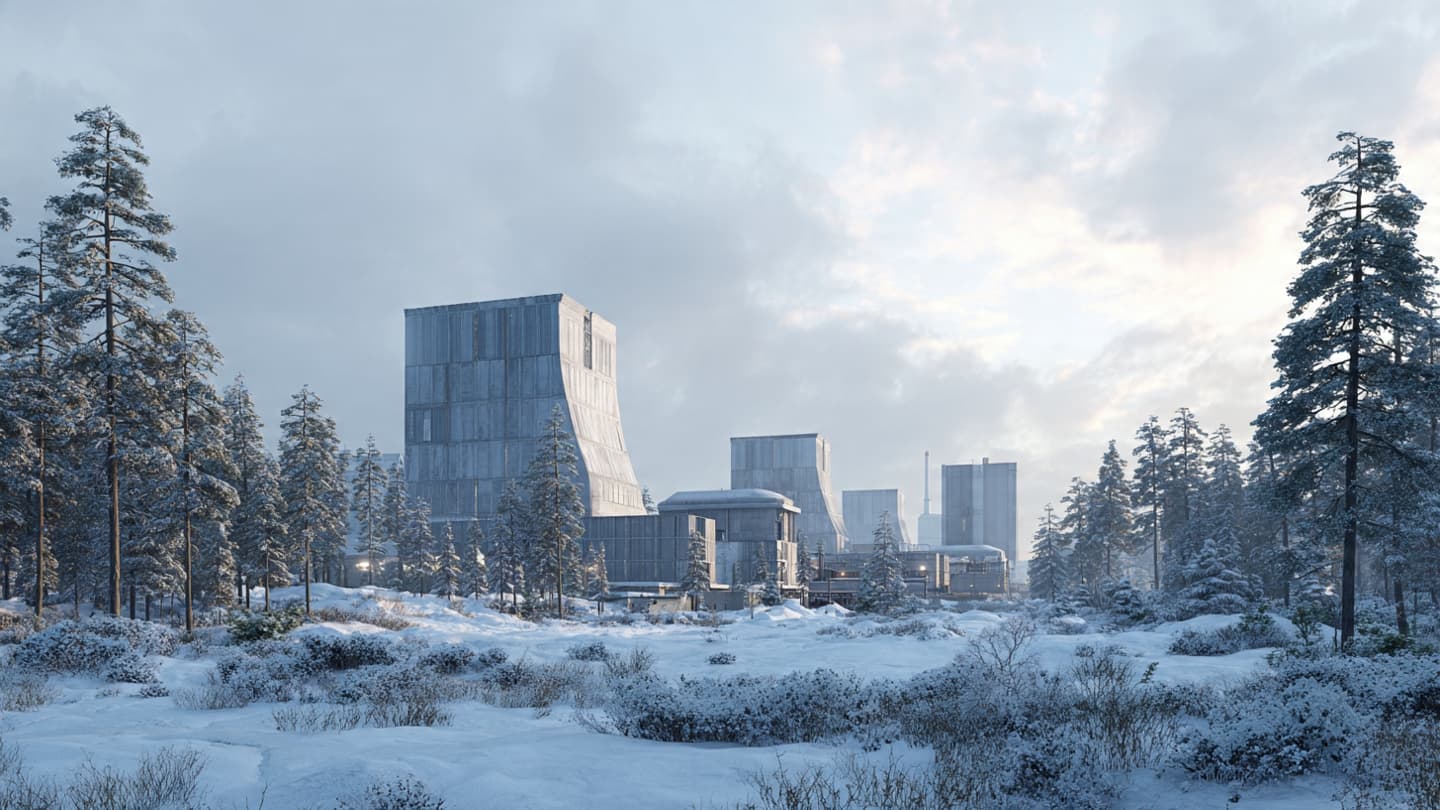
Far north in Finland, where winter landscapes stretch beneath long horizons, another kind of infrastructure is taking shape inside powerful computing facilities. It does not rise like a tower or cross a highway, but works through thousands of processors and enormous quantities of data. Europe is expanding that digital infrastructure with a new artificial intelligence supercomputer supplied by French company Bull.
The European Union has awarded Bull, a French state-owned technology company, a €387.8 million contract for a new AI supercomputer known as LUMI-AI in Finland. The project reflects growing European demand for computing capacity as artificial intelligence research expands.
The system is expected to build on Europe’s existing high-performance computing infrastructure. Supercomputers are used for tasks requiring enormous computational resources, including scientific simulations, climate modeling, drug research and increasingly complex artificial intelligence workloads.
Artificial intelligence has intensified the demand for such systems. Training and running advanced models can require large numbers of specialized processors operating simultaneously, creating a need for facilities capable of handling high volumes of computation.
Finland already hosts LUMI, one of Europe’s major supercomputing systems. The new LUMI-AI project extends that infrastructure toward workloads specifically connected with artificial intelligence.
The project also illustrates how technology infrastructure is becoming increasingly European in scale. A French company can build computing equipment for a facility in Finland, while researchers from different countries use the resulting infrastructure for projects that extend across national borders.
Bull’s role places French engineering within that wider network. The company has long operated in high-performance computing, and the new contract gives it a significant position in Europe’s expanding AI infrastructure.
The investment comes as demand for computing capacity continues to exceed available resources in several areas of AI research. Researchers and organizations increasingly depend on large-scale computing systems to process datasets and train sophisticated models.
For Europe, additional supercomputing capacity can also support scientific research without requiring every institution to build its own specialized infrastructure. Shared systems allow researchers to access computing resources through coordinated European programs.
The Finnish location provides another advantage through its established high-performance computing environment. Existing facilities, expertise and energy infrastructure create a foundation upon which new systems can be developed.
The €387.8 million contract therefore represents more than a technology purchase. It is another piece of Europe’s growing digital infrastructure, linking French computing expertise with Finnish facilities and a broader scientific community preparing for an era in which artificial intelligence increasingly depends on enormous computational resources.
AI Image Disclaimer This article uses an AI-generated illustration to visually represent European artificial intelligence infrastructure. It is not a photograph of the actual LUMI-AI facility or equipment.
Sources Reuters
Published by Banx Network. This article is part of the Banx decentralized media programme, powered by the BXE token on the XRP Ledger.