Amid the vast tapestry of the cosmos, where stars trace arcs across the void, a new enigma has emerged. Astronomers have identified a black hole unlike any previously observed, prompting questions that stretch both understanding and imagination. Its properties—mass, spin, or behavior—challenge established models, suggesting that even in the dark heart of space, the universe retains surprises.
Black holes are regions of spacetime where gravity is so intense that nothing, not even light, can escape. They are typically classified by size and formation mechanism: stellar-mass black holes arise from collapsed massive stars, while supermassive black holes anchor galaxies. The newly observed black hole, however, does not conform neatly to these categories. It exhibits unusual gravitational interactions, emits unexpected X-ray signals, or exists in an environment where current physics offers no straightforward explanation.
For astronomers, this discovery is both exhilarating and humbling. Observations are conducted using space telescopes, ground-based observatories, and sophisticated simulations, yet even with advanced tools, the behavior of this object remains puzzling. It underscores the limits of current theory and emphasizes the iterative nature of scientific discovery: each anomaly pushes researchers to refine models, consider new mechanisms, and explore alternative interpretations.
Beyond its scientific implications, the black hole captures the imagination. It reminds us that the cosmos is vast, dynamic, and sometimes defies our expectations. Its presence invites inquiry, dialogue, and a reassessment of assumptions about the extremes of matter, energy, and gravity.
In practical terms, astronomers have discovered a new type of black hole with properties that challenge existing classification schemes, prompting further observation and theoretical study to understand its unusual characteristics.
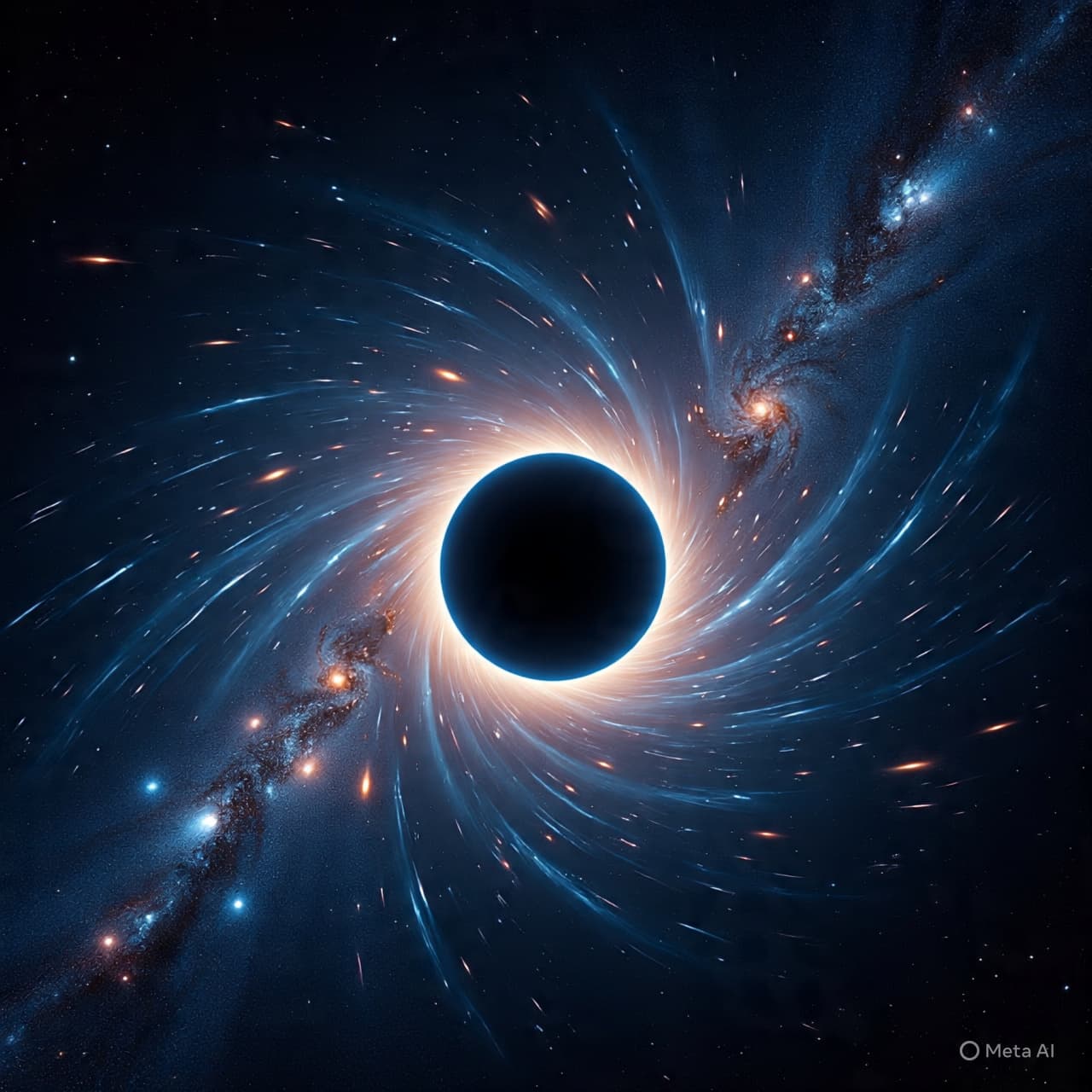
AI Image Disclaimer Visuals are AI-generated and serve as conceptual representations.
Sources (names only) NASA Space.com The Verge Science News Nature
Published by Banx Network. This article is part of the Banx decentralized media programme, powered by the BXE token on the XRP Ledger.