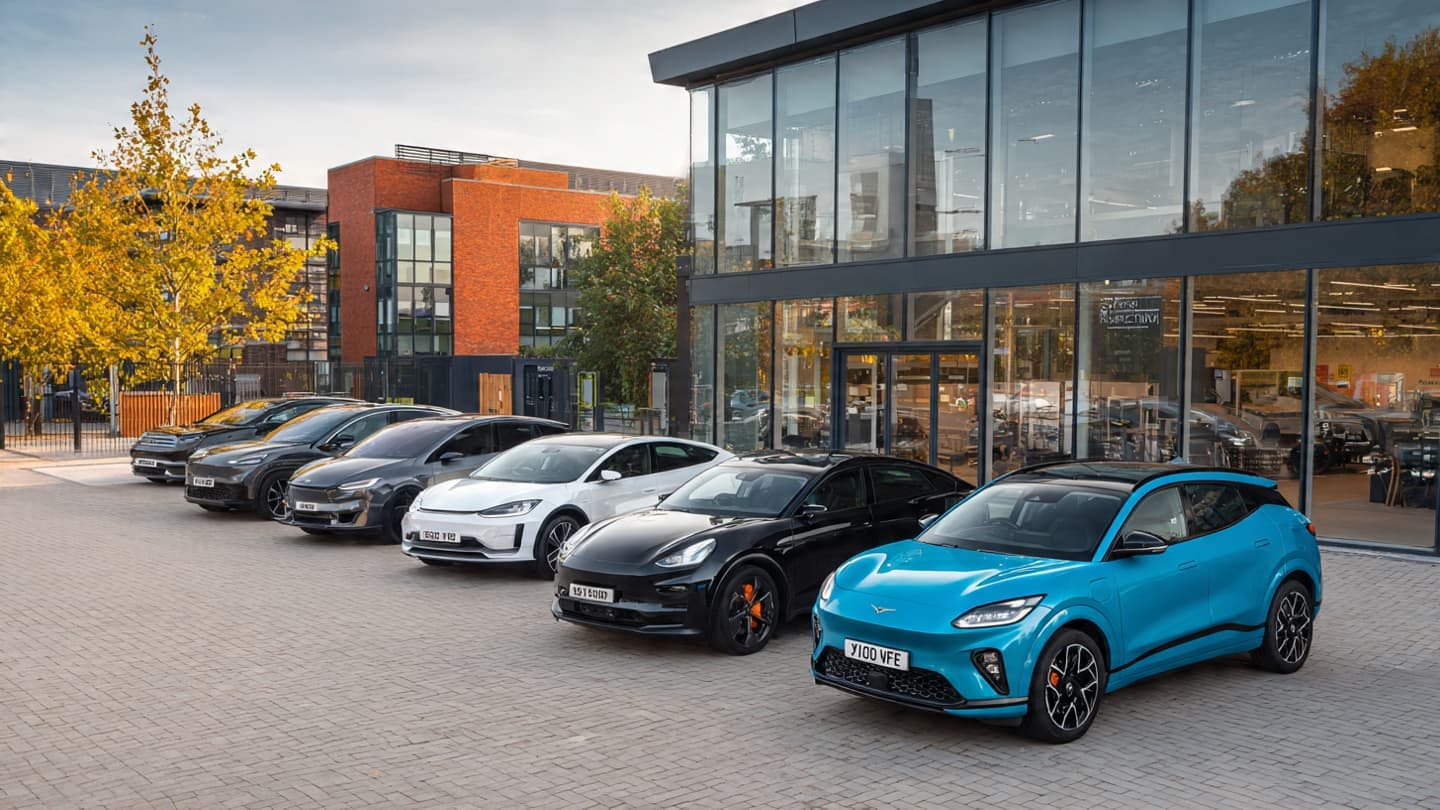
Across Britain's roads, the changing character of the automobile market can sometimes be seen before it is measured. New cars arrive quietly at dealerships, move through city streets, and gradually alter the composition of traffic. In August, that shift became particularly visible as battery-electric vehicles emerged as the country's largest new-car fuel category.
Registrations of battery-electric vehicles rose about 30% compared with August last year, reaching 27,876 units and giving electric cars almost 30% of the market. Total new-car registrations also increased strongly, rising 17.5% year-on-year to 93,977 vehicles.
Hybrid vehicles remained close behind, accounting for roughly 29% of the market, while petrol cars represented about 21.5%. The figures show a market in which several technologies are competing for space, even as the balance continues to move toward electrification.
The August numbers also reveal how quickly consumer preferences can change when the surrounding economics shift. Rising fuel costs have encouraged motorists to consider alternatives, adding another layer to the broader European transition toward electric vehicles.
Among individual manufacturers, Tesla retained the largest share of Britain's battery-electric market, with 8.8% during the year-to-date period. Kia followed with 6.7%, while China's BYD reached 6.4%, reflecting the increasingly international character of Britain's electric-car market.
Kia also led monthly battery-electric registrations for the second consecutive month, illustrating how competitive the market has become. Established manufacturers and newer electric-focused brands are increasingly meeting consumers in the same space, where range, price, charging access, and model availability all influence purchasing decisions.
The broader transition is taking place alongside Britain's zero-emission vehicle framework. Under the current trajectory, manufacturers face a requirement for zero-emission vehicles to represent 33% of sales in 2026, rising to 80% in 2030 and 100% in 2035.
For the automotive industry, August therefore offered more than a strong monthly result. It showed electric vehicles moving from an emerging category toward a central position in the market, while hybrids and traditional petrol vehicles continued to compete for consumers whose choices are increasingly shaped by operating costs and technology.
The roads themselves will reveal how durable this change becomes. For now, the August registration figures provide a clear snapshot: Britain's electric-car market is no longer simply growing around the edges of the automotive industry. It has become one of its defining centers.
AI Image Disclaimer: The written article is based on reported market data. Any accompanying AI-generated visuals are illustrative and should not be interpreted as exact photographs of the reported events.
Sources: Reuters New AutoMotive Society of Motor Manufacturers and Traders
Published by Banx Network. This article is part of the Banx decentralized media programme, powered by the BXE token on the XRP Ledger.