
Evening settles differently across continents that share the same concerns. In Brussels, the light fades against glass facades and quiet offices where language is measured carefully, shaped to carry both urgency and restraint. Far to the south and east, in Beirut, the air carries a different weight—one shaped not only by politics, but by memory, by proximity, by the uneasy nearness of unresolved tensions.
Between these two places stretches a conversation that has grown longer than expected.
European leaders, watching the evolving dialogue between the United States and Iran, have begun to speak with a more deliberate clarity. A ceasefire, they suggest, cannot remain confined to a single axis of conflict. It must travel outward, touching the edges where tensions quietly accumulate. And among those edges, Lebanon stands as both a neighbor and a mirror.
The concern is not abstract. Southern Lebanon, where the presence of Hezbollah remains a defining force, has long existed in a state of suspended equilibrium with Israel. The line between calm and escalation there is thin, shaped by history and sharpened by every regional shift. When negotiations intensify elsewhere—especially those involving Iran, a key backer of Hezbollah—the effects ripple outward, subtle at first, then increasingly difficult to ignore.
In recent days, European officials have signaled that any agreement between Washington and Tehran should acknowledge this interconnectedness. A ceasefire that halts one current, they imply, may still leave others moving beneath the surface. Their message is less a demand than a widening of perspective: that peace, to hold, must be aware of the terrain it rests upon.
The European Union has often approached such moments with a preference for continuity over rupture. Its diplomats speak in careful extensions—adding clauses, broadening frameworks, tracing the quiet lines between one region and another. In this instance, their appeal reflects a familiar instinct: to prevent a contained agreement from becoming an incomplete one.
There is also an awareness, unspoken but present, that Lebanon’s fragility does not exist in isolation. Economic strain, political paralysis, and the weight of recent years have left the country particularly sensitive to shifts beyond its borders. A ceasefire that excludes it, even indirectly, risks reinforcing that vulnerability—leaving it once again at the edge of decisions made elsewhere.
Yet diplomacy rarely moves in straight lines. The conversations between the United States and Iran carry their own complexities, shaped by nuclear concerns, regional alliances, and the careful choreography of negotiation. Expanding the scope of such talks introduces both possibility and complication, requiring a balance between ambition and feasibility.
And so the moment lingers in a kind of quiet extension. Europe’s voice enters not as interruption, but as an echo—suggesting that the geography of peace may be larger than initially drawn. Whether that suggestion becomes part of the final shape remains uncertain.
For now, the facts remain measured. European leaders have urged that any U.S.-Iran ceasefire framework account for Lebanon’s security context, particularly the dynamics along its southern border. The United States has not formally expanded the scope of negotiations, while discussions with Iran continue within their established parameters. In Lebanon, the situation remains tense but unchanged, held in a familiar balance that is both stable and precarious.
As night settles across Brussels and Beirut alike, the same question lingers in different forms: how far a single agreement can reach, and how much of the surrounding silence it can truly hold.
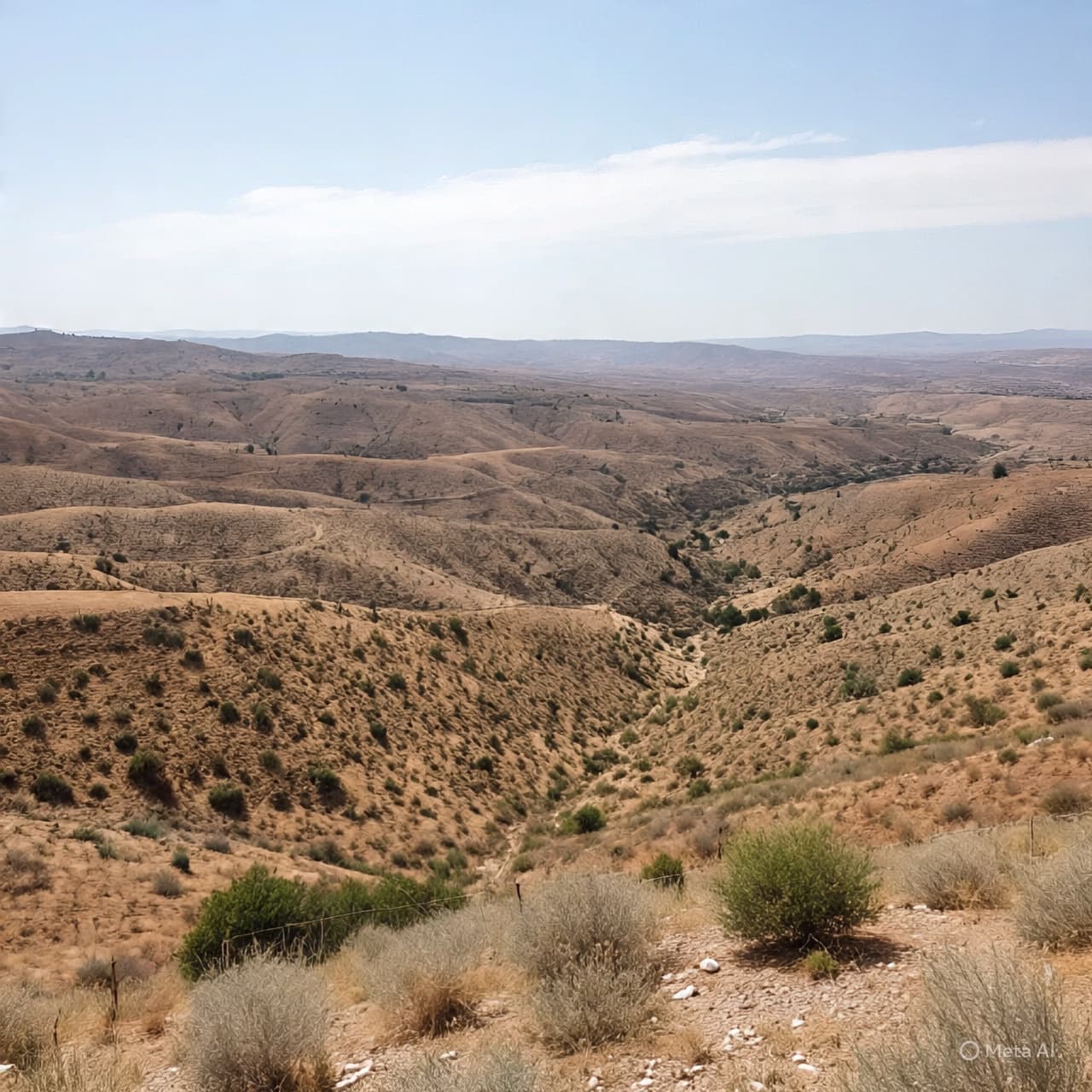
AI Image Disclaimer Illustrations were created using AI tools and are not real photographs.
Sources : Reuters BBC News Al Jazeera Financial Times The Guardian
Published by Banx Network. This article is part of the Banx decentralized media programme, powered by the BXE token on the XRP Ledger.


