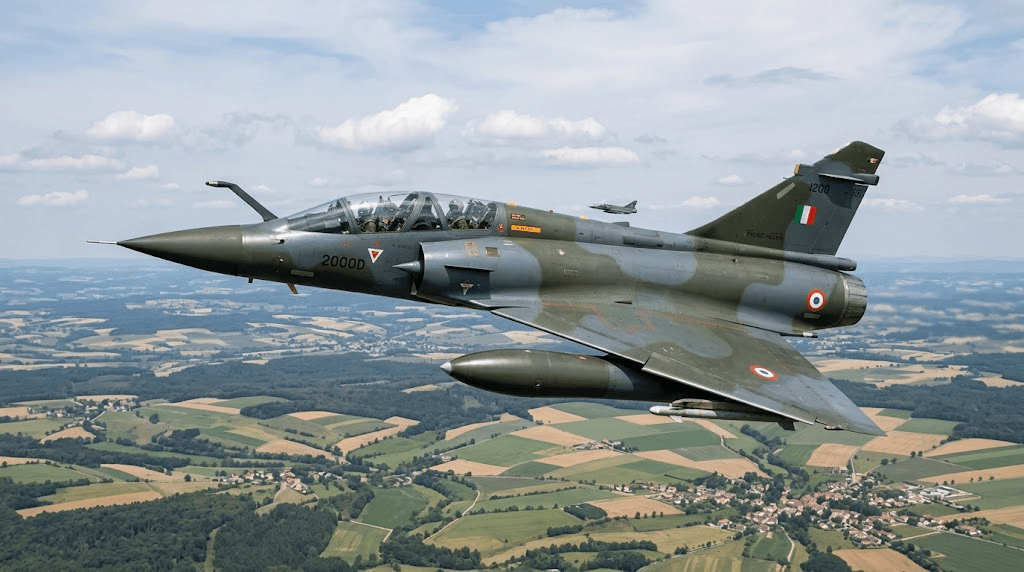
In the vast blue of the Caribbean sky, a moment that should have been routine turned alarmingly close to catastrophe. On December 12, 2025, a JetBlue Airways flight climbing out of Curaçao nearly collided with a U.S. Air Force refueling aircraft in airspace near Venezuela, forcing the commercial pilot to take evasive action to avert disaster. ([turn0news1][turn0news32])
The incident unfolded as JetBlue Flight 1112 — bound for New York City’s John F. Kennedy Airport — was ascending after takeoff. According to cockpit audio recordings and communications with air traffic control, the crew had to halt their climb when a U.S. military refueling tanker crossed directly into their flight path at a similar altitude. The pilot described the situation as “outrageous” and acknowledged how narrowly they avoided an impact. ([turn0news1][turn0news4])
“What happened was unacceptable,” the JetBlue pilot told controllers, saying the military aircraft was flying at the same altitude and passed within 2–5 miles of the airliner’s course. He also noted that the military plane did not have its transponder activated, a critical safety device that helps commercial aircraft detect other traffic and avoid collisions. Transponders relay identification and altitude information to nearby aircraft and radar systems, and their absence made the tanker difficult to identify on collision‑avoidance systems. ([turn0news1][turn0news4])
The military aircraft involved was identified by the pilot as a U.S. Air Force aerial refueling tanker, and according to his account, after crossing the commercial jet’s path it continued toward Venezuelan airspace. Neither the Pentagon nor U.S. Air Force officials immediately provided comment on the tanker’s mission or circumstances around the incident. A spokesperson for JetBlue confirmed that the airline reported the near miss to federal authorities and said its crew followed proper procedures throughout the encounter. ([turn0news1][turn0news32])
This close call comes amid heightened U.S. military activity in the region, where American forces have boosted drug interdiction flights and other operations near Venezuela. In the past month, the Federal Aviation Administration (FAA) issued warnings urging U.S. aircraft to exercise additional caution when operating in or near Venezuelan airspace due to security risks and increased military traffic. ([turn0search24])
Experts note that transponder deactivation — sometimes permitted during specific military operations — can complicate civilian aviation safety when aircraft share airspace. In this case, the absence of a transponder signal may have limited the JetBlue crew’s ability to detect the tanker via airborne collision avoidance systems, making visual sighting and rapid descent the only means to prevent impact. ([turn0news6])
Officials from the FAA and the U.S. Southern Command said investigations are underway to determine precisely how the incident occurred and whether procedures or communication protocols were breached. While no injuries were reported and both aircraft continued without collision, the encounter has raised concerns among aviation safety advocates about coordination between military and commercial air traffic in congested or contested airspace. ([turn0search21])
For passengers and crew aboard Flight 1112, what began as a standard international journey became a stark reminder of how the skies — even well‑traveled corridors — can still present unexpected hazards when military and civilian operations intersect.
AI Image Disclaimer Visuals are AI‑generated illustrations and are not real photographs.
Sources: Associated Press reporting via The Guardian and other outlets
• ABC News
• CBS News
• People.com
Published by Banx Network. This article is part of the Banx decentralized media programme, powered by the BXE token on the XRP Ledger.