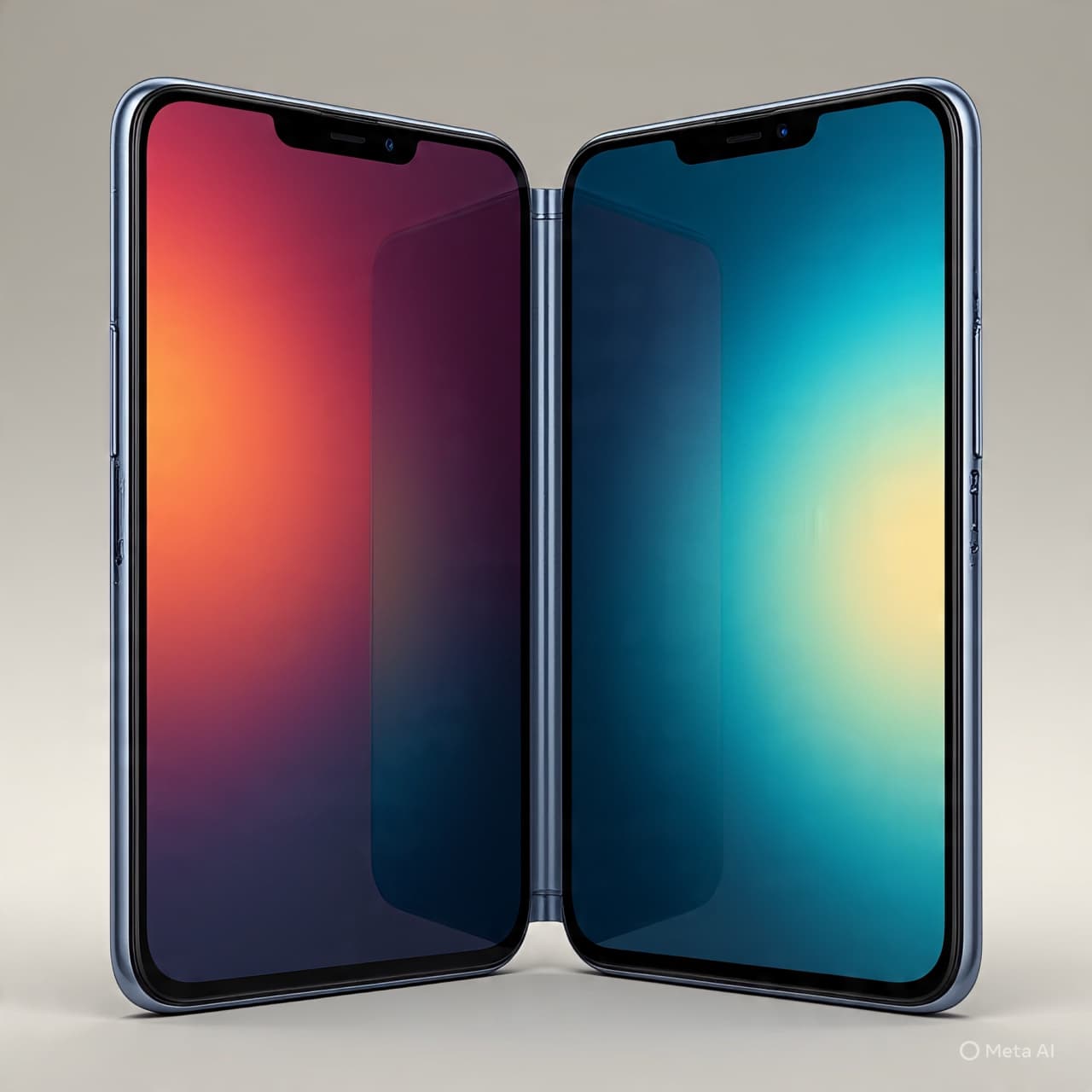
There are moments in technology when a single image feels less like a reveal and more like a quiet turning of a page. Not a dramatic reinvention, not a thunderclap announcement—just a subtle shift in proportion, a widening of perspective. Foldable phones have always carried that sense of movement, of glass bending into possibility. And now, with the first official look at Samsung’s “Wide” Galaxy Z Fold, the shape of that possibility appears to be changing.
At first glance, the difference may seem modest. Yet proportions have a language of their own. The newly surfaced official imagery suggests a noticeably wider inner display compared to previous Galaxy Z Fold models. The near-16:10 aspect ratio, previously rumored, now appears more tangible. It is a design choice that feels less experimental and more considered, as though Samsung has been listening closely to how users actually unfold their devices.
Reports from major Android-focused outlets indicate that the wider display aims to improve usability in everyday scenarios. A broader inner screen offers a more balanced canvas for reading articles, browsing the web, editing documents, or watching video content. Where earlier foldables sometimes felt tall and narrow when opened, the “Wide” Galaxy Z Fold leans closer to tablet proportions. The result may be a viewing experience that feels calmer, less stretched, more natural to the eye.
The outer display, too, appears to benefit from this recalibration. One of the long-standing critiques of early foldables was their narrow cover screens—functional, but occasionally cramped for typing or quick interactions. The wider approach seems to address that quietly. Without altering the core identity of the Fold line, Samsung appears to be smoothing the ergonomics, refining rather than reinventing.
Beyond aspect ratio, the official look reinforces familiar strengths. The hinge mechanism remains central to the design philosophy. Observers note slimmer bezels, a flatter fold when closed, and what appears to be further refinement in crease visibility. While detailed technical specifications remain limited at this stage, the visual presentation suggests incremental durability and polish—traits that have defined Samsung’s foldable evolution over recent generations.
There is also a competitive undercurrent to this moment. The foldable market has matured. Devices are no longer novelties displayed behind glass; they are daily drivers for a growing segment of users. Competitors have experimented with wider form factors, and consumer feedback has consistently emphasized comfort and practicality. In that context, the “Wide” Galaxy Z Fold feels like a response not to hype, but to habit.
Software will likely play an equally important role. A near-16:10 display opens possibilities for improved multitasking layouts, more symmetrical split-screen views, and better scaling for productivity apps. Samsung’s One UI, long optimized for large displays, may find new room to breathe within this broader frame. The success of the wider format will depend not only on hardware proportions but on how fluidly the experience adapts.
Yet the tone of this reveal remains measured. There is no sweeping declaration of revolution—only a visual confirmation that the Fold series continues to evolve. The first official images do not shout; they suggest. They hint at a device shaped by iteration, guided by real-world use rather than speculative ambition.
Samsung has not yet detailed full specifications, pricing, or release timelines for the “Wide” Galaxy Z Fold. More information is expected closer to an official launch announcement. For now, the wider silhouette stands as a preview of intent—a sign that foldables are entering a phase defined less by spectacle and more by refinement.
Sometimes progress is not about adding more, but about adjusting the frame. And in widening its fold, Samsung may be quietly redrawing the boundaries of what feels comfortable in the palm of a hand.
AI IMAGE DISCLAIMER Visuals are created with AI tools and are not real photographs.
SOURCES Android Authority SamMobile The Verge 9to5Google GSMArena
Published by Banx Network. This article is part of the Banx decentralized media programme, powered by the BXE token on the XRP Ledger.