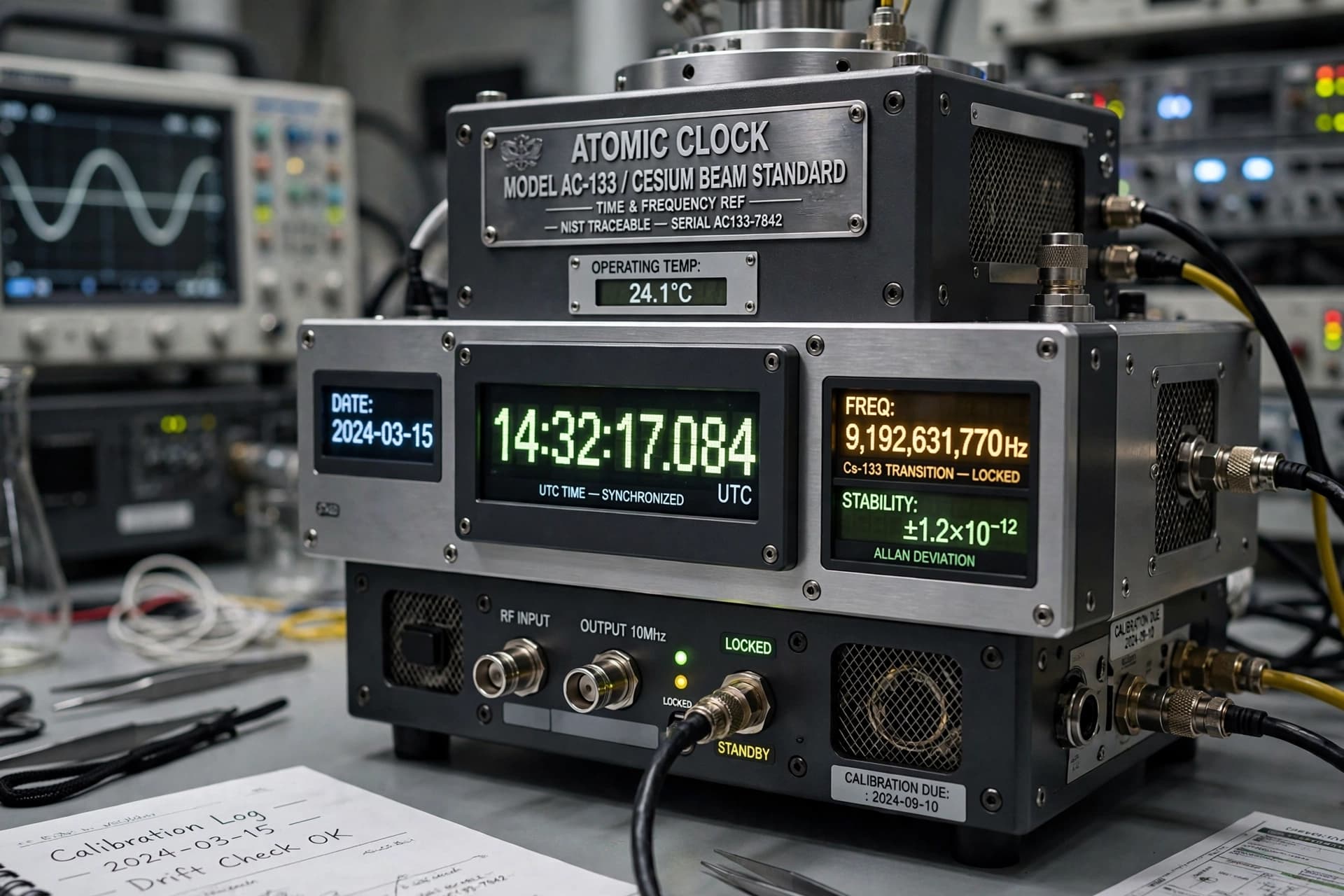
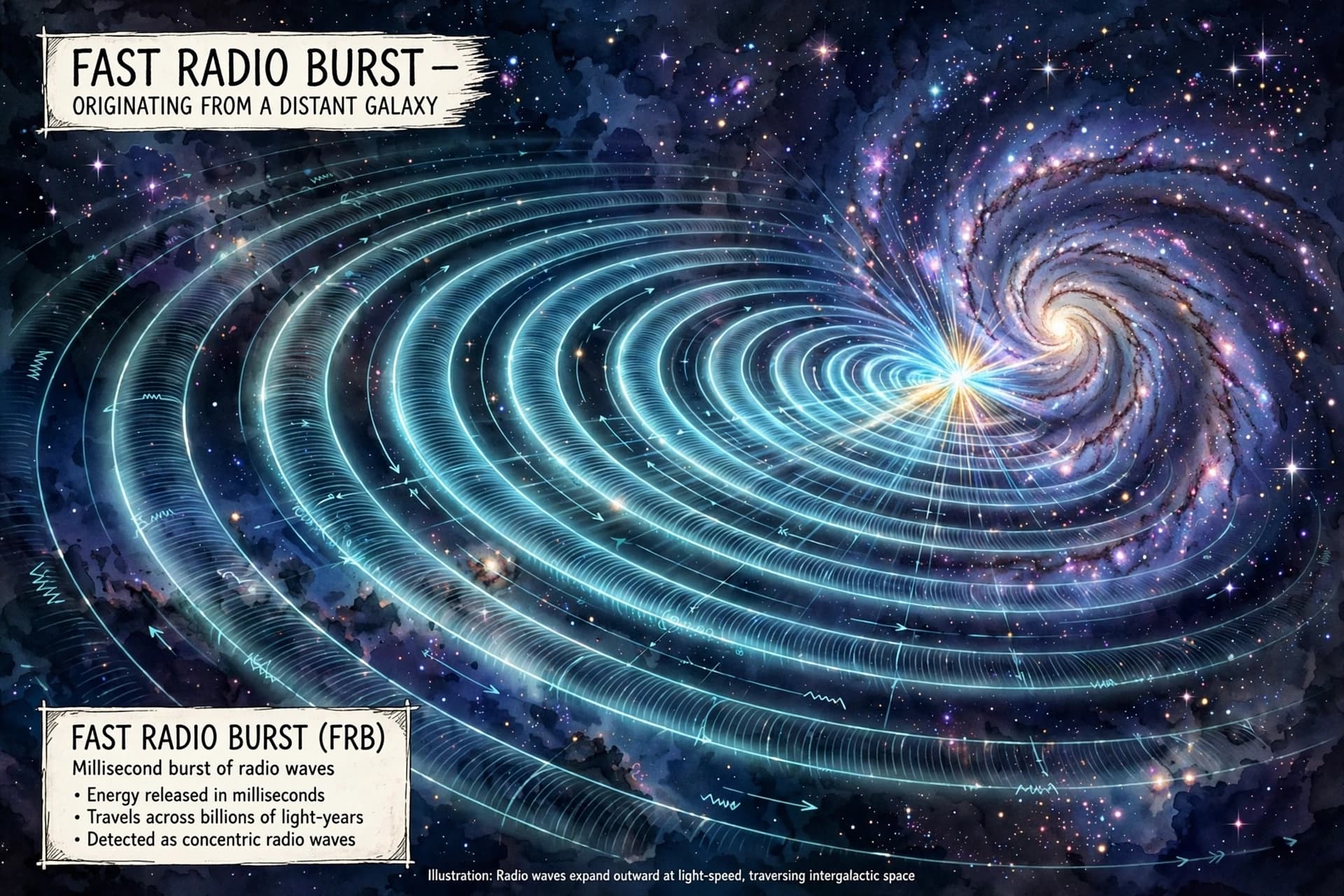
There are lights in the universe that shine softly, and there are those that declare themselves across unimaginable distances. Most of the time, the cosmos speaks in whispers—faint radio signals drifting through dark expanses. But every so often, it surprises us with a voice so bright it feels almost deliberate. Recently, astronomers identified just such a signal: a “gigamaser,” the most luminous microwave laser ever detected in deep space.
To understand its significance, one must first consider the nature of a maser. Similar in principle to a laser but operating at microwave frequencies, a maser amplifies radiation through stimulated emission. In space, natural masers form in specific cosmic environments—often within dense clouds of gas or near the energetic cores of galaxies. When these emissions become extraordinarily powerful, they are known as megamasers. The newly reported gigamaser, however, appears to exceed even those already rare benchmarks.
According to findings discussed by researchers affiliated with agencies such as NASA and the European Space Agency, the gigamaser was detected in a distant galaxy whose core harbors an actively feeding supermassive black hole. As material spirals inward, it heats and compresses surrounding gas. Under the right conditions, molecules—often water vapor—become excited and emit intensely amplified microwave radiation.
The result is a beacon of staggering brightness. Unlike optical light, which can be obscured by dust, microwave emissions travel across cosmic distances with less interference. Radio telescopes on Earth captured this emission, revealing a signal far stronger than typical megamasers. In terms of energy output, the gigamaser dwarfs many previously observed examples, prompting scientists to designate it with a new descriptor.
Such discoveries are not merely astronomical curiosities. Masers serve as valuable tools in cosmology. Because they can be observed at great distances and mapped with high precision, they allow astronomers to measure galaxy rotation speeds and refine estimates of cosmic expansion. In some cases, masers have helped calibrate the Hubble constant, contributing to our understanding of how quickly the universe is expanding.
The gigamaser’s extraordinary luminosity may provide even clearer insights into the environments around supermassive black holes. Its intensity suggests extreme physical conditions—dense molecular gas, powerful radiation fields, and dynamic gravitational forces at play. By studying its structure and variability, researchers hope to better understand how galaxies evolve and how black holes influence their surroundings.
The discovery also underscores the growing sophistication of radio astronomy. Arrays of linked radio telescopes now operate with remarkable sensitivity, scanning the skies for faint and fleeting signals. When an emission as bright as a gigamaser appears, it stands out against the cosmic background like a flare in darkness.
Yet scientists approach the finding with measured excitement. Additional observations will confirm its properties and refine energy calculations. As with all astronomical measurements, independent verification strengthens confidence in classification.
There is something quietly poetic in the idea of a microwave laser blazing across intergalactic space. In laboratories on Earth, masers were once experimental devices—precursors to the lasers that now power communications and medicine. In distant galaxies, nature has been conducting similar experiments for eons, producing phenomena far beyond human scale.
For now, the gigamaser remains a luminous anomaly—an amplified echo from a galaxy far away. According to space agencies and research institutions monitoring the discovery, follow-up studies are underway to map its structure and confirm its record-breaking brightness. If validated, it may stand as the brightest microwave laser ever recorded in deep space, a reminder that even in the quietest corners of the universe, brilliance can still erupt.
AI Image Disclaimer Images in this article are AI-generated illustrations, meant for concept only.
Sources
NASA European Space Agency (ESA) Nature Science Space.com
Published by Banx Network. This article is part of the Banx decentralized media programme, powered by the BXE token on the XRP Ledger.