There is a strange choreography to international cooperation in the age of permanent tension, a set of gestures that can look, from a distance, like something other than what they are. On Sunday, Russia's Federal Security Service announced that it had detained a Russian teenager accused of planning a terrorist attack on a Moscow museum complex, and it credited the United States for providing the information that made the arrest possible .
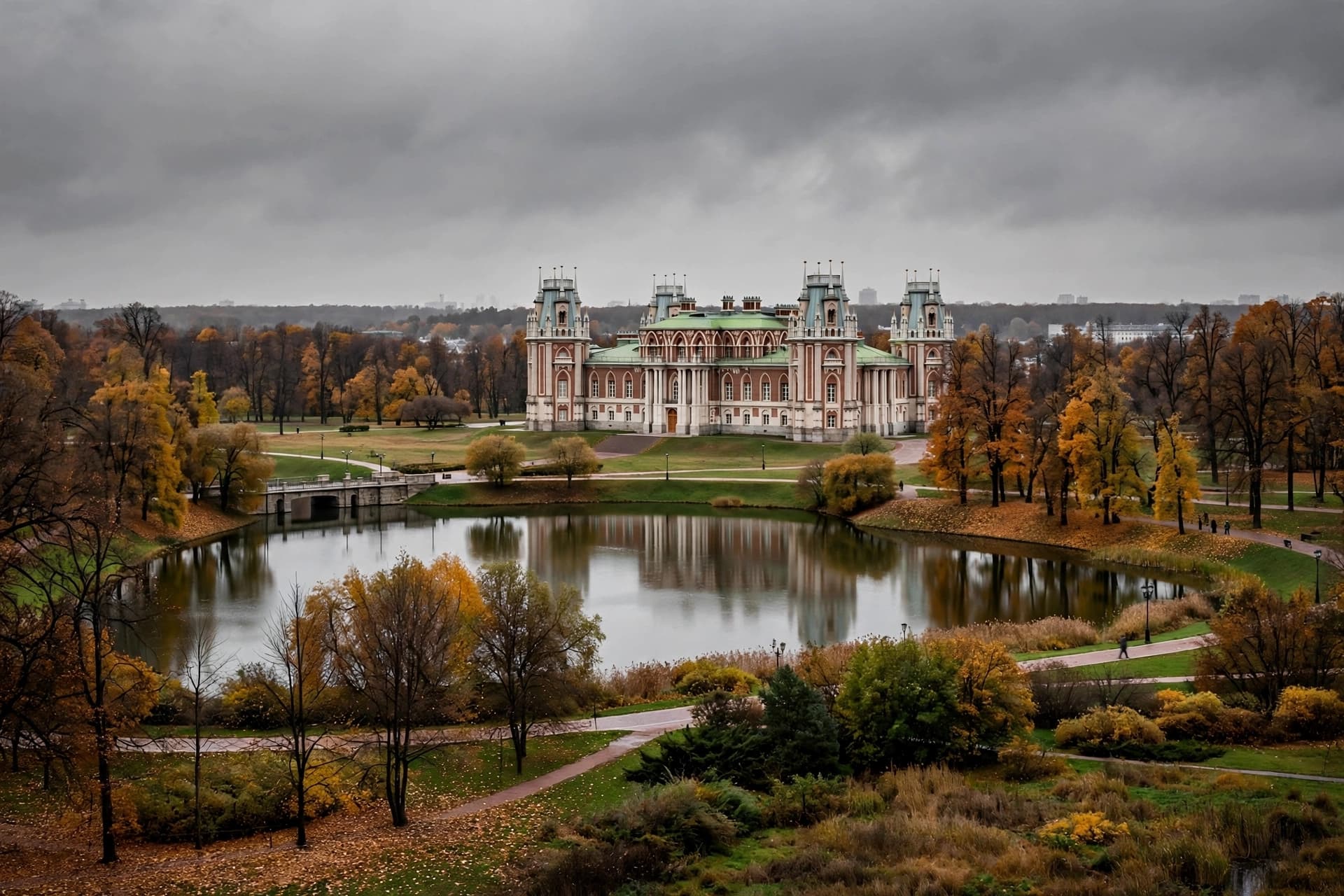
The sequence of events was unusually swift. On Saturday, the U.S. Embassy in Moscow issued a security alert warning of a credible threat to the Tsaritsyno Museum Reserve, a palace and park complex in southern Moscow, and urged Americans to avoid the area . The FSB said it received information from U.S. law enforcement through established channels and took appropriate measures. By Sunday, the agency announced the detention of a minor who had allegedly been preparing an attack on the site .
According to the FSB, the teenager had posted photographs of himself on TikTok wearing tactical clothing and a balaclava, holding an object resembling an automatic weapon. He also posted a photo taken at Tsaritsyno with the caption "I found a place" . The agency said a search of his home turned up clothing and accessories seen in the social media posts, and that his phone showed he was subscribed to a neo-Nazi channel on Telegram and had conducted numerous searches related to terrorist attacks, mass killings, and other acts of violence . The Russian Investigative Committee is assessing what legal action to pursue.
The FSB's public statement of gratitude to the American side was notable, not because such cooperation is unprecedented but because it arrived at a moment when relations between Washington and Moscow remain deeply strained. The two countries have exchanged security information before—in 2017, the United States warned Russia of a planned attack on Kazan Cathedral in St. Petersburg, and Vladimir Putin personally thanked Donald Trump. In 2024, the United States warned of an ISIS threat in Moscow; that warning was dismissed, and more than 140 people were killed days later in an attack on Crocus City Hall .
The Tsaritsyno complex was temporarily closed on Saturday following the U.S. alert, and the threat appears to have been neutralized before any harm occurred . The teenager has not been publicly identified, and the investigation is ongoing. What remains, beyond the facts of the case, is the peculiar geometry of a world in which two adversarial nations can still, on occasion, share a warning that saves lives—and then return to the work of opposing each other.
Image Disclaimer: The images in this article were created by artificial intelligence and are not photographs of the individuals or locations involved.
Sources: Yonhap News Agency, Sohu/Xinhua, KBS News, TVR Info, Reuters
Published by Banx Network. This article is part of the Banx decentralized media programme, powered by the BXE token on the XRP Ledger.