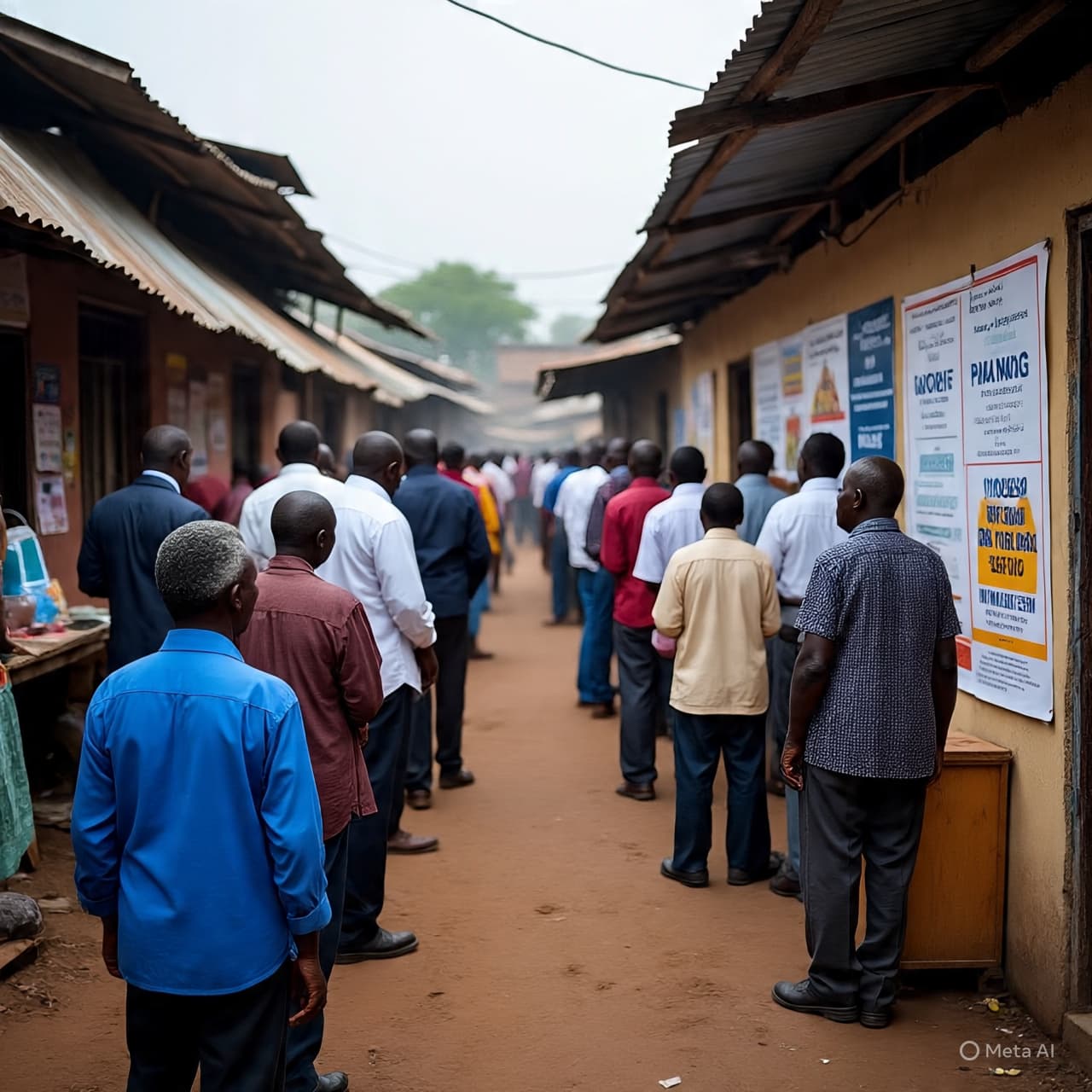
For the first time since the 2021 military takeover, voters in Guinea have returned to the polls, marking a pivotal moment in a country still navigating the uncertain terrain between military rule and civilian governance. The election, long delayed and closely watched, unfolded under the shadow of a transition that has stretched far beyond its original promises.
At the center of the process stands the military leader who seized power nearly four years ago, now positioned as the frontrunner in a contest shaped as much by control as by consent. Authorities have framed the vote as a necessary step toward restoring constitutional order, presenting it as evidence of progress after years of instability. Yet for many Guineans, the exercise carries a more complicated meaning.
The political landscape remains tightly managed. Several prominent opposition figures were barred from participating, and campaigning unfolded under strict limits. While officials described the process as inclusive and orderly, critics argued that the absence of meaningful competition reduced the election to a confirmation rather than a contest. The line between transition and entrenchment, they warned, has grown increasingly thin.
Security considerations dominated the atmosphere. Polling stations operated under heavy oversight, reflecting lingering concerns about unrest. In many areas, voters approached the ballot with caution rather than celebration, mindful of past upheavals and uncertain about what real change might follow. Participation, while symbolically significant, carried the weight of restrained expectations.
For the ruling authorities, the vote serves as a bid for legitimacy at home and abroad. International partners have urged a return to constitutional order while expressing concern over the pace and credibility of the transition. The election, therefore, functions less as an endpoint than as a test—of intent, of governance, and of the willingness to move beyond military rule.
As ballots were cast and counted, the outcome appeared largely predetermined. Yet the broader question remains unresolved: whether this election marks the beginning of genuine civilian rule or simply formalizes a power structure already in place. For a nation long shaped by cycles of intervention and uncertainty, the answer will define its political future.
Published by Banx Network. This article is part of the Banx decentralized media programme, powered by the BXE token on the XRP Ledger.