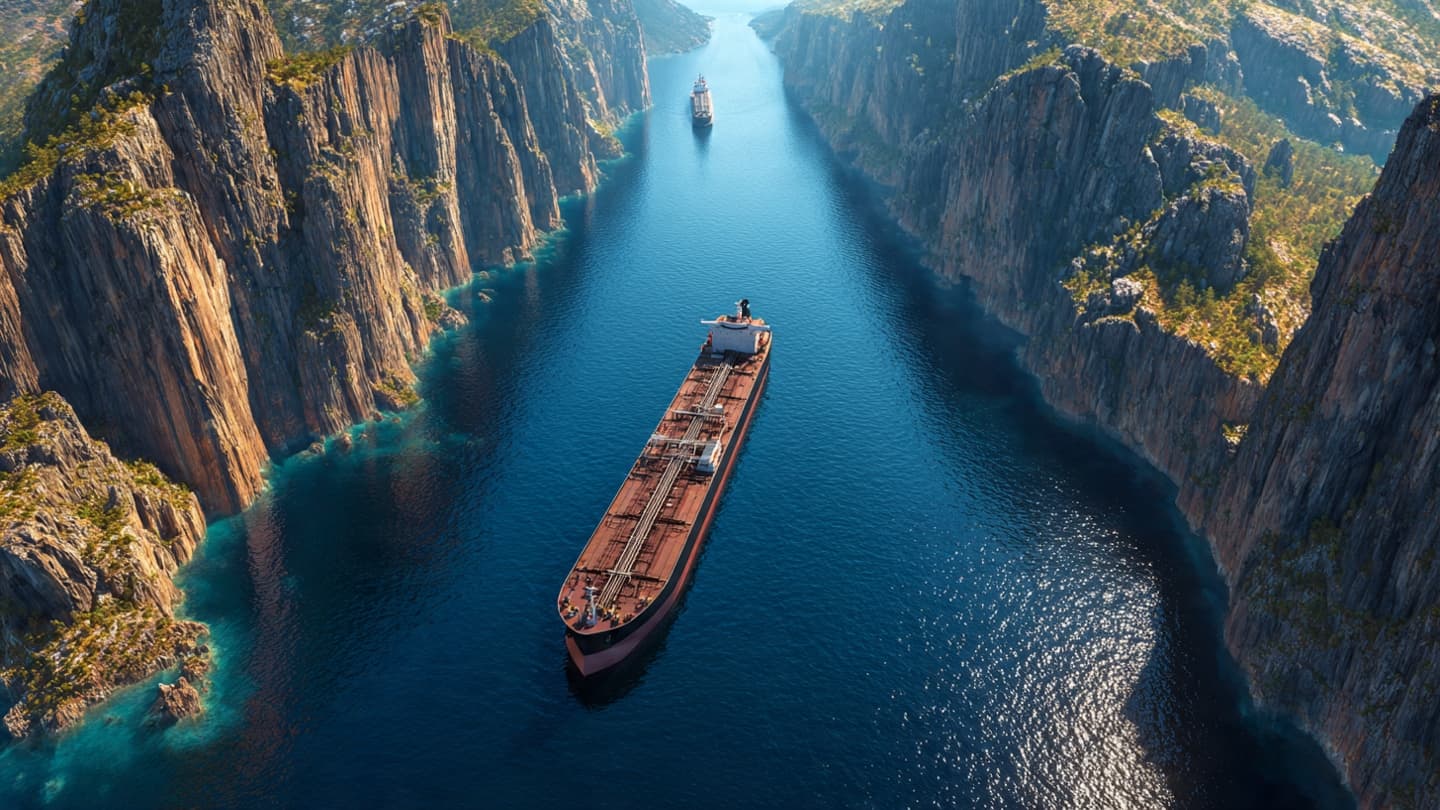
Across the world's oceans, certain waterways carry importance far beyond their geographic size. The Strait of Hormuz is one such passage. Serving as one of the most critical routes for global energy transportation, it connects producers and consumers across continents. Recent developments suggesting its reopening have attracted significant attention from governments, businesses, and financial markets alike.
Energy markets reacted positively to reports that shipping activity could gradually return to more normal levels. The waterway handles a substantial share of global oil exports, making its operational status a matter of international economic importance.
Shipping experts caution, however, that reopening a major maritime route does not automatically restore normal conditions overnight. Vessel schedules, insurance arrangements, logistical planning, and port operations often require time to adjust after periods of disruption.
Energy companies continue monitoring developments closely. Reliable transportation routes are essential for maintaining predictable supply chains and supporting stable market conditions. Even modest disruptions can influence pricing and planning decisions throughout the global economy.
The Strait of Hormuz occupies a unique strategic position. Connecting the Persian Gulf to international waters, it serves as a vital corridor for energy exports destined for markets in Asia, Europe, and beyond.
Financial analysts note that transportation stability can influence investor confidence. Energy prices often respond not only to supply and demand fundamentals but also to perceptions regarding logistical reliability and geopolitical risk.
Maritime operators are expected to proceed cautiously during the initial stages of renewed activity. Safety assessments, coordination with authorities, and operational planning remain important priorities as traffic increases.
Importing nations have welcomed signs of progress. Stable energy flows contribute to economic planning by helping reduce uncertainty surrounding fuel availability and transportation costs. Such stability can support broader economic growth objectives.
Industry observers emphasize that resilience within global energy systems depends upon both infrastructure and cooperation. Shipping routes, ports, pipelines, and international coordination all play important roles in maintaining reliable supply networks.
As vessels gradually return to one of the world's most important waterways, attention remains focused on implementation and long-term stability. The reopening of the Strait of Hormuz represents an encouraging development for global energy markets, even as stakeholders recognize that full normalization may take additional time.
AI Image Disclaimer Images in this article are AI-generated illustrations, meant for concept only.
Sources Reuters Bloomberg The Guardian Financial Times International Energy Agency (IEA)
Published by Banx Network. This article is part of the Banx decentralized media programme, powered by the BXE token on the XRP Ledger.