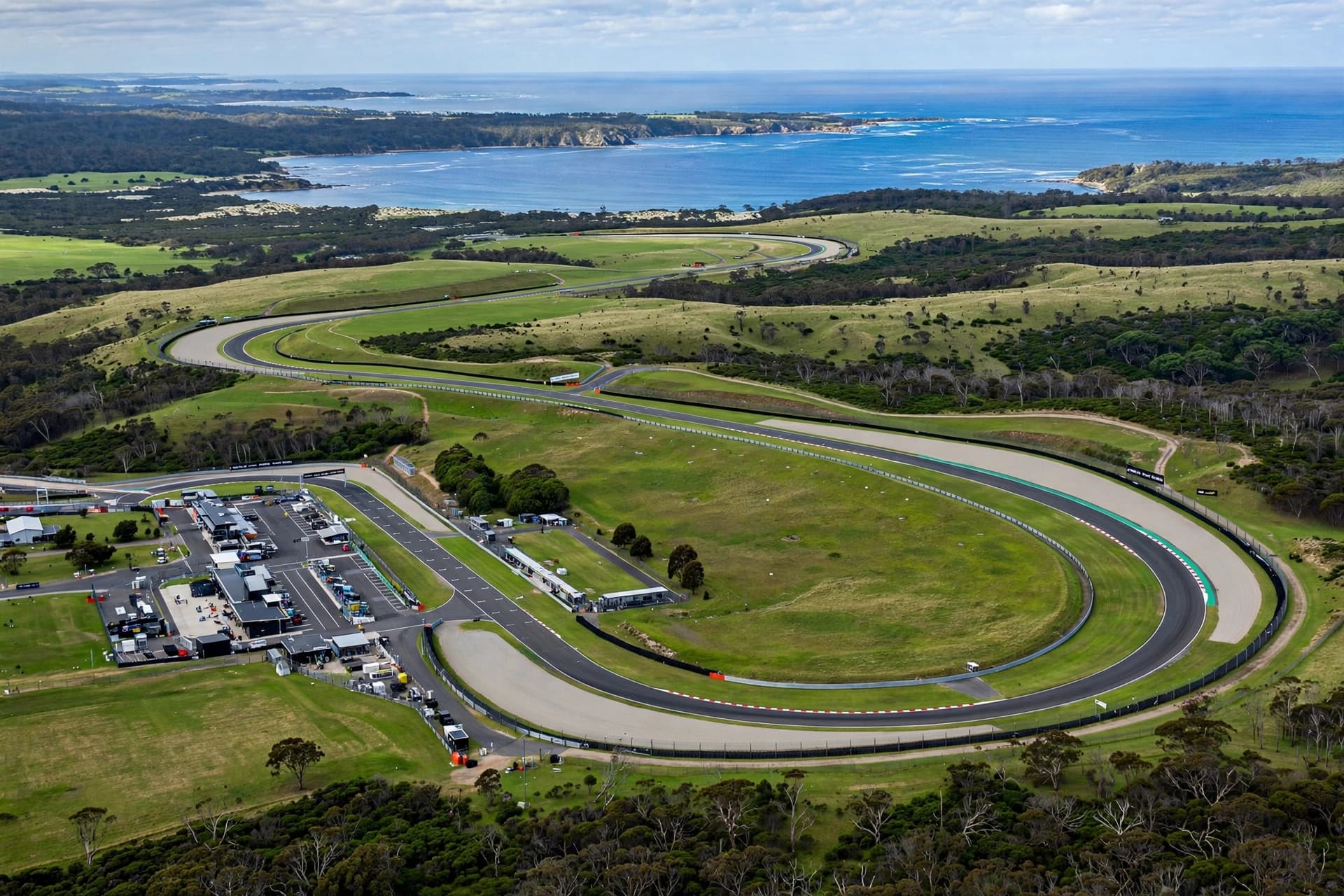
There is a certain sadness that settles over a place when it knows it is being left behind. Not the sharp grief of sudden loss, but the slower, more reflective ache of a farewell that has been coming for years. Phillip Island, that windswept ribbon of asphalt south of Melbourne, will host its final MotoGP race this weekend, and the riders who have danced with its curves are speaking of it the way one speaks of a home that will soon belong to someone else.
The 4.4-kilometer circuit has long been revered for its high-speed layout, its elevation changes, and the old-school character that resists the sanitized precision of modern track design . Its coastal setting adds a dimension that no amount of engineering can replicate: the wind, the salt air, the sense that the race is unfolding at the edge of something vast. For the riders, it has been a favorite—not despite its demands, but because of them.
Jack Miller, the only Australian on the grid, described the emotions as "pretty high" as he prepared for his final home Grand Prix at the venue . "It's probably one of the most iconic tracks on the calendar and produced arguably some of the best races we've ever seen in MotoGP," he said. On a MotoGP bike, he explained, "you're kind of dancing with the bike the whole way through, trying to manage the shaking, the wheelie and the way the bike deals with the wind. You can never fully attack" .
Pedro Acosta, the young KTM rider, placed Phillip Island in the same breath as Mugello and Jerez—tracks that carry the weight of history. "On one side, it will be beautiful for everyone; and on the other one, it will be so sad," he said. "It will be so sad that next year we don't come here" . Marc Marquez, a two-time winner at the circuit, spoke of the "healthy respect" the track commands, the way a crash sends a rider into the gravel "in no time" .
Jorge Martin, Marquez's title rival, offered a more personal reflection. "I'm sure I will miss Phillip Island for the next few years," he said. "Maybe we will come back in the future, but for the moment I will miss it." He spoke not only of the track but of the place itself—the rented holiday homes, the wildlife, the surfing. "The vibe here is great," he said .
The departure is not a sudden decision. Aging facilities and limited accommodation had cast doubt over the venue's future for years, and this year the state government of South Australia secured a new deal to move the Australian Grand Prix to a revamped street circuit in Adelaide, which once hosted Formula 1 . The riders understand the commercial logic even as they mourn the loss. But understanding does not soften the farewell.
What remains, after the engines fall silent on Sunday, is the memory of what the place offered: a track that asked everything of a rider and gave everything back in return. The riders will move on to Adelaide, to new challenges and new surfaces. But somewhere in the collective memory of the sport, Phillip Island will remain—windy, fast, unforgiving, and beloved.
Images in this article are AI-generated for illustrative purposes only.
Sources: Motorsport.com, Yahoo Sports, Fox Sports, GPblog
Published by Banx Network. This article is part of the Banx decentralized media programme, powered by the BXE token on the XRP Ledger.