There is a particular kind of diplomacy that lives in the space between what is announced and what is written down. In September, European Commission President Ursula von der Leyen stood before an audience and offered Canada something that had never existed before: the prospect of becoming the European Union's first "associate member." The phrase was striking, ambitious, and—as it turned out—legally undefined. Now, as the 21st Canada-EU summit approaches in Montreal, the language has quietly shifted, and the title has been set aside.
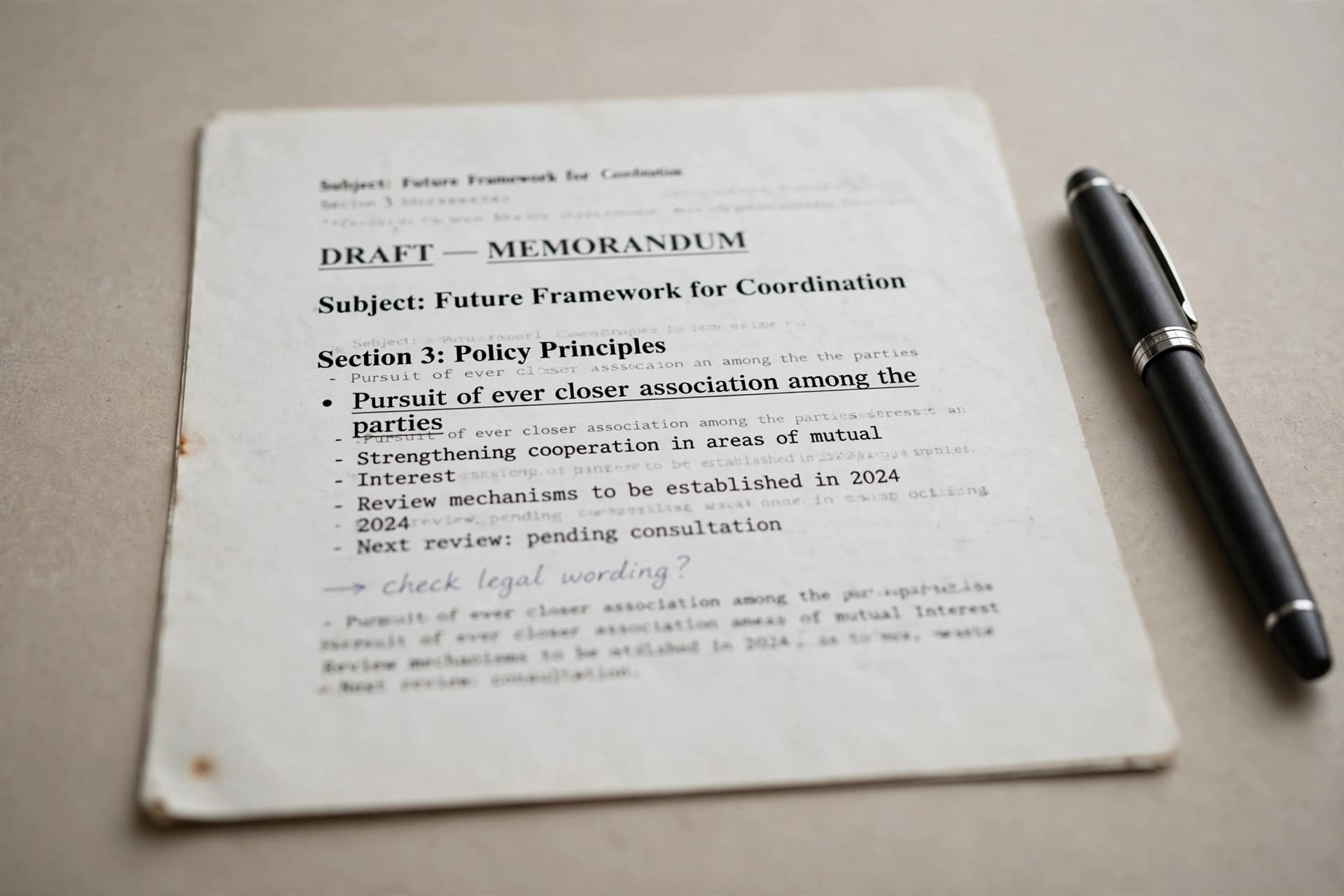
According to sources who have seen the latest draft of the joint statement, the term "associate member" has been removed. In its place, the document now speaks of an "ever closer association" between Canada and the 27-nation bloc . The change was first reported by Politico, and it reflects a reality that some EU member states were unwilling to ignore: there is no such status as associate membership in the EU's treaties. Countries are members, or they are not. Candidate countries have a path. But "associate member" was a phrase without a legal home.
The opposition appears to have come most firmly from Germany, which sources described as treating the term as a red line . Other member states raised questions as well, uncertain what the status would entail and why it was being proposed without a framework to support it. The European Commission had not provided details on what associate membership would concretely look like, and the ambiguity made some capitals uneasy . The title, whatever its intentions, had become a complication.
Prime Minister Mark Carney has been characteristically measured about the shift. Speaking to reporters before a cabinet meeting, he said the nomenclature does not matter as long as the relationship delivers for Canadians. "The good news is it doesn't matter about specific names or nomenclature," he said. "What matters is the difference that it will make to the lives of Canadians … and Canada as a whole becoming a more independent, more sovereign nation, so we can live our lives as we choose" .
That framing is pragmatic, and it may well be correct. Sources emphasized that the removal of the term does not mean the substance of the agreement has changed . The draft statement still promises deeper cooperation on trade, energy, critical minerals, and other areas. The summit will proceed, the documents will be signed, and the relationship will continue to deepen in ways that matter more than a label. But there is a difference between saying the name does not matter and acknowledging that the name was, for a time, the story.
For Canada, the episode is a reminder of the complexity of its position in the world. The country is not seeking full EU membership, and Carney has said as much. What it wants is a closer partnership, one that reflects shared values and shared interests in a world where the United States has become an unpredictable partner. The EU wants the same. The difficulty lies in finding language that captures that ambition without overpromising or creating expectations that cannot be met.
The joint statement will be released at the summit on Friday. The draft is finalized by EU member countries, though Canada could still request changes . What the final text will say is not yet certain, but the direction is clear. The title has been dropped. The association remains. And the work of building a relationship that does not depend on a name continues.
Image note: The visuals accompanying this article were created using artificial intelligence and do not depict the actual summit or the individuals involved.
Sources: CBC News, Radio-Canada, Politico, VRT
Published by Banx Network. This article is part of the Banx decentralized media programme, powered by the BXE token on the XRP Ledger.