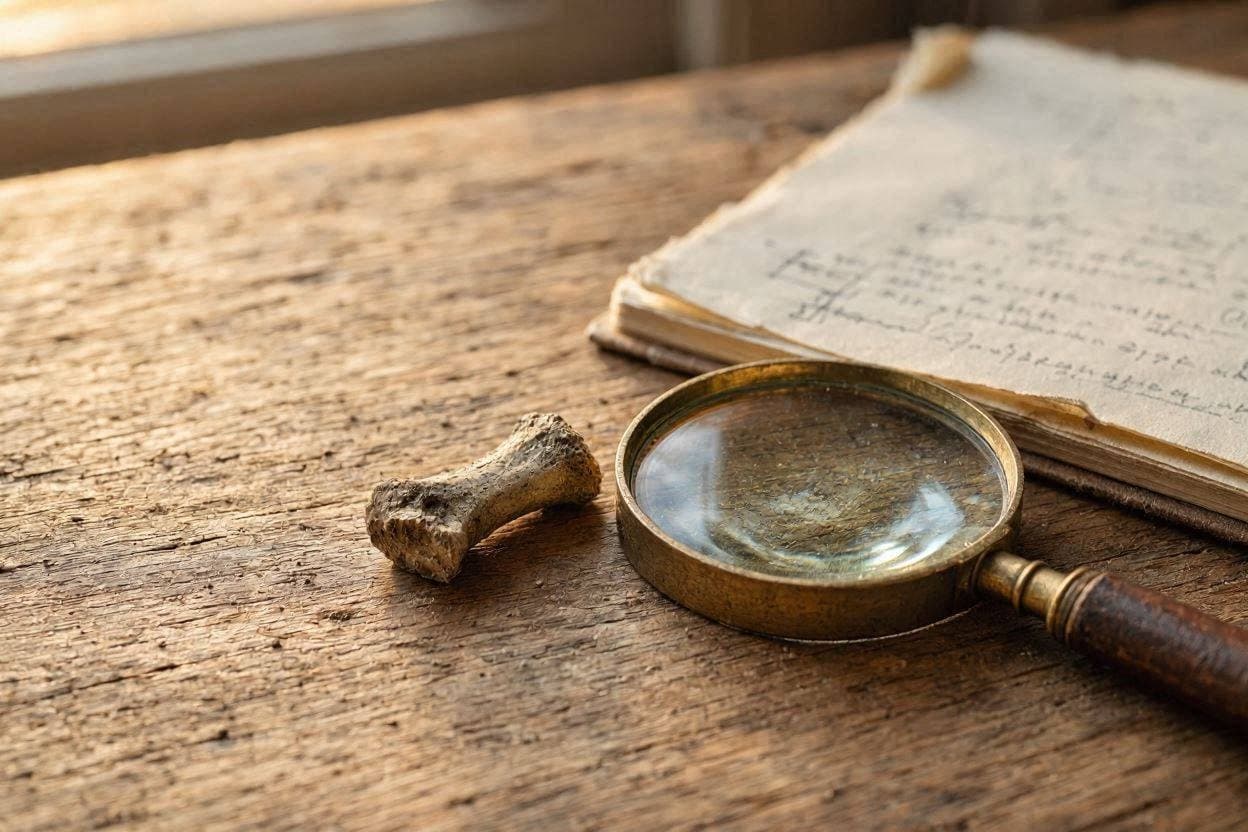
In the vast and silent archives of natural history, truth often hides in plain sight, waiting for a keen eye to reveal it. For years, a small, unassuming bone sat among a collection of larger, more dramatic fossils, dismissed as insignificant or misidentified. It was not until a routine re-examination that researchers realized they were holding a piece of paleontological history: the first-known foot bone of a baby Tyrannosaurus rex. This discovery serves as a gentle reminder that even in well-studied fields, there are secrets left to uncover, tucked away in the shadows of our own assumptions.
Body: The bone, a tiny phalanx from the foot, was originally part of a larger assemblage of fossils collected from the Hell Creek Formation in Montana. For decades, it was cataloged alongside bones from adult dinosaurs and other species, its juvenile origin overlooked due to its small size and fragmented state. It was only when a team of researchers decided to revisit the collection with fresh perspectives and advanced imaging techniques that the true nature of the specimen came to light. The bone’s morphology matched that of a very young theropod, specifically one belonging to the tyrannosaur lineage.
This finding is significant because juvenile T. rex fossils are exceptionally rare. Most of what we know about these apex predators comes from sub-adults and adults, leaving a gap in our understanding of their early development. The discovery of a foot bone from a hatchling or very young juvenile provides crucial data on how these animals grew and moved during their most vulnerable stages. It suggests that even as babies, they possessed the robust skeletal structure that would later support their immense weight.
The misidentification highlights the challenges of paleontology, where context is everything. Without the surrounding matrix or associated bones, isolated fragments can be difficult to classify. However, it also underscores the value of museum collections as living resources. As technology improves and scientific questions evolve, old specimens can yield new insights, proving that the work of discovery does not end when the fossil leaves the ground.
For scientists, this bone offers a glimpse into the life cycle of one of Earth’s most famous creatures. It raises questions about parental care, growth rates, and the ecological role of juvenile tyrannosaurs. Did they hunt differently? Were they protected by adults? Each small bone adds a piece to the puzzle, helping to reconstruct a more complete picture of their existence.
The emotional resonance of finding a baby T. rex is undeniable. It humanizes these ancient giants, reminding us that they too began as small, fragile beings. This connection across millions of years fosters a deeper appreciation for the continuity of life and the shared biological heritage of all creatures, extinct or extant.
As research continues, experts hope to find more juvenile specimens to corroborate these findings. The single foot bone is a starting point, a key that may unlock further discoveries in existing collections. It invites museums and researchers worldwide to look again at their holdings, wondering what else might be hiding in plain sight.
Closing: The identification of the baby T. rex foot bone is a testament to the patience and precision of scientific inquiry. It reminds us that history is not static but constantly being rewritten as we learn to see with new eyes. In the quiet corners of a museum drawer, a small bone has spoken, adding a tender chapter to the story of the king of dinosaurs.
AI Image Disclaimer: The images accompanying this article are AI-generated conceptual illustrations of fossil fragments and paleontological settings, designed to visualize the theme of discovery without depicting specific real-world artifacts.
Sources: Smithsonian Magazine National Geographic Science Daily Journal of Vertebrate Paleontology
Published by Banx Network. This article is part of the Banx decentralized media programme, powered by the BXE token on the XRP Ledger.