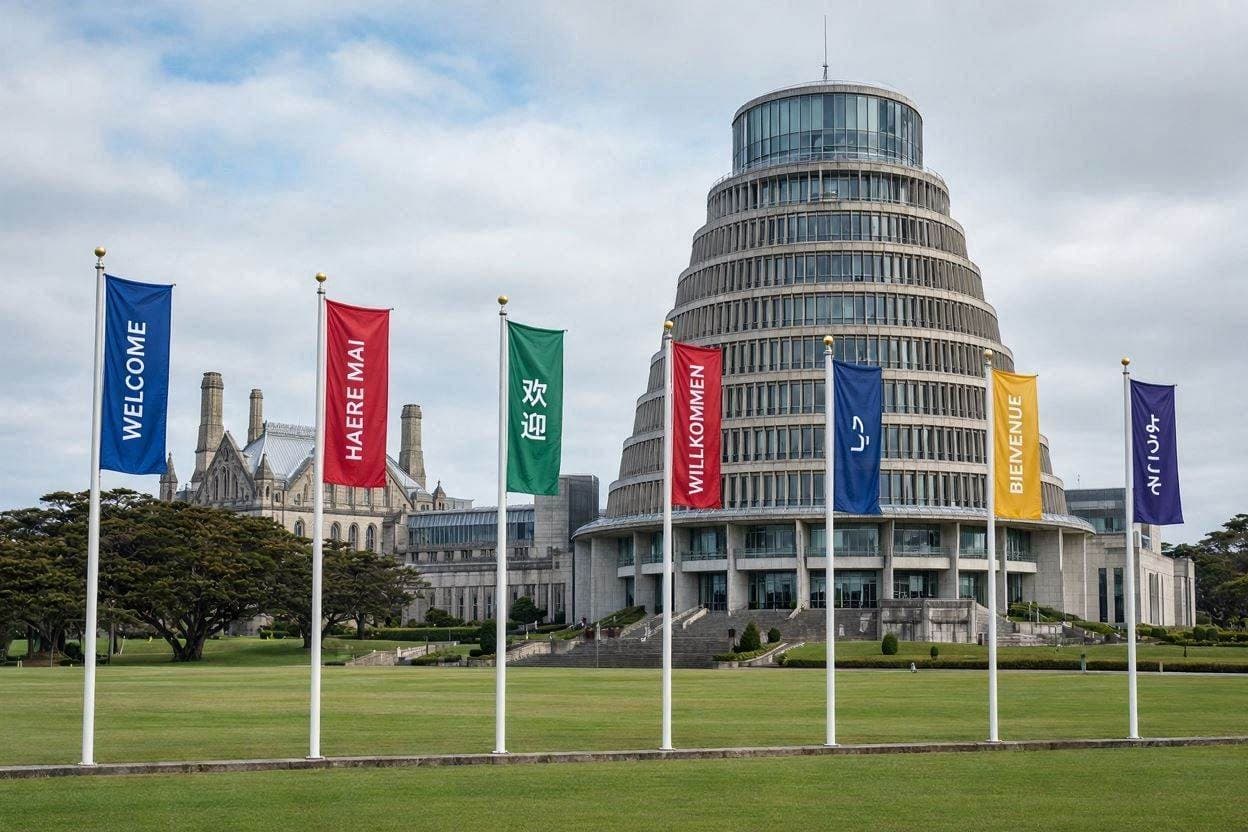
In the land of the long white cloud, where the winds carry the echoes of ancient chants and the rhythms of modern life, a legislative shift has redefined the linguistic landscape. For decades, English has been the de facto tongue of Aotearoa, spoken by the vast majority of its people in homes, schools, and workplaces. Yet, it lacked the formal statutory recognition afforded to Te Reo Māori and New Zealand Sign Language. With the passing of the English Language Bill, this anomaly has been corrected, granting English the status of an official language. It is a move that invites reflection on identity, inclusivity, and the symbolic power of law in a multicultural society.
The journey to this legislative milestone was not without debate. Proponents argued that recognizing English formally would ensure its protection and promote clarity in legal and public domains. They emphasized that while English is widely used, its lack of official status created a peculiar gap in the nation’s linguistic framework. By enshrining it in law, alongside Te Reo Māori and NZSL, the government aims to create a balanced triad of official languages, each with its own distinct role and heritage.
Critics, however, viewed the bill with skepticism. Some Māori leaders and linguists expressed concern that the move might dilute the efforts to revitalize Te Reo Māori, which has fought for recognition against centuries of colonization. They argued that English, as the dominant global language, does not need legislative protection, whereas indigenous languages require active support to survive. This tension highlights the delicate balance between acknowledging historical realities and fostering cultural preservation.
The bill, introduced by the National-led coalition government, passed through Parliament with steady support. It mandates that English be recognized in legislation, ensuring that government services and documents are accessible in the language most commonly used by citizens. This practical aspect of the law aims to improve efficiency and transparency, reducing ambiguity in legal interpretations and public communications.
For everyday New Zealanders, the change may seem subtle. English remains the primary medium of communication, and daily life continues much as before. However, the symbolic weight of the legislation is significant. It affirms the place of English in the national identity while reinforcing the commitment to bilingualism and biculturalism that defines modern New Zealand. It is a statement of unity in diversity.
Educational institutions are now reviewing their policies to align with the new legal framework. Schools and universities are encouraged to promote proficiency in all three official languages, fostering an environment where students can appreciate the richness of their linguistic heritage. This holistic approach to language education aims to build bridges between communities and enhance mutual understanding.
The international community watches with interest, noting how New Zealand navigates its complex linguistic history. The model of triple official status offers a unique case study in language policy, demonstrating how a nation can honor its indigenous roots while acknowledging the practical realities of global communication. It is a testament to the country’s progressive approach to social cohesion.
As English takes its place alongside Te Reo Māori and NZSL, New Zealand reaffirms its commitment to a inclusive and respectful society. The legislation is more than a legal formality; it is a celebration of the voices that shape the nation. In recognizing English, the country does not diminish others but rather completes a picture of linguistic harmony.
AI Image Disclaimer: The visuals accompanying this article are AI-generated illustrations designed to represent the themes of linguistic diversity and national identity.
Sources: The Guardian, New Zealand Parliament, Wikipedia, RNZ
Published by Banx Network. This article is part of the Banx decentralized media programme, powered by the BXE token on the XRP Ledger.