There is a certain melancholy in watching a machine that spent its life looking outward finally turn homeward, not by choice but by the slow, inexorable pull of gravity. The Neil Gehrels Swift Observatory was launched on November 20, 2004, with a singular purpose: to catch the universe in the act of exploding. Gamma-ray bursts, supernovas, the violent deaths of stars—Swift was built to swivel quickly toward these fleeting events, to capture their light before it faded. For twenty-two years, it did exactly that, discovering more than 2,000 gamma-ray bursts and 1,400 exploding stars, along with comets, asteroids, and black holes shredding stars .
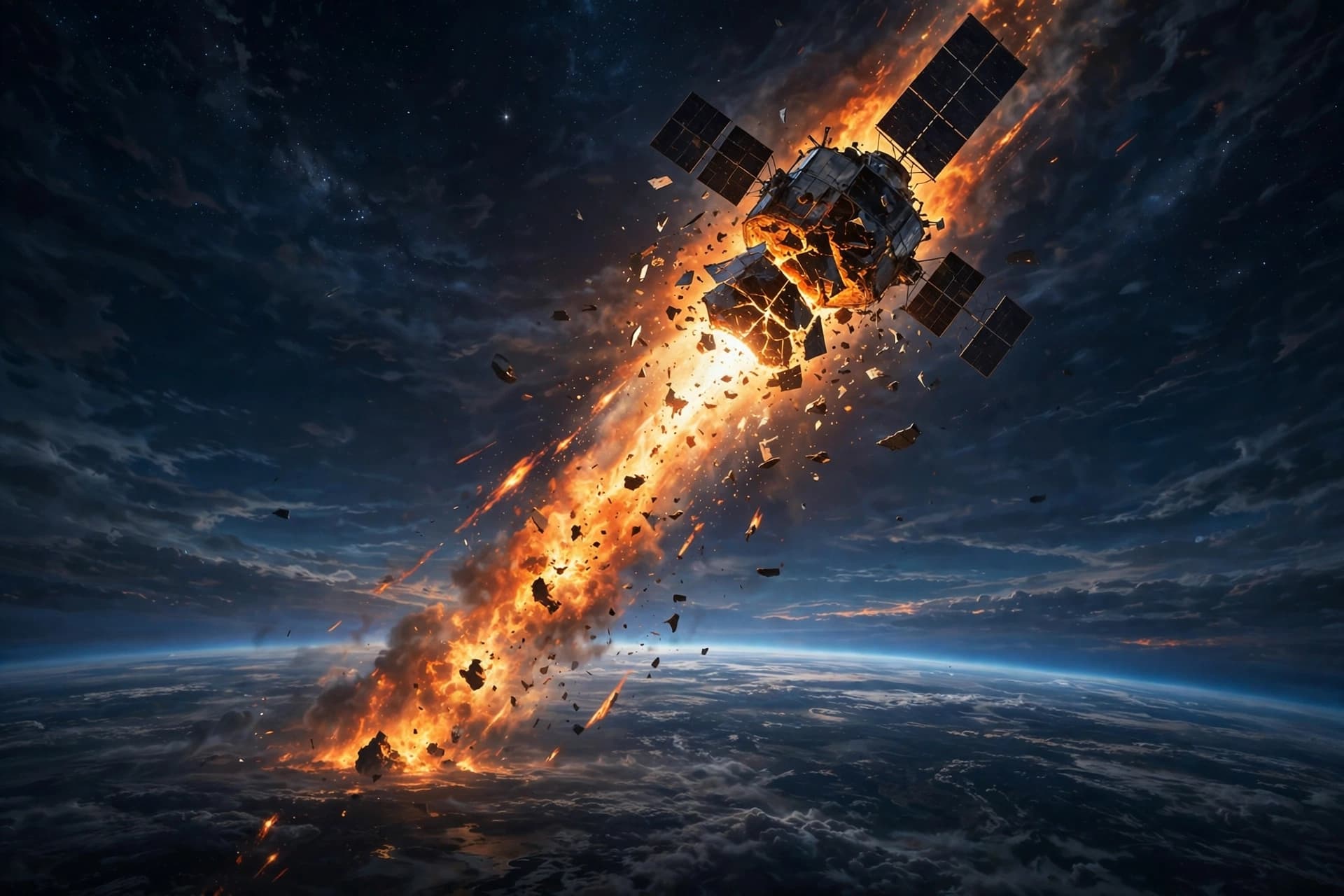
Now, the telescope is falling. Intense solar activity over the past few years has heated Earth's upper atmosphere, increasing drag on objects in low orbit. Swift, which was designed to operate for a few years but far exceeded its expected lifetime, has been dragged down faster than anticipated. The U.S. Space Force predicted that the 1.5-ton observatory would re-enter the atmosphere on or around October 30 . Most of the spacecraft is expected to burn up, but a handful of pieces made of denser-than-lead tungsten and some mirror components could survive the fiery descent, according to NASA's Brad Cenko, the mission's chief scientist .
Where those pieces might land is a matter of orbital mechanics and probability. Any surviving debris will most likely plunge into the ocean, which covers the majority of the planet's surface. But swaths of Africa, Australia, India, Southeast Asia, and Central and South America fall within the re-entry zone, and the Space Force tracked the telescope's dwindling path in the final days . The risk to any individual on the ground is vanishingly small, a statistical abstraction rather than a personal threat. But the fact of re-entry itself carries a weight that statistics cannot capture.
There was an attempt to save Swift. NASA hired Katalyst Space, a commercial company, to mount a rescue mission. The plan involved a three-armed robot named Link, which launched in July and was intended to rendezvous with the telescope and boost it to a higher orbit. But Link ran into trouble and never got closer than twelve to fifteen kilometers from Swift. The robot itself plunged back to Earth in September, and the rescue was called off . Swift resumed observations briefly after the rescue attempt failed, discovering even more gamma-ray bursts, but by late October, it was too low to remain steady for observations. Its systems were shut down .
For the team that operated Swift for more than two decades, the end is both expected and painful. "We've known this day would come since before Swift was launched," said John Nousek, an astronomer at Pennsylvania State University who led the control team. "At least in low-Earth orbit, what goes up must come down. And that end is catastrophic" . The word "catastrophic" is not an exaggeration. A spacecraft that cost hundreds of millions of dollars, that was built with care and operated with devotion, that contributed immeasurably to our understanding of the most violent phenomena in the cosmos, will end its existence as a streak of light and a scattering of debris.
Swift's legacy, however, is not measured in its final moments. It was a first responder for the Hubble and Webb space telescopes, alerting them to cosmic events so they could follow up with deeper observations. It was a workhorse, unglamorous but indispensable, the kind of mission that rarely makes headlines but quietly makes science possible. Its ability to slew rapidly—to swivel toward a burst of gamma rays within seconds of detection—was its superpower, and it used that power thousands of times . Scientists are still figuring out how to fill the gap its absence creates.
There is no ceremony for a satellite's death. No flag is lowered, no bell is rung. The telescope simply descends, its orbit decaying day by day, until the atmosphere claims it. But those who built it, who operated it, who relied on its data, will remember. The lessons learned from Swift, its operators hope, will be applied to new generations of space missions. The universe is still full of explosions, and someone, someday, will build the next machine to watch for them.
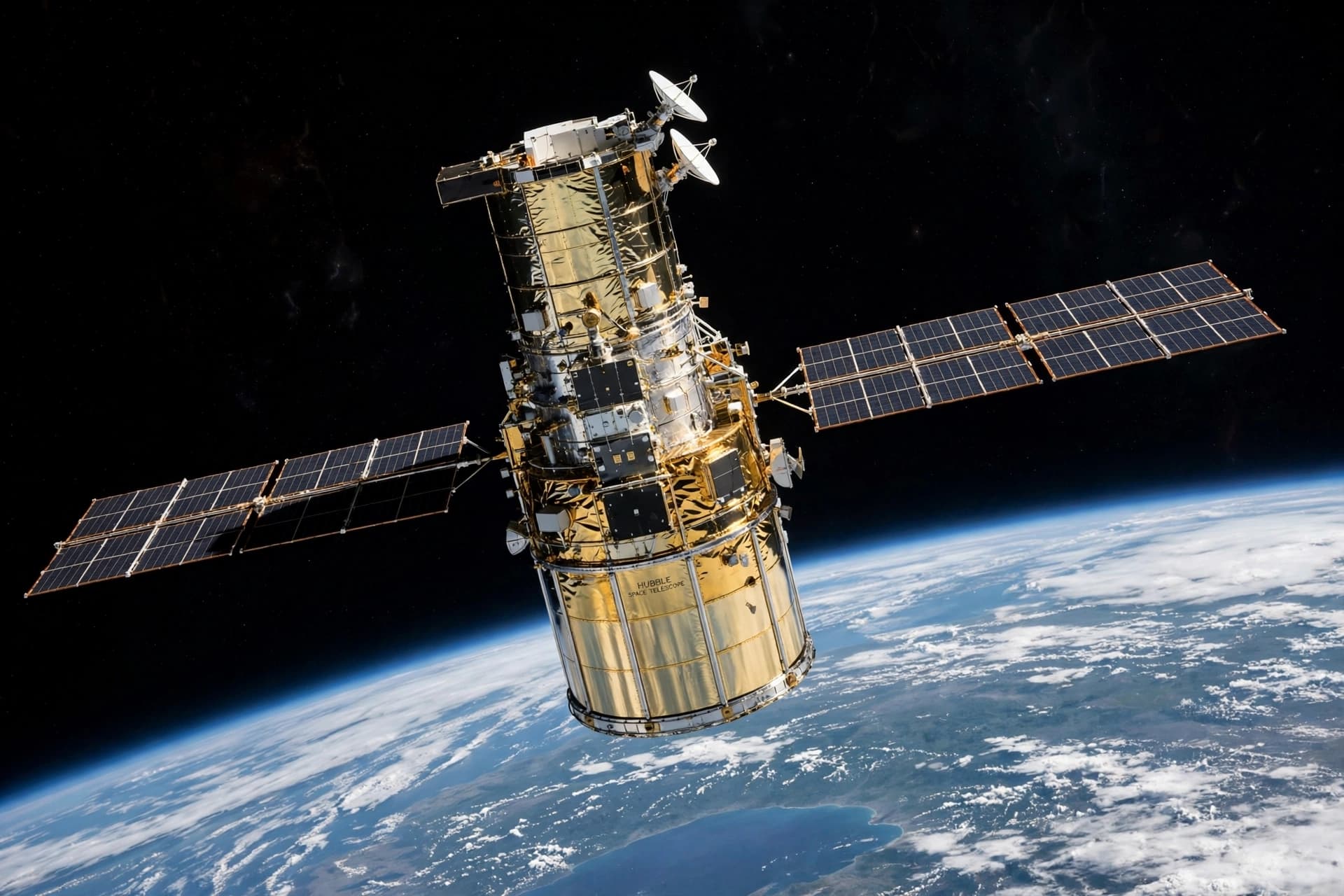
Image Disclaimer: This article's image is an AI-generated illustration and does not represent the actual Swift Observatory or its re-entry.
Sources: CBC News, The Hindu, Deccan Chronicle, The Associated Press
Published by Banx Network. This article is part of the Banx decentralized media programme, powered by the BXE token on the XRP Ledger.