Out in the stillness of space, far beyond the comforting pull of Earth, there is a machine that watches the universe as if it were reading an endless, unfolding manuscript. Its existence feels almost paradoxical—both immensely powerful and astonishingly delicate.
The James Webb Space Telescope operates at the second Lagrange point, roughly a million miles from Earth, a region where gravitational forces balance in a way that allows a spacecraft to remain relatively stable. From this distant perch, it observes galaxies formed billions of years ago.
Despite its scientific power, the telescope’s energy consumption is surprisingly modest, running on less electricity than a typical household kettle. This efficiency is not a limitation but a design necessity, ensuring that limited onboard power is allocated to precision instruments rather than heavy consumption.
What makes its engineering story particularly striking is the complexity of its deployment. After launch, Webb unfolded itself in space through a sequence of steps so intricate that engineers identified 344 single points of failure—individual steps where a malfunction could have jeopardized the mission.
Each of these steps, from unfolding the sunshield to aligning the primary mirror segments, required absolute precision. There was no possibility of manual repair once the telescope left Earth, only remote control and pre-programmed choreography executed millions of miles away.
This fragility is often contrasted with the telescope’s scientific resilience. Once successfully deployed, it became one of humanity’s most advanced tools for observing infrared light, revealing details of star formation, distant galaxies, and exoplanet atmospheres.
The contrast between vulnerability and capability is part of what makes the mission so compelling. A structure that could be undone by a single failure now serves as one of humanity’s most stable windows into the early universe.
Its success reflects decades of engineering, international collaboration, and careful risk management. Every bolt, hinge, and motor was designed with the awareness that repair was not an option.
Today, the telescope continues its mission of cosmic observation, demonstrating how extraordinary precision engineering can transform risk into discovery.
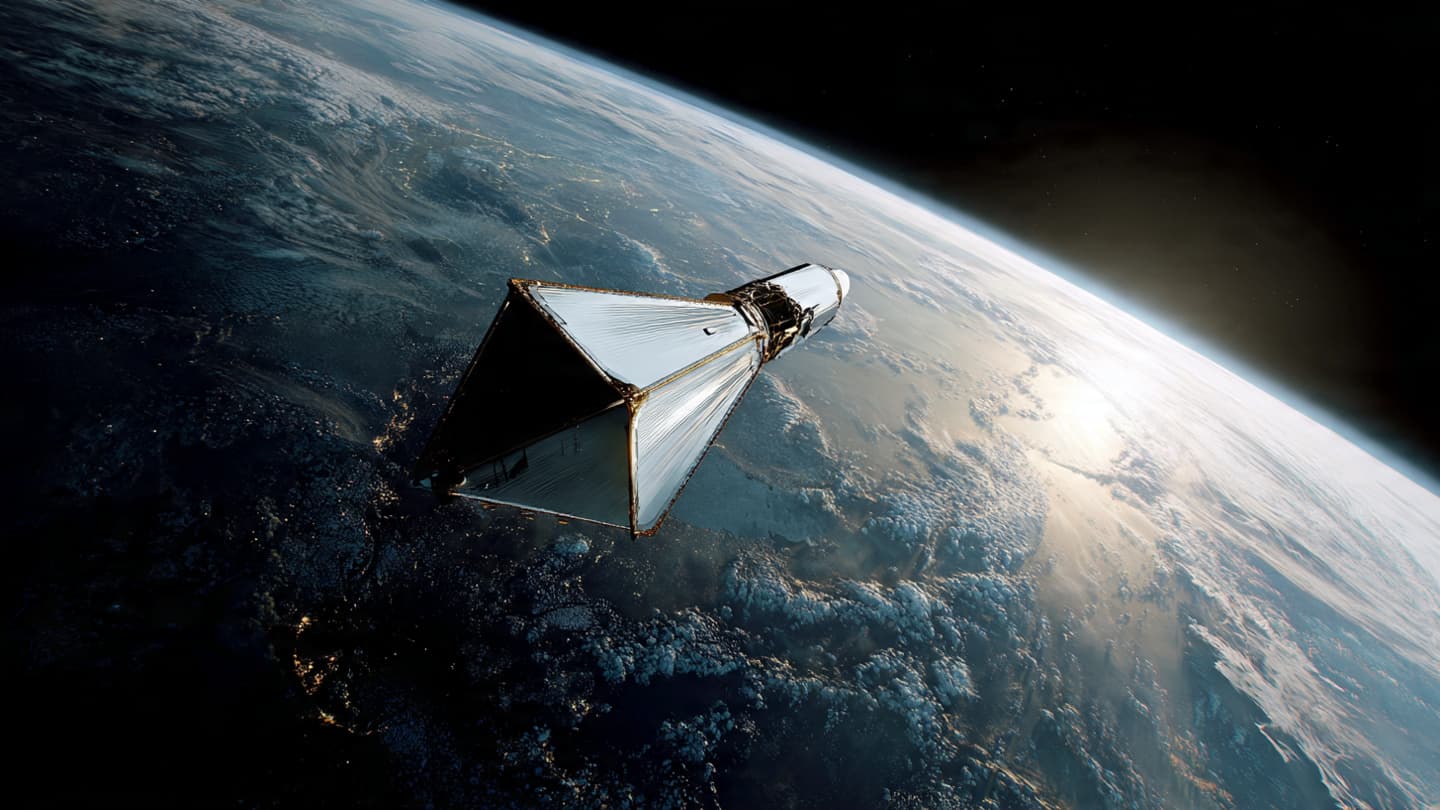
AI Image Disclaimer Images accompanying this topic are AI-generated visual interpretations intended to represent spacecraft deployment and deep-space observation concepts.
Source Verification Check (credible outlets typically associated): NASA, ESA, Space Telescope Science Institute, Scientific American, Nature, BBC Science Focus
Published by Banx Network. This article is part of the Banx decentralized media programme, powered by the BXE token on the XRP Ledger.