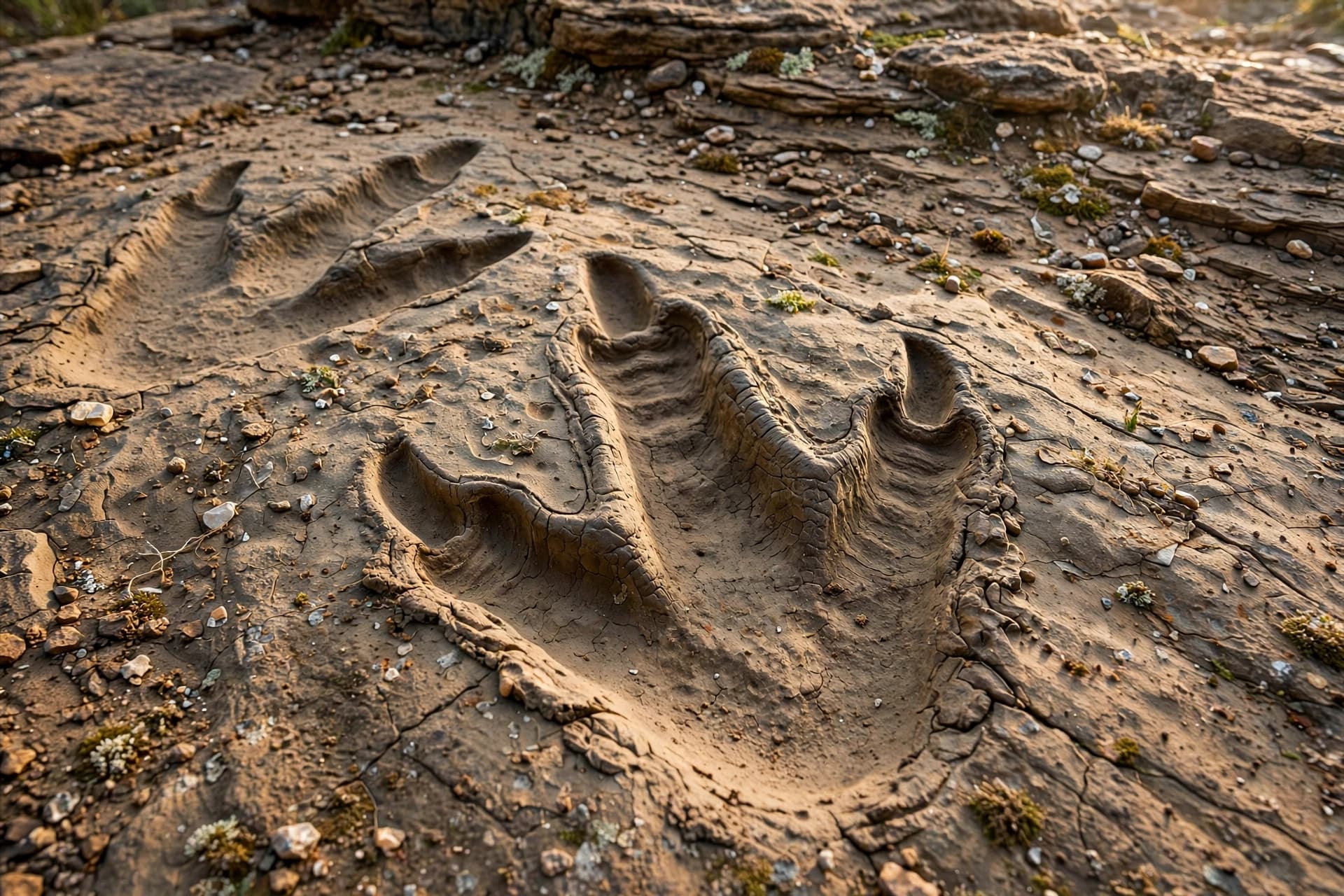
In the quiet, windswept badlands of North Dakota, where the earth reveals its ancient secrets layer by layer, a remarkable discovery has bridged the gap between the present and the distant past. Ryan Flannery, a high school science teacher with a keen eye for detail, stumbled upon a series of fossilized footprints that would rewrite a small but significant chapter in paleontological history. These tracks, attributed to the mighty Tyrannosaurus rex, represent the first known trackway of this iconic predator in the state, offering a rare glimpse into the movement and behavior of a creature that ruled the land 66 million years ago.
The discovery occurred during a routine field trip with his students, a testament to the idea that scientific breakthroughs often happen when we are simply paying attention. Flannery noticed a series of large, three-toed impressions preserved in the sandstone, distinct from the surrounding rock. Recognizing their potential significance, he contacted experts at the North Dakota Geological Survey, who confirmed that the prints belonged to a T. rex. The find is particularly special because it is not just a single footprint, but a trackway—a sequence of steps that reveals how the animal moved.
Trackways are invaluable to paleontologists because they provide dynamic information that bones alone cannot. By analyzing the stride length and depth of the prints, scientists can estimate the speed, gait, and even the weight distribution of the dinosaur. In this case, the tracks suggest that the T. rex was walking at a leisurely pace, perhaps patrolling its territory or searching for food along an ancient riverbank. This behavioral insight adds flesh and muscle to the skeletal reconstructions we are familiar with, bringing the animal to life in a more tangible way.
North Dakota has long been a rich source of T. rex fossils, including the famous "Sue" and "Trike," but actual footprints have remained elusive. The state’s geology, dominated by the Hell Creek Formation, is ideal for preserving bones but less so for delicate surface impressions. The survival of these tracks is a matter of fortunate circumstance, requiring specific conditions of mud consistency, rapid burial, and mineralization to prevent erosion over millions of years.
For Flannery, the discovery was a moment of profound connection to the deep past. As an educator, he has spent years teaching students about the importance of observation and curiosity. Finding these tracks validates those lessons in the most dramatic way possible, showing that anyone, regardless of their professional title, can contribute to our understanding of natural history. His story serves as an inspiration to amateur enthusiasts and students alike, encouraging them to look closely at the world around them.
The scientific community has welcomed the find with enthusiasm, noting its importance for understanding the distribution and behavior of T. rex populations in the Late Cretaceous. The trackway provides a new data point for mapping the range of these predators and offers clues about the environments they inhabited. It also highlights the ongoing potential of the Hell Creek Formation to yield new discoveries, reminding us that the ground beneath our feet still holds many mysteries.
As the site is studied further, researchers hope to extract more details about the individual that made the prints. Was it a juvenile or an adult? Was it traveling alone or in a group? While some questions may remain unanswered, the trackway stands as a permanent record of a moment in time, frozen in stone. It is a silent testimony to the power and presence of one of Earth’s most formidable creatures.
Ryan Flannery’s discovery of the first T. rex trackway in North Dakota is a reminder of the enduring allure of paleontology. It underscores the value of citizen science and the joy of uncovering history in unexpected places. As these footprints continue to be studied, they will help paint a more complete picture of the life and times of the tyrant king.
AI Image Disclaimer: The illustrations accompanying this article are AI-generated visualizations designed to evoke the atmosphere of the discovery site and the ancient landscape, not actual photographs of the fossilized tracks.
Sources: Smithsonian Magazine, Live Science, National Geographic, North Dakota Geological Survey
Published by Banx Network. This article is part of the Banx decentralized media programme, powered by the BXE token on the XRP Ledger.