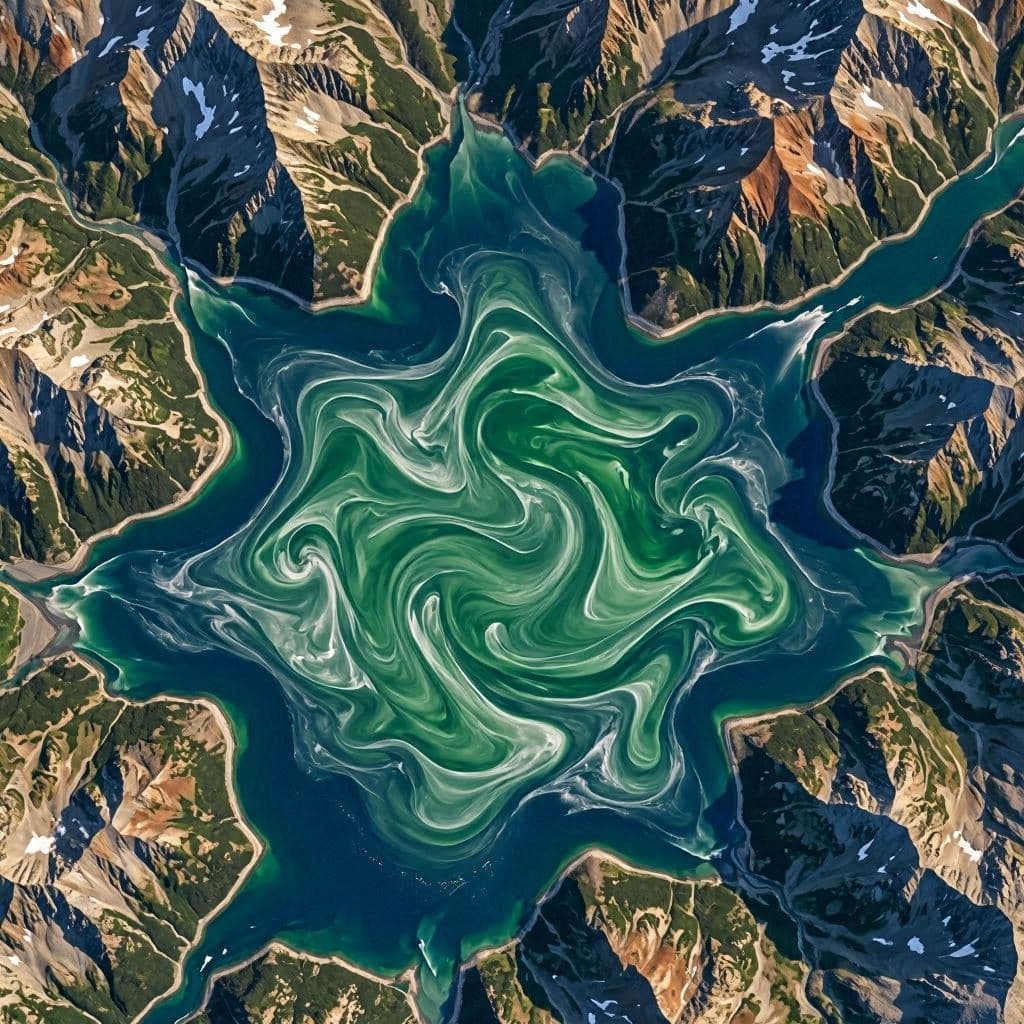
From the vantage point of space, Earth reveals patterns that are often invisible to those walking its surface. A recent image captured by astronauts showcases a striking phenomenon: a giant, milky-green vortex swirling across Lake Skadar, a vast body of water nestled on the border between Montenegro and Albania. This visual spectacle, while beautiful, is a testament to the dynamic and sometimes fragile nature of our planet’s ecosystems. It invites us to look closer at the forces that shape these natural wonders, both from above and within.
Body: Lake Skadar, the largest lake in Southern Europe, is known for its rich biodiversity and complex hydrology. The "milky-green" appearance observed from orbit is typically caused by a combination of sediment suspension and algal blooms. When heavy rains or wind disturb the lake bed, fine particles of clay and silt are lifted into the water column, creating a cloudy, opaque effect. Simultaneously, nutrient-rich conditions can trigger rapid growth of phytoplankton, adding vibrant green hues to the mix.
The term "cryptodepression" refers to lakes whose bottoms lie below sea level, a geological feature that makes them unique and sensitive to environmental changes. Lake Skadar’s depth and structure allow it to hold vast amounts of water, but also make it susceptible to stratification and circulation patterns that can create such vortices. These swirling forms are not just aesthetic; they indicate the movement of water masses, mixing nutrients and oxygen in ways that sustain aquatic life.
For scientists, images like these are valuable data points. They help monitor water quality, track sediment transport, and understand the impact of climate variability on freshwater systems. The vortex serves as a visible indicator of underlying processes, such as wind-driven currents or thermal differences, that govern the lake’s health. By studying these patterns from space, researchers can gain insights that are difficult to obtain from ground-level observations alone.
Local communities depend on Lake Skadar for fishing, tourism, and agriculture. Changes in water clarity and quality can have direct economic impacts, affecting livelihoods and regional stability. The presence of algal blooms, while natural, can sometimes signal excessive nutrient runoff from agricultural lands, highlighting the need for sustainable land management practices. Balancing human activity with ecological preservation is an ongoing challenge for the region.
The beauty of the image should not overshadow the environmental concerns it may represent. Algal blooms can deplete oxygen levels in the water, posing risks to fish and other aquatic organisms. Monitoring these events helps authorities take preventive measures, such as regulating fertilizer use or improving wastewater treatment. It is a reminder that even remote perspectives can inform local action.
As climate change alters precipitation patterns and temperatures, the frequency and intensity of such phenomena may shift. Understanding the baseline behavior of lakes like Skadar is crucial for predicting future changes. The vortex, therefore, is not just a momentary curiosity but a piece of a larger puzzle regarding the resilience of freshwater ecosystems in a warming world.
Closing: The milky-green vortex in Lake Skadar is a reminder of the intricate connections between land, water, and atmosphere. As we continue to observe our planet from space, we gain a deeper appreciation for its complexity and fragility. Protecting these natural treasures requires both global awareness and local stewardship, ensuring that their beauty endures for generations to come.
AI Image Disclaimer: The images accompanying this article are AI-generated conceptual illustrations of satellite views and lake ecosystems, designed to reflect the themes of environmental monitoring and natural beauty.
Sources: Live Science NASA Earth Observatory European Space Agency (ESA) National Geographic
Published by Banx Network. This article is part of the Banx decentralized media programme, powered by the BXE token on the XRP Ledger.