There is a particular gravity to an accusation that carries the weight of a nation's intelligence—a moment when the language of diplomacy gives way to the language of certainty. In London, Prime Minister Keir Starmer stood before the press and said what many had suspected but few had stated with such clarity: that a security incident at a U.S.-run air base in the Middle East was "almost certainly" directed by Iran . The words were measured, but the implication was not. They spoke of a threshold crossed, a line that, once named, cannot be unnamed.
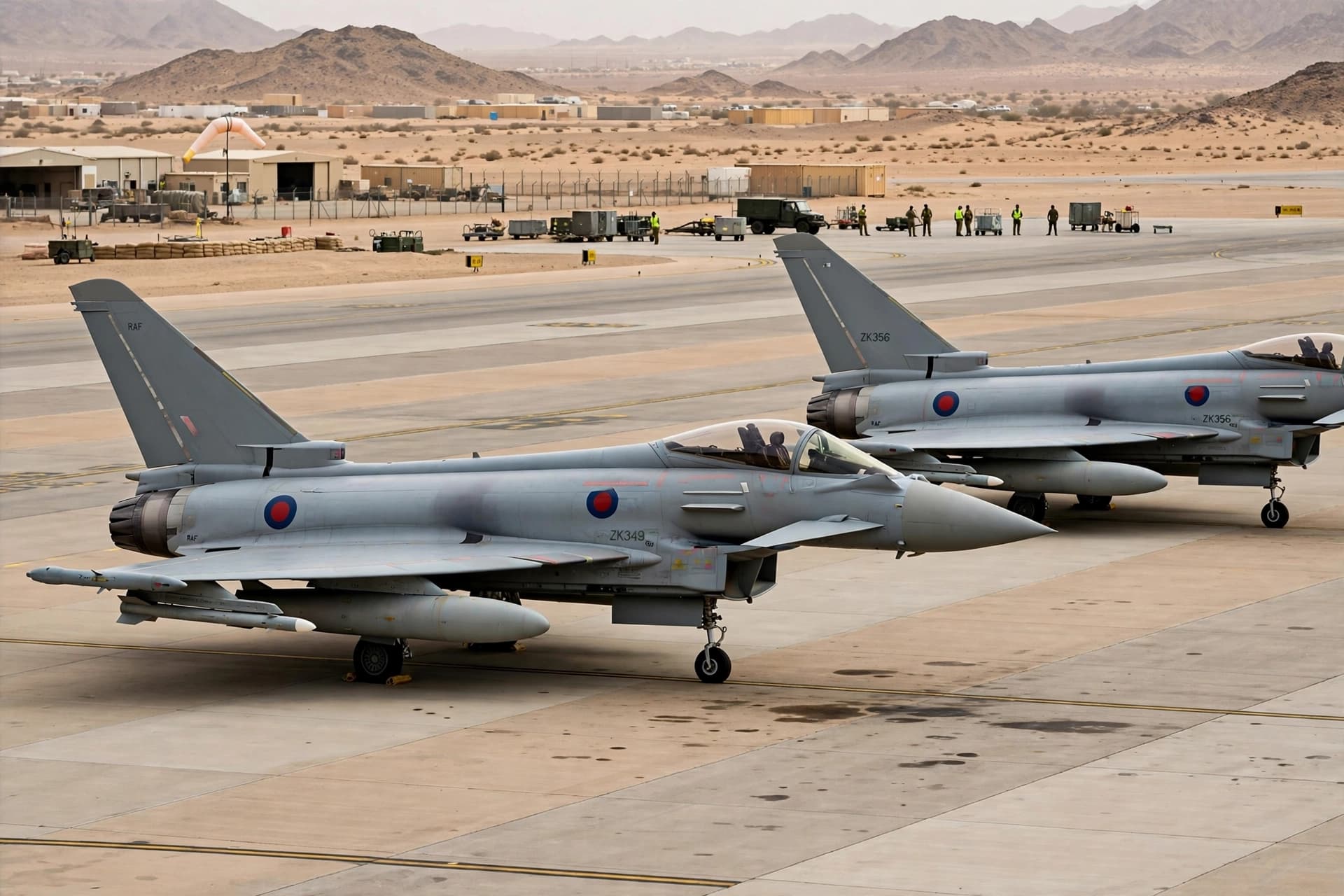
The base in question is Al Udeid in Qatar, the largest U.S. military installation in the region and a linchpin of American power projection . The incident came amid a broader escalation: after U.S. and Israeli strikes on Iran, Tehran launched what Starmer described as "indiscriminate attacks" across the Gulf, striking Kuwait's airport, targets near Doha, and the Palm Jumeirah in Dubai, where the Fairmont hotel caught fire . British forces were active, Starmer said, with RAF Typhoon jets deployed to Al Udeid as part of "defensive operations" coordinated to protect British personnel, interests, and allies .
The British position has been carefully calibrated. The U.K. did not participate in the initial strikes on Iran, and Starmer emphasized that Britain's role was defensive, not offensive . But he also made clear that the Iranian regime represents a "direct threat," citing more than twenty potentially lethal plots on British soil in the past year . The deployment of additional F-35 jets and enhanced air defense capabilities to RAF Akrotiri in Cyprus underscored that this was not a rhetorical response .
The accusation against Iran is not made lightly, and its consequences ripple outward. European allies have fractured over the broader conflict: French President Emmanuel Macron called the U.S.-Israeli offensive "illegal," while European Commission President Ursula von der Leyen convened an emergency security council . The Gulf states, many of them partners in the coalition that hosts Al Udeid, have found themselves both hosts and targets. The question of what happens next—whether the incident becomes a catalyst for de-escalation or a step toward something wider—remains unanswered.
For the personnel at Al Udeid, the incident was not an abstraction. It was a moment of danger in a place that has long served as a hub for American and allied operations. For the British government, it was a confirmation of a threat that had been building for months. And for the region, it was another entry in a ledger of violence that seems only to grow longer.
The investigation into the incident continues, and the full details of what occurred at Al Udeid have not been made public . But the prime minister's statement has already done what such statements do: it has named a suspect, and in doing so, has changed the terms of the conversation. The question now is not whether Iran was involved, but what the response will be—and whether the Gulf, already on edge, can absorb another blow.
AI Image Disclaimer: The images accompanying this article are AI-generated and are intended for illustrative purposes only.
Sources:
· Anadolu Ajansı · The Guardian (cited within reports) · Crónica · Clarín
Published by Banx Network. This article is part of the Banx decentralized media programme, powered by the BXE token on the XRP Ledger.