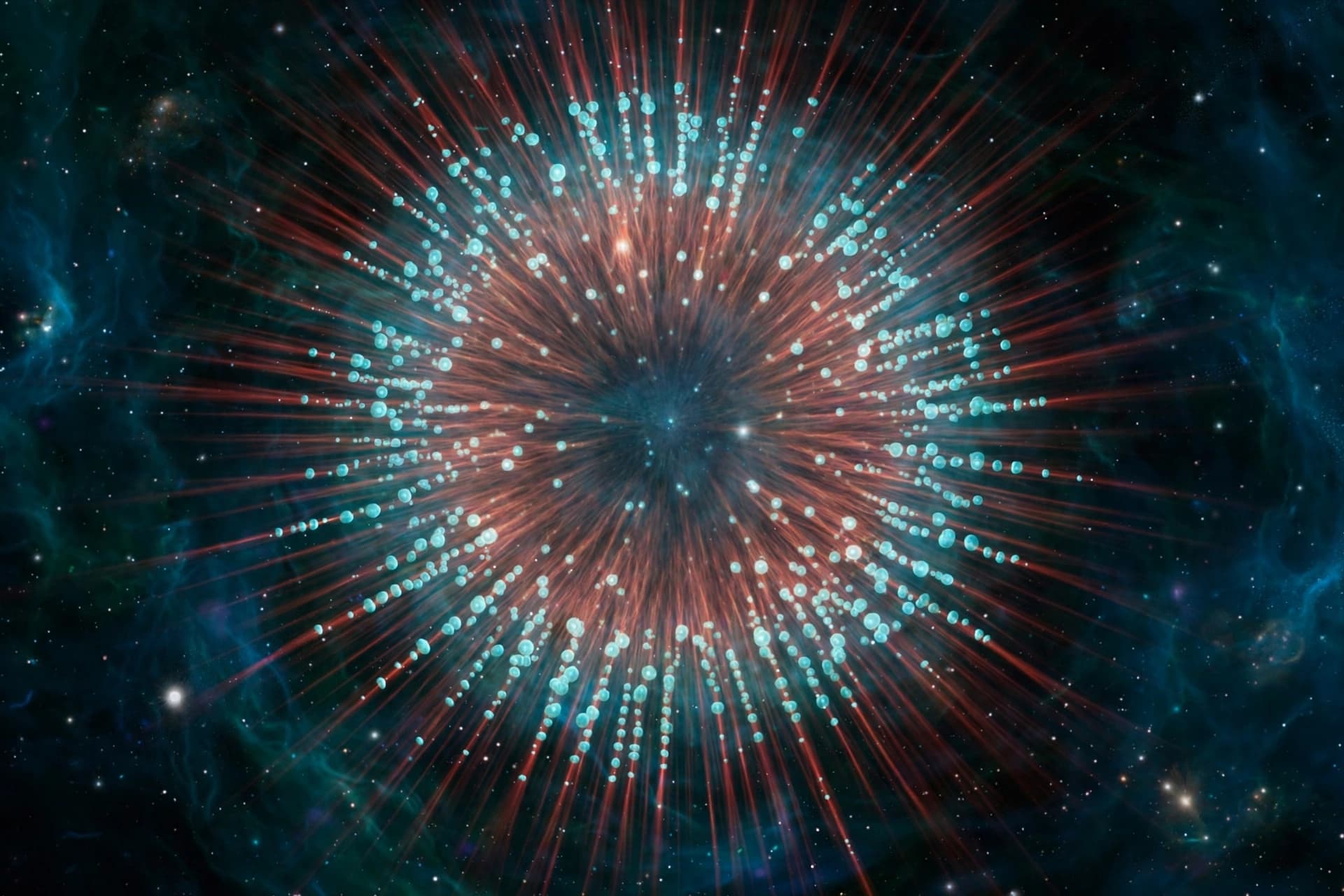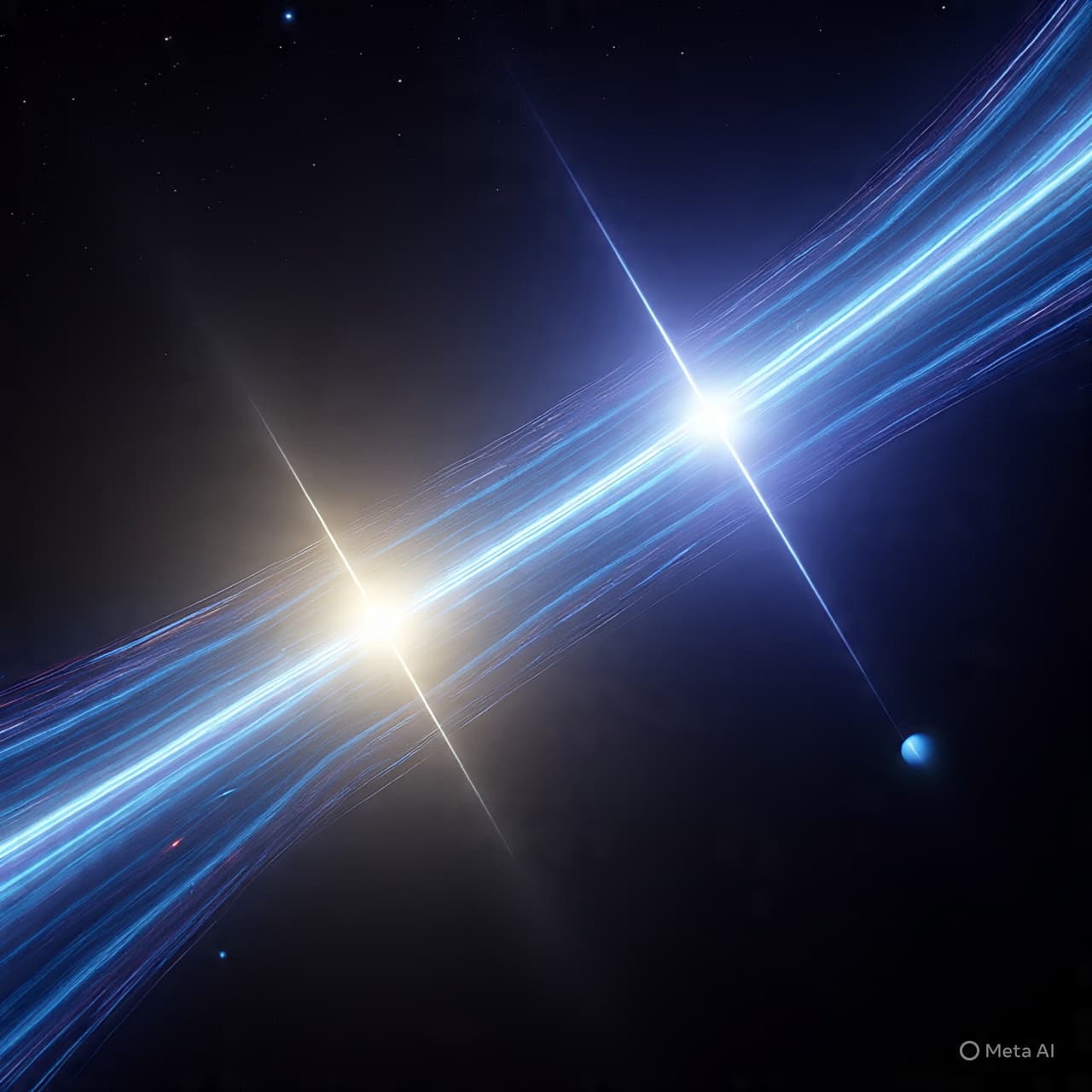
In the quiet reaches of the galaxy, far from the soft familiarity of our own Sun, astronomers have captured something both violent and strangely elegant — a “vampire star” siphoning material from its smaller, fading companion. The term sounds theatrical, almost playful, yet the phenomenon itself carries a quiet, cold gravity: a star feeding on another to prolong its own life, reshaped by a process that unfolds over eons.
This newly observed system has been the subject of scattered hints for years, but recent data from high-resolution telescopes finally delivered what researchers describe as the clearest look yet at the accretion process. In these rare binary pairs, the dominant star draws gas from its partner, stripping it layer by layer as gravity turns intimacy into extraction. Streams of hydrogen arc between them, pulled into glowing spirals before settling onto the surface of the larger star.
The imagery evokes drama, but the physics behind it is almost tender in its precision. As the weakening star expands and cools, it loses its grip on its outer layers. The companion — hotter, denser, and gravitationally stronger — becomes a thief by proximity, capturing the drifting material and folding it into its own structure. What emerges is a system in which identity blurs: one star diminished, the other revitalized, the two bound in a cycle of steady transformation.
Observations suggest the donor star has already lost a significant portion of its mass, revealing internal layers that would normally remain hidden until much later in its evolution. For astronomers, this is a rare opportunity: a natural laboratory showing stellar life cycles in accelerated motion. It also helps explain puzzling anomalies observed in certain fast-spinning or unusually bright stars, many of which may be hiding a history of cosmic predation.
The broader significance reaches beyond this single pair. Vampire-star systems are believed to be precursors to several dramatic astrophysical events, including nova eruptions or, in extreme cases, supernova detonations triggered when the feeding star gains too much mass. Understanding the early stages of this exchange helps refine models of how stars evolve, age, and sometimes collapse in spectacular fashion.
Yet, despite the violent metaphor, there is something quietly reflective in the image of one star borrowing the life of another. In the vastness of the universe, even destruction becomes a process of recycling — a reminder that energy shifts, matter migrates, and the boundaries between life and loss blur in the cosmic scale.
This first clear look does not close the story; it opens it. With better instruments and more observations ahead, astronomers hope to follow the system as it continues its slow, gravitational waltz — a silent drama written in light across the dark.
Published by Banx Network. This article is part of the Banx decentralized media programme, powered by the BXE token on the XRP Ledger.