In the hush of deep space, a silent sentinel circles — watching the Sun with calm patience. That sentinel is India’s Aditya-L1 spacecraft, launched in 2023, now steadily orbiting the Sun-Earth Lagrange Point L1. As Earth-bound life flows in predictable rhythms, Aditya-L1 stands poised, a quiet lighthouse in the cosmic seas, awaiting a moment when the Sun itself will change its tune. That moment may come in 2026 — a year destined to stand apart in our solar journey.
Since its deployment, Aditya-L1 has gathered glimpses of our star: images of the corona, records of solar flares, and the gentle ebb and flow of solar wind. But beyond those snapshots, the mission has held its breath — for the Sun is entering a breathless phase too. According to leading space-weather projections, around 2026 the Sun is expected to hit its maximum activity cycle: the point roughly every 11 years when the Sun’s magnetic poles reverse and its mood shifts from calm to turbulent.
That shift is not trivial. During solar maximum, eruptions — especially Coronal Mass Ejections (CMEs) — become more frequent, powerful, and unpredictable. Massive bubbles of charged particles, CMEs may travel at thousands of kilometers per second. If aimed toward Earth, they can disrupt satellites, communication systems, and even power grids.
Here is where Aditya-L1’s unique design becomes critical. Its coronagraph instrument — VELC — acts like an artificial Moon, blocking the Sun’s bright surface and revealing the faint outer corona. This allows continuous 24/7 monitoring of the corona, even during what would be eclipses on Earth. Moreover, Aditya-L1 can observe solar activity in visible light and ultraviolet and X-rays, measure the temperature and energy of eruptions, and follow the solar wind and magnetic fluctuations with payloads such as SoLEXS, SUIT and others.
In practical terms, what does 2026 offer? For scientists, it is a rare window into the most tempestuous phase of the Sun — a natural laboratory to study how the corona heats up, how CMEs form and accelerate, and how magnetic fields twist and snap. For humanity, it carries tangible stakes: better forecasts of “space weather,” early warnings before solar storms, protection for satellites, communications, power grids, and Earth-orbit infrastructure.
Already, Aditya-L1 has provided glimmers of what’s to come. Data from 2024 revealed solar flares and CMEs that, while still modest compared to worst-case scenarios, serve as benchmarks for what might arrive during solar maximum. Scientists say that once 2026’s peak unfolds, what was once rare could become frequent — offering both a surge of scientific insight and a call to readiness for Earth’s technological systems.
Thus, 2026 may mark not just a milestone, but a transformation: when the Sun reveals more of its hidden power, and when the quiet vigil of Aditya-L1 becomes a beacon for safeguarding our connected world. It is a moment when curiosity and caution meet — and when Earth-bound humanity learns again that we live under the sway of a star whose calm and fury are two sides of the same cosmic coin.
In quiet orbit, in constant vigil — Aditya-L1 stands ready. 2026 will not simply be another year. It may be our solar awakening.
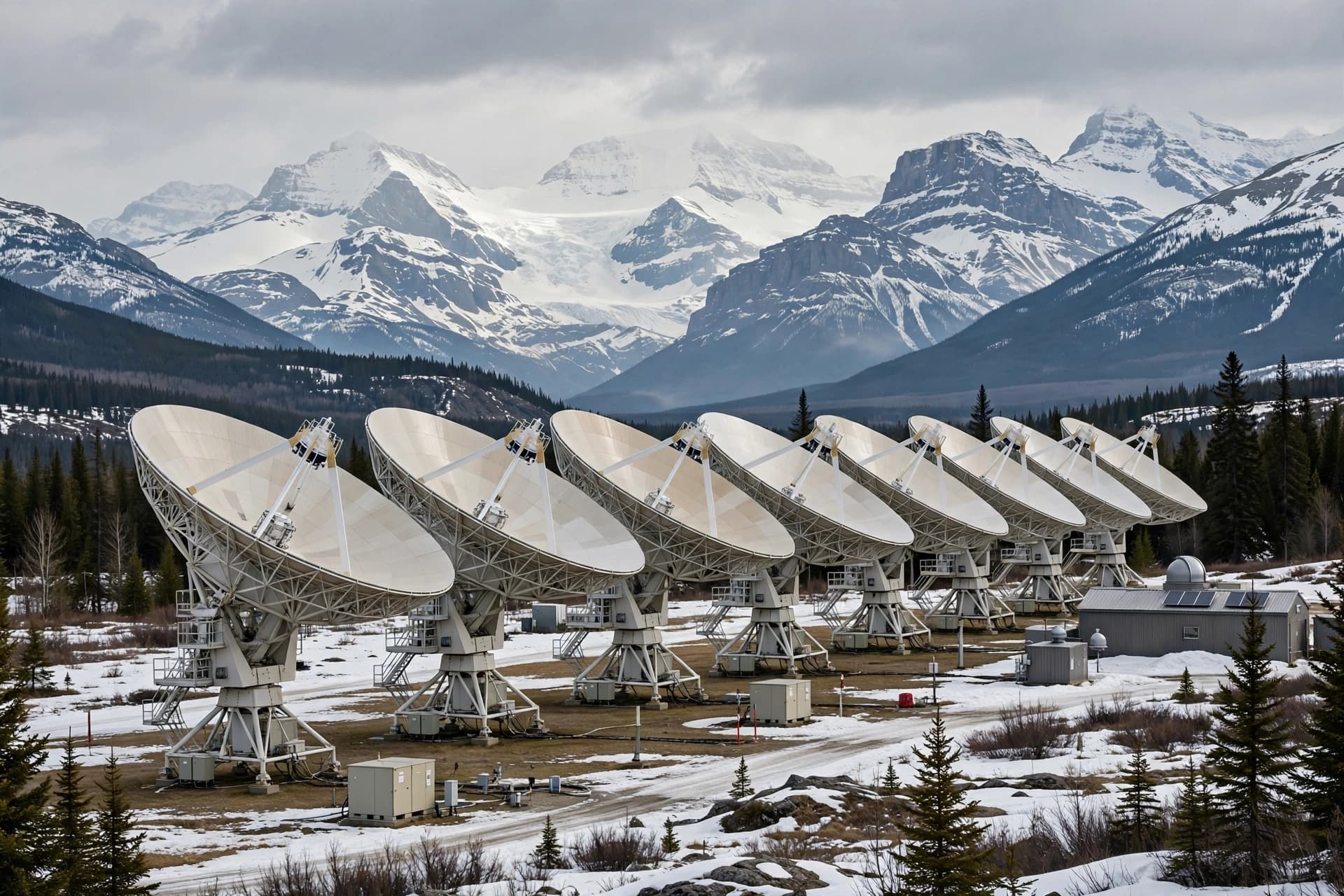
Visuals are created with AI tools and meant as conceptual illustrations, not as real photographs.
Sources BBC News / mainstream international news coverage Moneycontrol (science reporting on Aditya-L1) India Today (report on Aditya-L1 observations of CMEs) Scientific publications on SoLEXS and SUIT payloads of Aditya-L1 World-Today-News summarizing solar-cycle forecasts and mission potential
Published by Banx Network. This article is part of the Banx decentralized media programme, powered by the BXE token on the XRP Ledger.