Space missions are often described in numbers—distances, velocities, timelines measured in precision. Yet behind those calculations, there is always something quieter, something human that resists being reduced to data. Sometimes, it takes the form of a small, unexpected companion.
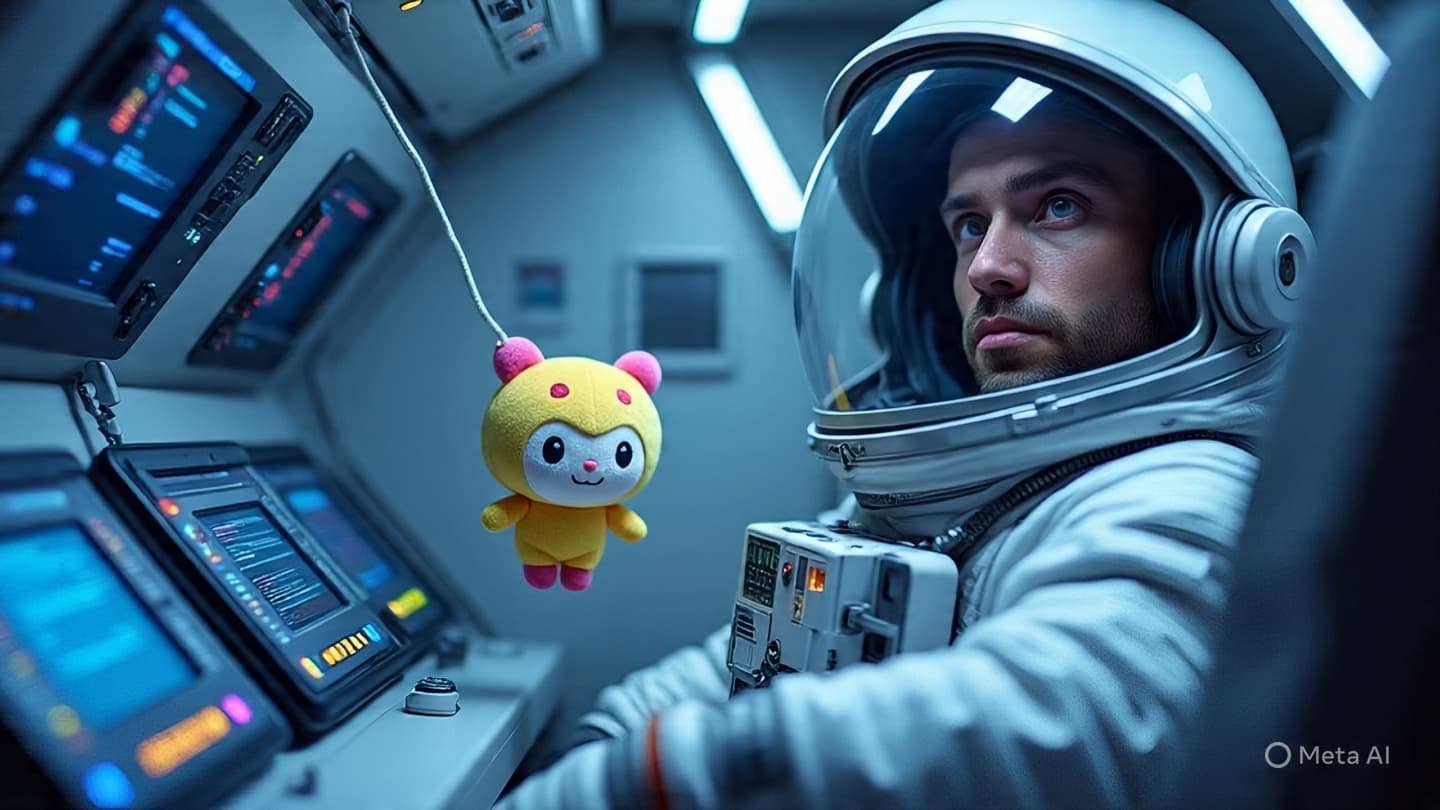
During preparations for the Artemis 2 mission, commander Reid Wiseman found himself advocating for just such a companion—a plush mascot named “Moonrise,” or “Rise.” In a program defined by engineering rigor, the presence of a small toy might seem incidental. Yet its story reflects a deeper layer of human connection within space exploration.
The Artemis 2 mission, set to carry astronauts around the Moon, represents a significant step in returning humans to deep space. Every item aboard the spacecraft is carefully evaluated for weight, purpose, and safety. In such an environment, even a symbolic object must justify its place.
Wiseman’s insistence on keeping the mascot was not merely sentimental. Within space missions, such objects often serve as zero-gravity indicators—floating freely when the spacecraft reaches microgravity. But beyond function, they also serve as emotional anchors, reminders of Earth in an environment that can feel profoundly distant.
The mascot itself, small and unassuming, became a point of connection among the crew. It is easier, perhaps, to carry courage when it is shared, even symbolically. In the confined space of a spacecraft, where isolation and focus coexist, such gestures gain unexpected significance.
NASA has a long tradition of including mascots or small tokens aboard missions. These items, though minor in scale, often become part of the narrative that surrounds each journey. They are photographed, remembered, and sometimes become icons of the mission itself.
For Wiseman, the decision to ensure the mascot remained part of the mission reflects an understanding that exploration is not solely technical. It is also emotional, shaped by the individuals who undertake it. The presence of “Rise” becomes a subtle acknowledgment that even in the pursuit of the extraordinary, there is room for the familiar.
As Artemis 2 moves closer to launch, the focus will naturally remain on its scientific and strategic goals. Yet stories like this quietly remind us that space exploration is still, at its core, a human endeavor—one that carries not just instruments, but meaning.
When the spacecraft eventually leaves Earth, the mascot will float gently within its cabin, a small figure in a vast journey. It will not change the mission’s trajectory, but it may shape how that journey is remembered.
AI Image Disclaimer: Visuals are created with AI tools and are not real photographs.
Source Check: NASA Space.com CNN BBC The New York Times
Published by Banx Network. This article is part of the Banx decentralized media programme, powered by the BXE token on the XRP Ledger.