In the delicate tapestry of the night sky, rare moments arise when celestial phenomena intersect in a cosmic pas de deux — bright moonlight weaving through fleeting meteors, and Earth’s gaze caught between flash and glow. This January, skywatchers around the globe will witness just such an event: the first major meteor shower of the year set against the glow of a supermoon, a pairing that promises beauty and a hint of frustration for those scanning the heavens.
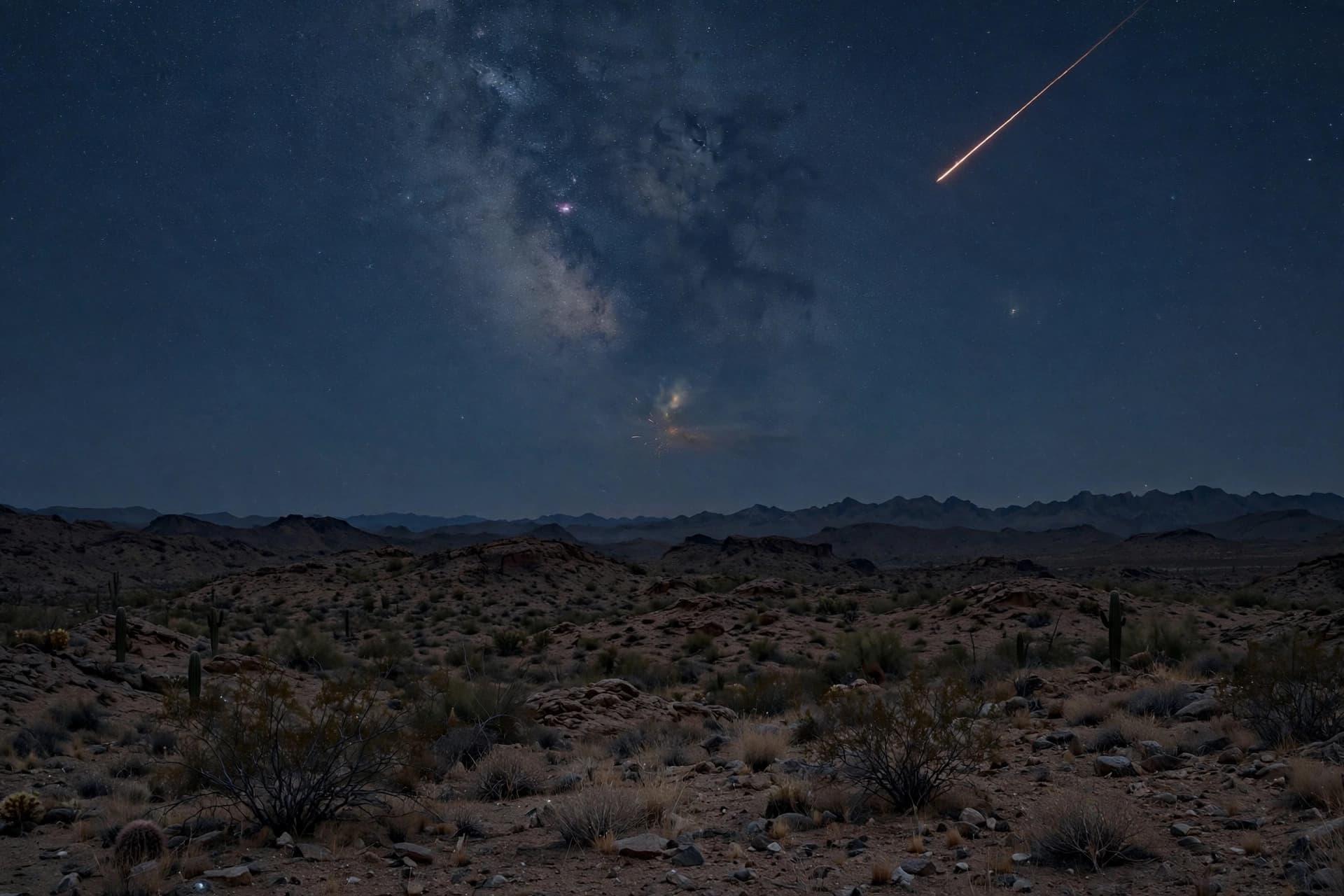
The Quadrantid meteor shower, active into January and peaking overnight, is renowned among stargazers for its bright streaks of cosmic “fireballs” — luminous points of light that mark debris from asteroid 2003 EH1 burning in Earth’s atmosphere. Under ideal dark skies, this shower can produce a few dozen meteors per hour, a stellar display enjoyed each year when our planet crosses a dense trail of space debris.
Yet this time, the show arrives with a twist. A supermoon — when a full moon is at its closest point to Earth in its orbit — will shine in the night sky as the Quadrantids reach their peak. Supermoons appear up to nearly 14% larger and about 30% brighter than more distant full moons, their luminescence sweeping across the darkness. Although this brightness is subtle to most observers, it becomes a formidable competitor to the faint light trails of meteors.
“The biggest enemy of enjoying a meteor shower is the full moon,” says an expert from the Liberty Science Center, reminding casual viewers and dedicated stargazers alike that moonlight can overwhelm the faint glimmer of shooting stars. This convergence may reduce visible meteors to fewer than 10 per hour, compared with typical peaks closer to 25 meteor sightings under darker skies.
Still, the spectacle is far from lost. Both phenomena — the supermoon and the nocturnal meteor shower — are visible without any special equipment, offering an opportunity for anyone with a clear view of the sky to share in the wonder. To enhance the experience, observers are encouraged to venture away from city lights, let their eyes acclimate to darkness, and look toward the horizon where meteors may launch their fleeting arcs. Early evening and predawn hours provide particularly good windows of sight.
This celestial overlap not only marks one of the earliest astronomical highlights of 2026 but also underscores the timeless rhythm of the cosmos — Earth in motion, space debris in its wake, and the Moon lighting our nights. Even when one spectacle dims another, the sky offers its own quiet poetry: a dance of light and shadow across the heavens, inviting us to look up and reflect on the vastness above.
AI Image Disclaimer “Visuals are created with AI tools and are not real photographs.”
Sources Associated Press (via multiple outlets) TimeandDate.com Night Sky Guide Discover Magazine astronomy calendar
Published by Banx Network. This article is part of the Banx decentralized media programme, powered by the BXE token on the XRP Ledger.